

What Human Food Can Dogs Eat Safely?
Many common human foods are safe for dogs in moderate amounts — plain cooked chicken, carrots, blueberries, plain rice, and pumpkin are among the most widely recommended by veterinarians. However, several foods that are harmless to humans are genuinely toxic to dogs, including grapes, raisins, onions, garlic, chocolate, and xylitol (an artificial sweetener found in sugar-free products). The difference between a safe treat and a veterinary emergency often comes down to knowing which category a food falls into before offering it.
Safe Human Foods for Dogs
The following foods are considered safe for most dogs when offered plain (no seasoning, no butter, no sauce) and in appropriate portions. Treats and human food combined should not exceed 10% of your dog’s daily caloric intake.
Proteins
Plain cooked chicken: Boneless, skinless chicken breast is one of the safest protein treats for dogs. Boil or bake without seasoning. Avoid fried chicken or chicken with bones — cooked bones splinter and can cause internal injuries.
Plain cooked turkey: Same guidelines as chicken. Avoid turkey skin (too fatty) and processed deli turkey (high sodium).
Cooked salmon: An excellent source of omega-3 fatty acids that supports coat health. Must be fully cooked — raw salmon can carry parasites that are dangerous specifically to dogs. Remove all bones.
Plain cooked eggs: Scrambled or hard-boiled without oil or seasoning. Eggs provide protein and biotin. Some veterinarians recommend eggs as a regular dietary supplement for coat health.
Fruits
Blueberries: Rich in antioxidants and safe in small quantities. Good as training treats due to their small size.
Watermelon: Safe and hydrating. Remove seeds and rind — seeds can cause intestinal blockage in small dogs, and rind is difficult to digest.
Apple slices: Safe without seeds or core. Apple seeds contain small amounts of cyanide — not dangerous in one or two seeds, but best avoided as a habit. Cut into bite-sized pieces to prevent choking.
Bananas: Safe in moderation. High in sugar and potassium — a few slices as an occasional treat, not a daily offering.
Vegetables
Carrots: Excellent low-calorie treat, good for dental health. Safe raw or cooked. Cut into appropriate sizes for your dog to prevent choking.
Green beans: Plain green beans (fresh, frozen, or canned without salt) are low-calorie and filling. Some veterinarians recommend them as partial meal replacements for dogs on weight-management diets.
Sweet potato: Cooked, plain sweet potato is nutrient-dense and easy to digest. A good addition for dogs with sensitive stomachs. Do not feed raw sweet potato.
Plain pumpkin: Canned pure pumpkin (not pumpkin pie filling, which contains sugar and spices) is widely recommended by veterinarians for digestive support. One to two tablespoons mixed into food helps with both constipation and mild diarrhea.
Grains and Other
Plain white rice: Easy to digest and commonly recommended as a bland diet for dogs with upset stomachs, typically mixed with plain boiled chicken.
Plain oatmeal: Cooked without sugar, milk, or flavorings. Good source of soluble fiber for dogs with mild digestive issues.
Peanut butter: Safe in small amounts if it does not contain xylitol. Check the ingredient label carefully — xylitol is increasingly common in “natural” or “sugar-free” peanut butters and is extremely toxic to dogs even in small amounts.
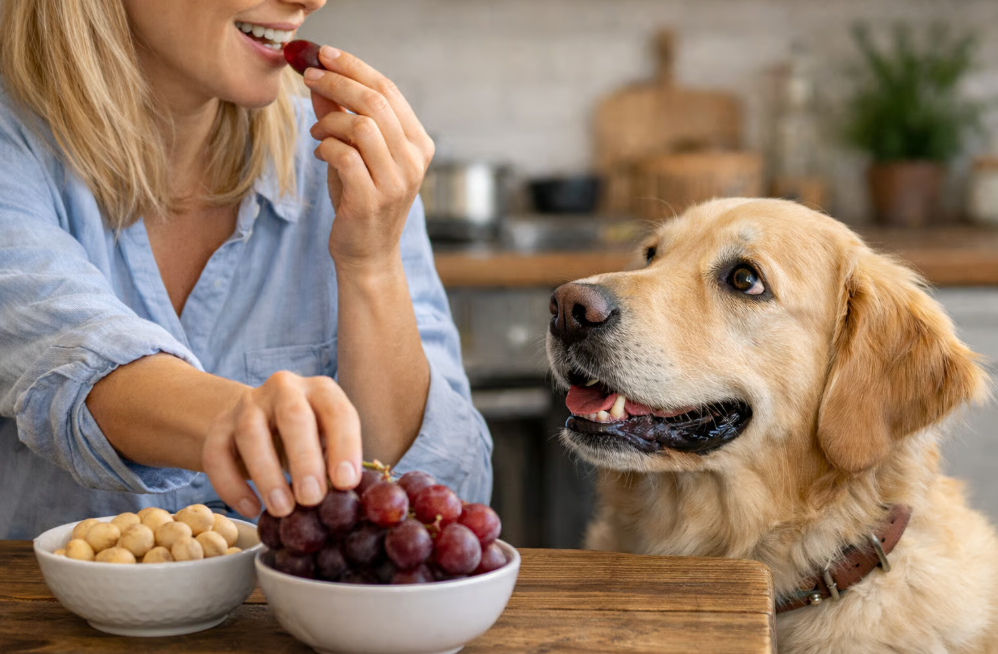
Toxic Foods: Never Feed These to Dogs
These foods are genuinely dangerous. Some cause immediate toxicity; others cause cumulative organ damage. This is not a complete list — when in doubt about any food, do not offer it until you have confirmed safety.
The Maple-and-grapes incident I mentioned happened in under five minutes. She found a bag on the counter, ate roughly eight grapes, and we were at the emergency vet within 30 minutes. Induced vomiting and IV fluids resolved it without kidney damage — but the margin was narrow. I now treat the toxic foods list as absolute, not “probably fine in small amounts.”
Portion Guidelines
The 10% rule is the most practical guideline: all treats, including human food, should make up no more than 10% of your dog’s total daily calories. For a 60-lb dog consuming roughly 1,200 calories per day, that is 120 calories from treats — approximately one-third of a chicken breast, or about 15 baby carrots, or two tablespoons of peanut butter.
Overfeeding safe foods is still a health issue. Excess fruit adds sugar; excess cooked meat adds calories that lead to weight gain. If you are uncertain about your dog’s healthy weight, see how to tell if your dog is overweight.
What to Do If Your Dog Eats Something Toxic
If your dog eats a known toxic food, call your veterinarian or the ASPCA Animal Poison Control Center (888-426-4435) immediately. Do not induce vomiting unless directed to by a professional — some toxic substances cause more damage coming back up. Note the approximate amount consumed and when it happened. Time is critical for most food toxicities — early intervention significantly improves outcomes.
Frequently Asked Questions
Can dogs eat cheese?
Most dogs can eat small amounts of plain, low-fat cheese without issues. However, some dogs are lactose intolerant and will develop diarrhea or gas from dairy. Start with a very small amount and observe. Avoid cheeses with added herbs, garlic, or high fat content.
Is bread safe for dogs?
Plain white or wheat bread in small amounts is not toxic, but it offers no nutritional value for dogs and adds empty calories. Raw bread dough is dangerous — the yeast expands in the stomach and produces alcohol. Never allow a dog to eat raw dough.
Can dogs eat raw meat safely?
Raw meat carries bacterial risks including Salmonella and E. coli that can affect both the dog and the humans in the household. While some owners follow raw diets, the FDA and most veterinary organizations recommend cooking meat for dogs to eliminate pathogen risk. Raw salmon is specifically dangerous to dogs due to a parasite that causes “salmon poisoning disease.”
More FurlyHome Pet Health Guides
- How to Read a Dog Food Ingredient Label
- How to Tell If Your Dog Is Overweight
- What Causes Dog Allergies in the Home?
- Best Omega-3 Fish Oil for Dogs
- Why Does My Dog Eat Grass?
Verdict
Many human foods are safe and even beneficial for dogs in moderation — plain proteins, most vegetables, and select fruits make excellent treats. The critical knowledge is the toxic list: grapes, chocolate, xylitol, onions, and garlic are non-negotiable dangers. Keep the 10% calorie rule, introduce new foods one at a time, and when in doubt, check before offering. A safe treat strengthens the bond with your dog. A toxic one can turn into an emergency in minutes.
| Food | Toxic Component | Risk Level | Effect |
| Grapes and raisins | Unknown compound | Severe | Acute kidney failure — even small amounts |
| Chocolate | Theobromine | Severe (dark chocolate worst) | Heart arrhythmia, seizures, death |
| Xylitol (sugar substitute) | Xylitol itself | Severe | Rapid insulin release, liver failure |
| Onions and garlic | N-propyl disulfide | Moderate to severe | Red blood cell damage, anemia |
| Macadamia nuts | Unknown compound | Moderate | Weakness, vomiting, tremors |
| Avocado | Persin | Low to moderate | Vomiting, diarrhea; pit is choking hazard |
| Alcohol | Ethanol | Severe | CNS depression, liver damage |
| Caffeine | Caffeine/theobromine | Moderate to severe | Restlessness, rapid heart rate, seizures |
| Cooked bones | Splinter risk | Moderate | Internal puncture, intestinal blockage |






Write Your Review
No reviews yet. Be the first to share your experience!