

The Real Challenge: Dogs and Hardwood Floors
Hardwood floors and dogs coexist better than most people think, but only with a consistent maintenance routine. The three enemies of hardwood in a dog household are grit (tracked in on paws, it acts like sandpaper underfoot), moisture (from water bowls, drool, and accidents), and oils (from paw pads and skin secretions that dull the finish over time). Biscuit weighs 65 pounds and his nails alone would destroy an unprotected floor within months. The routine below takes under 10 minutes daily and prevents the slow accumulation of damage that leads to expensive refinishing. We’ve had our red oak floors for four years with two dogs, and the finish is still intact because of this schedule.
Daily Routine (Under 10 Minutes)
Step 1: Dry Dust Mop All High-Traffic Areas
Use a microfiber dust mop (not a broom) on all areas where your dog walks, sleeps, eats, and enters from outside. Microfiber picks up fine grit and pet hair through static attraction rather than pushing it around the way bristle brooms do. Focus on entryways, the path between the door and your dog’s favorite resting spots, and the area around food and water bowls. This single step prevents more floor damage than any other because it removes the abrasive grit that scratches finish with every footstep. A dedicated entry mat inside and outside your door captures most grit before it reaches the hardwood.
Step 2: Wipe Paws After Walks
Keep a towel or paw-cleaning mat at the door. Wipe all four paws after every outdoor trip, especially during wet weather, winter (road salt is highly corrosive to floor finishes), and spring mud season. This takes 30 seconds and prevents tracking in moisture, grit, lawn chemicals, and organic debris that can stain or damage the finish. For dogs who resist paw wiping, a shallow water pan by the door works as a passive alternative: the dog steps through it, rinsing the paws, and then onto an absorbent mat.
Step 3: Wipe Up Water and Drool Immediately
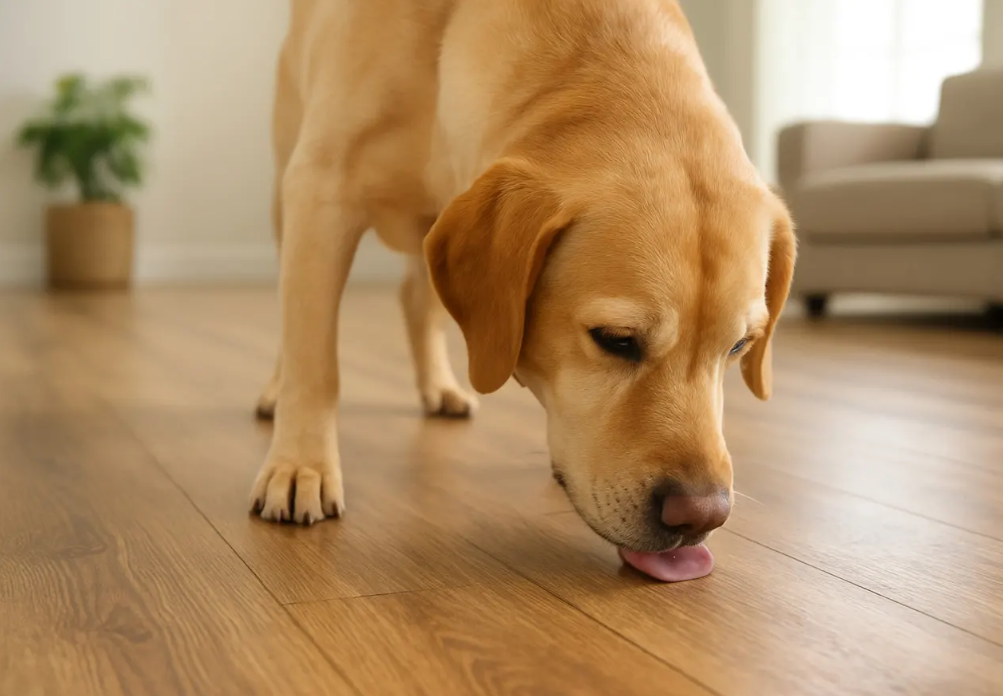
Standing water is hardwood’s most persistent enemy. Place absorbent mats under water bowls and wipe up any splashes promptly. Heavy droolers like Saint Bernards, Mastiffs, and some Retrievers leave saliva trails that contain proteins and enzymes that can cloud a polyurethane finish with repeated exposure. A quick wipe with a dry cloth immediately after a drool event prevents any interaction with the finish.
Weekly Routine (20 to 30 Minutes)
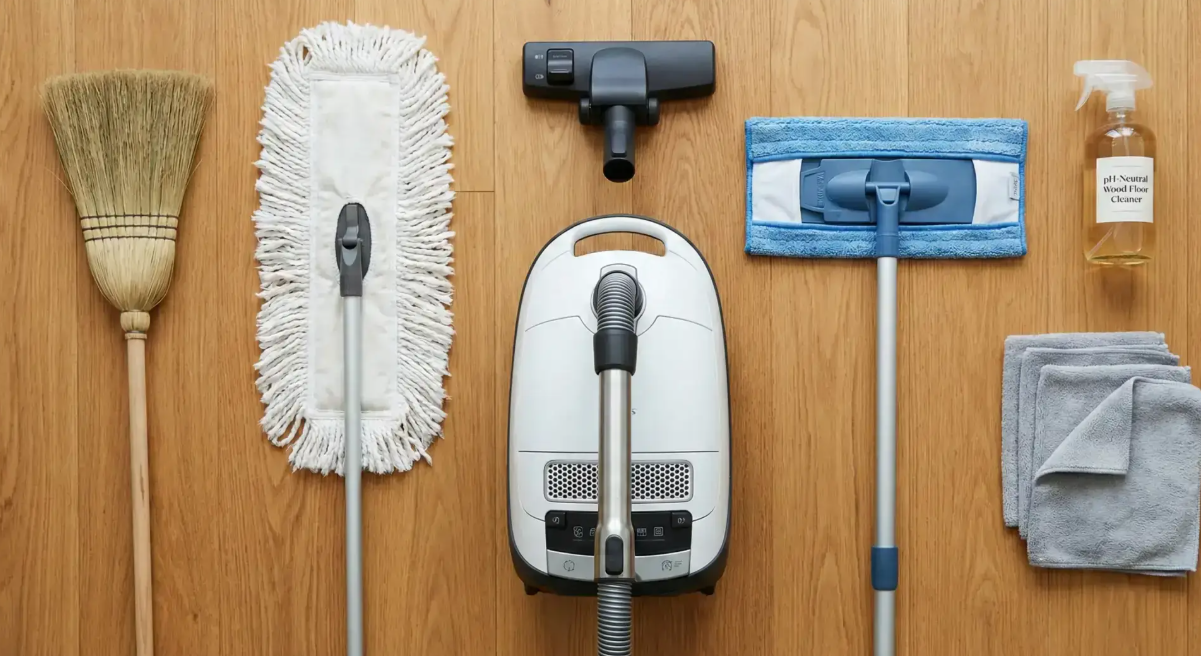
Step 1: Vacuum With a Hardwood-Safe Setting
Vacuum all hardwood floors once weekly using a vacuum with a hard floor setting (brush roll off or retracted). The brush roll on carpet-mode vacuums can scratch hardwood finishes. Focus on edges, corners, and under furniture where dust, dander, and hair accumulate. A vacuum reaches debris that dust mopping misses, especially in board seams and along baseboards. For the best vacuum options, our guide to the best vacuums for pet hair on hardwood floors covers models with dedicated hard floor modes.
Step 2: Damp Mop With a pH-Neutral Cleaner
After vacuuming, damp mop (not wet mop) with a pH-neutral hardwood floor cleaner. The mop should be wrung out until it’s barely damp, leaving no visible moisture trail behind it. Excess water seeps into seams and can cause cupping (where board edges rise higher than the center). Work in the direction of the wood grain. Avoid vinegar, ammonia, and multi-surface cleaners, as these degrade polyurethane finish with repeated use. For product recommendations, see our best pet-safe hardwood floor cleaners guide. If you prefer a mop system designed for pet households, our best mops for pet owners guide covers options with built-in wringing mechanisms that prevent over-wetting.
Monthly Routine (1 Hour)
Step 1: Deep Clean Under and Behind Furniture
Move furniture quarterly (monthly if your dog sleeps under or behind furniture). Hair, dander, and dust accumulate in these hidden areas and become compressed mats that can trap moisture against the floor. This is also where you’re most likely to discover old accident spots you didn’t know about. Clean these areas with the same vacuum-then-damp-mop routine used in the weekly schedule.
Step 2: Inspect the Finish
Once a month, examine high-traffic areas for signs of finish wear: dull spots, areas where water no longer beads on the surface, or visible scratches through the finish to raw wood. Early detection allows for spot refinishing rather than full room refinishing. The water bead test is the simplest diagnostic: place a few drops of water on the floor. If the water beads up and sits on the surface, the finish is intact. If it soaks in within a few seconds and darkens the wood, the finish has been compromised in that area.
Step 3: Trim Dog Nails
Dog nails are the primary source of scratches on hardwood floors. If you can hear clicking when your dog walks on hard surfaces, the nails are too long. Trim every 2 to 3 weeks, or use a nail grinder for smoother edges. Dogs with dewclaws need those trimmed too, as they can catch on floor seams. For dogs who resist nail trimming, regular walks on concrete sidewalks provide natural filing that supplements less-frequent trimming sessions.
Scratch Prevention Beyond Cleaning
Place felt pads under all furniture legs and replace them every 6 months (they collect grit that becomes abrasive). Use runners or washable rugs in high-traffic corridors, especially the path from the door to your dog’s primary rest area. Apply nail caps (soft silicone covers that glue onto the nail tips) for dogs with particularly destructive nails or those who sprint on hardwood. Consider a hardwood floor polish or refresher coat once or twice a year to maintain the protective layer. Water-based polyurethane refresher coats are pet-safe once cured (typically 24 to 48 hours). For more on flooring protection strategies, our guide on cleaning dog pee off hardwood floors includes finish maintenance advice for accident-prone households.
Frequently Asked Questions
What is the best hardwood floor finish for dog households?
Water-based polyurethane in a satin or semi-gloss sheen provides the best combination of durability and scratch resistance for dog households. Satin finishes show scratches less than high-gloss options. Oil-based polyurethane is slightly more durable but takes longer to cure (up to 30 days for full hardness) and has stronger fumes during application. Avoid wax finishes in pet households, as they require frequent reapplication and are easily damaged by moisture.
How often should hardwood floors be refinished in a dog household?
With proper daily maintenance, hardwood floors in a dog household typically need refinishing every 7 to 10 years, compared to 10 to 15 years in pet-free homes. Annual inspection of the finish condition (using the water bead test described above) helps determine the right timing. Spot refinishing high-wear areas can extend the interval between full refinishes.
Are robot vacuums effective for daily hardwood floor maintenance with dogs?
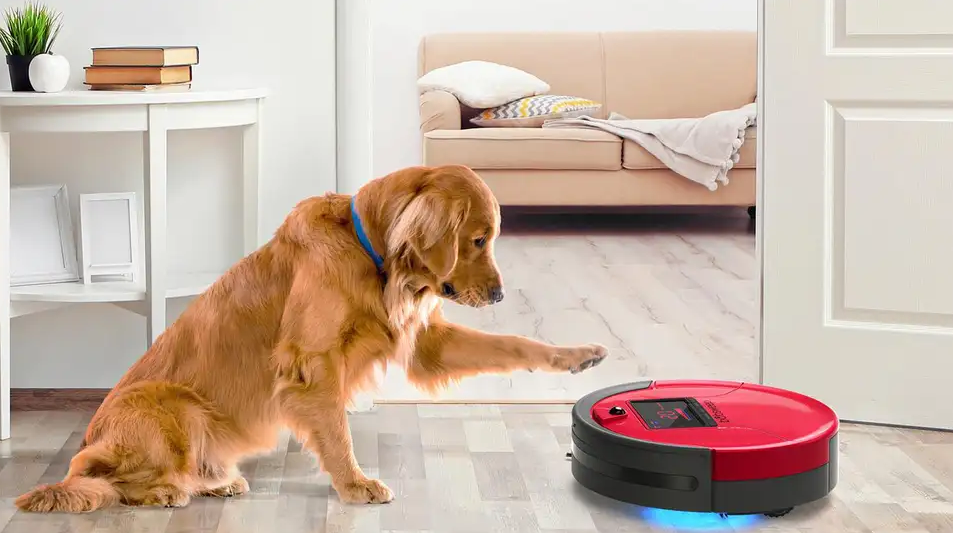
Robot vacuums are excellent for daily maintenance on hardwood floors, picking up pet hair, dander, and light grit between manual cleanings. They work best as a supplement to rather than replacement for weekly manual vacuuming, which reaches edges, corners, and under low furniture more effectively. Models with rubber brush rolls rather than bristle rolls are gentler on hardwood finishes. For a comparison of options, see our guide on robot vacuum vs regular vacuum for pet hair.



Write Your Review
No reviews yet. Be the first to share your experience!