

The Real Question: Do You Need Both?
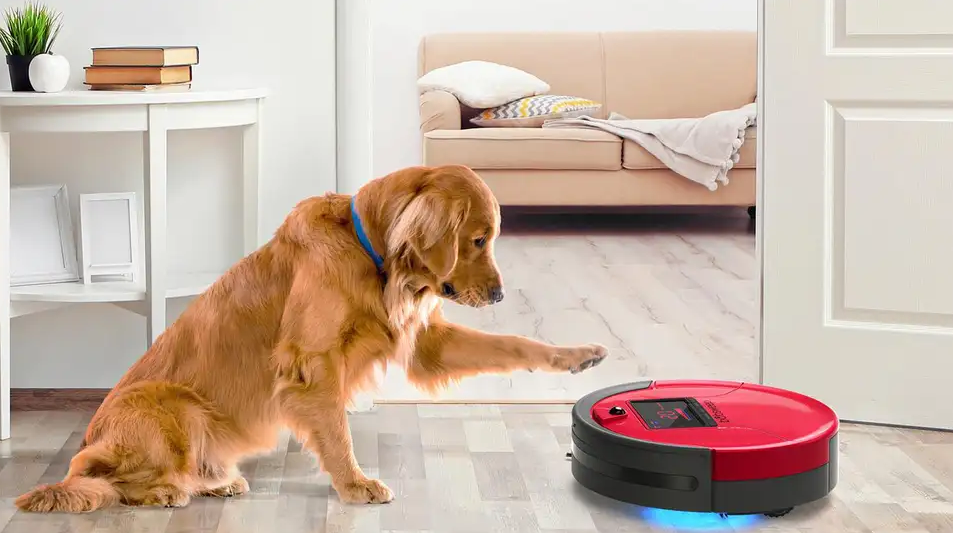
Robot vacuums and regular vacuums serve fundamentally different roles in a pet household, and framing the choice as one-or-the-other misses the point. A robot vacuum excels at maintaining a baseline level of cleanliness by running daily without your involvement. A regular vacuum excels at deep cleaning that reaches edges, corners, stairs, upholstery, and the depths of carpet pile. Most pet owners who’ve tried both end up using both. Biscuit sheds enough golden retriever hair daily to make a small wig, and running our robot vacuum every morning means we’re only dealing with that day’s shedding rather than a week’s accumulation when we pull out the upright. But the robot has never once cleaned behind the couch or gotten into the crevice between the baseboard and the carpet. Here’s how they compare across the factors that matter most for pet hair.
Suction Power and Pet Hair Pickup
Regular Vacuum
Full-size upright and canister vacuums generate 150 to 250+ air watts of suction, with motorized brush rolls that agitate carpet fibers and dislodge embedded pet hair. This combination is significantly more effective at removing hair that has worked its way into carpet pile, upholstery fabric, and rug fibers. For heavy-shedding breeds (Golden Retrievers, Huskies, German Shepherds, Labrador Retrievers), a regular vacuum’s deep cleaning capability is essentially irreplaceable. The motorized brush roll, when properly maintained, lifts hair from carpet at the base of the fiber rather than skimming the surface.
Robot Vacuum
Current-generation robot vacuums generate 2,000 to 11,000 Pa of suction, which sounds impressive but translates to roughly 30 to 70 air watts due to the smaller motor and airflow path. This is adequate for picking up surface-level pet hair on hard floors and low-pile carpet but insufficient for extracting hair embedded in medium to high-pile carpet. Robot vacuums compensate by running more frequently: daily passes prevent hair from embedding deeply in the first place. On hard floors (hardwood, tile, LVP), robot vacuums are nearly as effective as regular vacuums for pet hair because hair sits on the surface rather than penetrating into the material. For the best options, see our best robot vacuums for pet hair guide.
Coverage and Edge Cleaning
Regular Vacuum
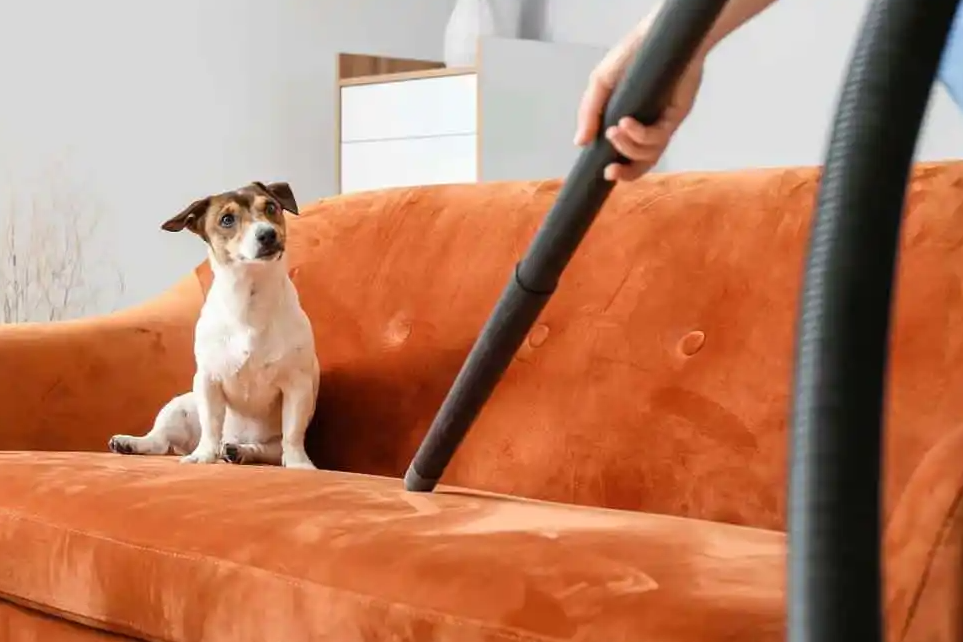
Manual vacuuming lets you control exactly where the vacuum goes: under furniture, into corners, along baseboards, up stairs, over upholstery, and into crevices. Pet hair accumulates disproportionately in these transitional areas. A crevice tool attachment reaches between couch cushions and along the baseboard-floor junction where hair and dander collect. The main downside is that you have to do it yourself, and in pet households, “weekly” vacuuming often becomes biweekly because life gets busy.
Robot Vacuum
Robot vacuums clean floor surfaces autonomously but struggle with edges, corners, and elevated surfaces. Side brushes reach about 1 inch from the wall, leaving a small gap along baseboards where hair accumulates. Most robots cannot navigate stairs, clean upholstery, or reach under furniture lower than 3.5 inches (their typical height). They also avoid cords, shoes, dog toys, and other floor clutter that they can get tangled on. The practical implication is that robot vacuums handle 80 percent of your floor’s square footage with zero effort from you, but the remaining 20 percent (edges, stairs, furniture) still requires manual attention.
Hair Tangling and Maintenance
Regular Vacuum
Long pet hair wraps around brush rolls on both regular and robot vacuums. Regular vacuums generally have larger, more accessible brush rolls that are easier to clean. Many newer models feature anti-tangle brush roll designs with rubber fins instead of bristles, which are significantly more resistant to hair wrapping. Expect to clean hair from the brush roll every 1 to 2 weeks in a heavy-shedding household. Bagless canister emptying is straightforward, though the allergen exposure during emptying is worth noting for people with pet allergies.
Robot Vacuum
Robot vacuums are more maintenance-intensive for pet households than their marketing suggests. The smaller dustbin (typically 300 to 700 ml) fills in a single cleaning session in heavy-shedding homes. Self-emptying dock models solve this by automatically dumping the bin into a larger bag or container that holds 30 to 60 days of debris, but these cost significantly more (typically $200 to $400 premium over base models). Brush rolls need hair removal every 3 to 5 cleaning cycles. Side brushes wear out and need replacement every 3 to 6 months. Sensors get blocked by hair and dander and need weekly wiping. Despite this maintenance, the time investment is still less than manual vacuuming because the actual cleaning runs unattended. For guidance on minimizing maintenance issues, our guide on how to vacuum dog hair without clogging covers techniques for both robot and regular vacuums.
Cost Comparison
A quality regular vacuum for pet hair ranges from $150 to $500, with models in the $250 to $350 range offering the best performance-to-price ratio for pet households. These typically last 5 to 10 years with proper maintenance. A quality robot vacuum for pet hair ranges from $250 to $1,100, with the higher end including self-emptying docks and advanced navigation. Robot vacuums have a shorter lifespan (3 to 5 years) and higher consumable costs (replacement brushes, filters, bags for self-emptying models). Over a 5-year period, the total cost of ownership for a robot vacuum is typically 1.5 to 2 times that of a regular vacuum. However, this cost comparison doesn’t factor in the value of the time you save by not vacuuming manually 3 to 5 times per week. For pet owners, the best value is typically the best vacuum for pet hair on hardwood floors as the primary deep cleaner, supplemented by a mid-range robot for daily maintenance.
Which to Choose (Decision Framework)
Robot vacuum only works if: You have all hard flooring (no carpet), light to moderate shedding, no stairs, and are comfortable supplementing with manual edge cleaning monthly. Regular vacuum only works if: You have the discipline to vacuum 3+ times weekly, your home is predominantly carpet, or you have stairs. Both is ideal if: You have heavy-shedding breeds, mixed flooring, or simply want consistently clean floors without daily manual effort. The combination of daily robot passes and weekly deep manual vacuuming keeps pet hair under control more effectively than either approach alone.
Frequently Asked Questions
Do robot vacuums scare dogs?
Most dogs acclimate to robot vacuums within 1 to 2 weeks if introduced gradually. Start by running the robot in a room while the dog is in a different room, then gradually allow exposure with the dog at increasing proximity. Noise-sensitive dogs may take longer, and some herding breeds may attempt to herd or chase the robot. Running the robot on a schedule while you’re home initially (rather than when the dog is home alone) allows supervision during the adjustment period.
Can a robot vacuum replace a regular vacuum entirely?
For pet households, no. Robot vacuums cannot clean stairs, deep-clean medium to high-pile carpet, vacuum upholstery, reach under very low furniture, or clean corners effectively. They are excellent at maintaining clean floors between deeper manual vacuuming sessions. Even the most expensive robot vacuums leave edges and corners with visible pet hair accumulation that a regular vacuum’s crevice tool handles in seconds.
How often should a robot vacuum run in a pet household?
Daily is optimal for homes with heavy-shedding dogs. Every other day is adequate for light to moderate shedders. Running the robot daily prevents pet hair from accumulating to the point where it embeds in carpet fibers or collects in hard-to-reach areas. Schedule runs for times when you and your pets are typically out of the house, allowing uninterrupted cleaning and avoiding stress for noise-sensitive pets.





Write Your Review
No reviews yet. Be the first to share your experience!