

Two Different Approaches to the Same Problem
Enzymatic cleaners and baking soda both reduce pet odor, but they work through entirely different mechanisms and excel in different situations. Understanding the chemistry behind each one prevents the common mistake of using the wrong product for the wrong problem, or worse, using both at the same time and canceling out their effects. Biscuit’s stomach bug last spring forced me to test both approaches side by side on identical carpet stains, and the results weren’t even close for urine odor. But baking soda outperformed in situations I didn’t expect. Here’s where each one wins, loses, and how to use them together when it makes sense.
How Enzymatic Cleaners Work
Enzymatic cleaners contain live bacterial cultures (typically strains of Bacillus) that produce enzymes as part of their natural metabolism. Different enzymes target different organic compounds: protease breaks down proteins (found in urine, vomit, blood, and feces), lipase breaks down fats and oils (found in sebaceous skin secretions and food residue), amylase breaks down starches, and most importantly for pet urine, urease and uricase break down uric acid into allantoin and carbon dioxide, both of which are odorless. The bacteria need moisture, warmth, and time to work. They consume the organic material as food, converting it into water, CO2, and mineral salts. This is why enzymatic cleaners require 10 to 24 hours of dwell time and must remain moist throughout the process. If the product dries before the bacteria finish, the cleaning stops. The process is biological, not chemical, which means it works at the molecular level rather than simply covering or absorbing odor.
How Baking Soda Works
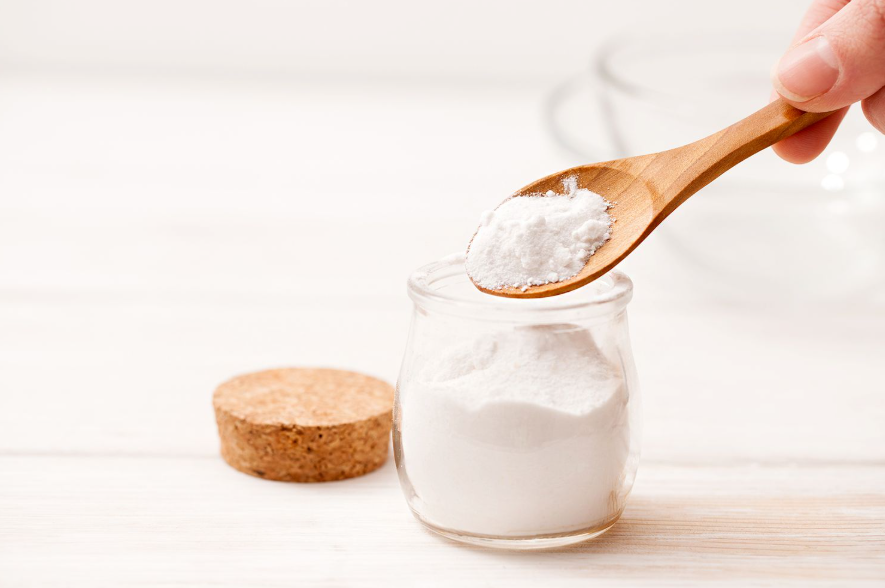
Baking soda (sodium bicarbonate, NaHCO3) is an alkaline powder with a pH of approximately 8.3 that reduces odor through two mechanisms. First, it acts as a physical adsorbent: its crystalline structure has a relatively high surface area that attracts and traps volatile odor molecules through weak electrostatic forces. Second, it acts as a mild acid-base neutralizer. Many pet odor compounds are acidic (volatile fatty acids from skin oils, butyric acid from bacterial decomposition), and baking soda’s alkalinity neutralizes them into less volatile, less odorous sodium salts. However, baking soda does not break down the source of the odor. It traps or neutralizes airborne and surface-level odor molecules but cannot decompose uric acid crystals, degrade embedded proteins, or kill odor-producing bacteria. When the baking soda is removed, any remaining organic material will continue producing odor.
Head-to-Head Comparison by Odor Type
Pet Urine Odor
Winner: Enzymatic cleaner by a wide margin. Urine odor persistence comes from uric acid crystals, which baking soda cannot dissolve or break down. Only the urease and uricase enzymes in enzymatic cleaners can cleave the purine ring structure of uric acid, converting it into allantoin and CO2. Baking soda will temporarily reduce the ammonia component of urine odor (since ammonia is alkaline and baking soda has mild buffering capacity) and adsorb some surface-level volatile compounds. But the uric acid crystals remain intact, and the odor returns with humidity changes. For urine on any porous surface, enzymatic cleaner is the only effective solution. For product recommendations, see our guide to the best enzymatic cleaners for dog urine.
General Dog Body Odor (Furniture, Bedding, Rooms)
Winner: Baking soda for maintenance, enzymatic cleaner for deep cleaning. General dog smell comes from volatile fatty acids produced by bacteria on the skin, plus sebaceous oil residue. For daily odor management, sprinkling baking soda on dog beds, carpet, and upholstery before vacuuming effectively adsorbs these volatile compounds without wetting the material. For deep odor removal where the smell has been building for months, enzymatic cleaner is more effective because it breaks down the accumulated oil and protein residue that baking soda can only mask. The practical approach is baking soda for weekly maintenance and enzymatic cleaner for monthly deep treatment. For a comprehensive odor management strategy, see our guide on getting dog smell out of your house permanently.
Vomit Odor
Winner: Enzymatic cleaner. Vomit contains stomach acid, bile pigments, and partially digested proteins that require enzymatic breakdown. Baking soda can neutralize the acidic component and absorb some surface odor, but the protein residue continues decomposing in carpet fibers and produces a sour smell for days or weeks. Enzymatic cleaner breaks down all organic components completely. However, baking soda is useful as a final step after enzymatic treatment: sprinkle it over the treated, dry area to adsorb any remaining airborne odor molecules.
Feces Odor
Winner: Enzymatic cleaner. Fecal odor comes from skatole and indole (bacterial tryptophan metabolites), hydrogen sulfide, and various mercaptans. These compounds are embedded in organic matter that baking soda cannot decompose. Enzymatic cleaners break down the organic matrix that holds and releases these compounds. Baking soda helps as a supplementary treatment on hard surfaces but is inadequate as a primary cleaner for fecal stains on carpet or fabric.
Litter Box Area Odor
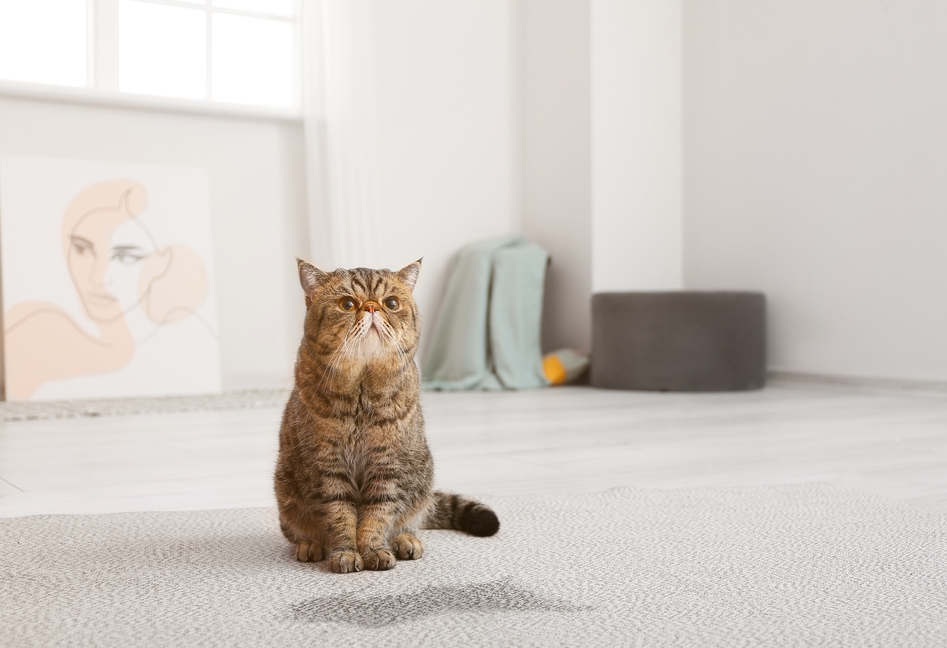
Winner: Baking soda for prevention, enzymatic cleaner for accidents. A thin layer of baking soda at the bottom of the litter box (under the litter) effectively adsorbs ammonia and other odor compounds during normal use. For urine that has splashed onto walls, flooring, or the litter box exterior, enzymatic cleaner is necessary because the urine contains uric acid that baking soda cannot address. Cat urine is particularly problematic due to felinine, a sulfur compound unique to cats that produces extremely potent thiols as it decomposes.
Critical Mistake: Using Both at the Same Time
Never apply baking soda and enzymatic cleaner simultaneously. Baking soda’s alkalinity (pH 8.3) can kill the live bacteria in enzymatic formulas, which thrive in a neutral to slightly acidic environment (pH 6.5 to 7.5). If you’ve already applied baking soda to a stain, vacuum it up, rinse the area with plain water, and allow it to dry before applying enzymatic cleaner. Similarly, don’t apply baking soda to an area still wet with enzymatic cleaner. Wait until the enzymatic treatment is complete (12 to 24 hours) and the area is fully dry before using baking soda as a finishing step. The correct sequence is always: enzymatic cleaner first, dry completely, baking soda second.
Cost and Practicality Comparison
Baking soda costs roughly $0.50 to $1.00 per pound and is available everywhere. It stores indefinitely in a sealed container and requires no special handling. Enzymatic cleaners cost $8 to $25 per 32-ounce bottle and have a shelf life of 1 to 2 years (the live bacteria gradually die in storage). Enzymatic cleaners require proper application technique: adequate saturation, sustained moisture, and sufficient dwell time. For routine odor maintenance in a pet home, baking soda is more practical and economical. For resolving specific biological stains and embedded odor, enzymatic cleaner is worth the higher cost because it addresses the root cause rather than the symptom. Most pet households benefit from keeping both on hand. For the best cleaning tools to complement these products, check our guide to the best odor eliminators for pet owners.
Frequently Asked Questions
Can I make a homemade enzymatic cleaner?
Some DIY recipes involve fermenting citrus peels in sugar and water for 3 months. While this process does produce some enzymatic activity, the resulting solution contains inconsistent enzyme concentrations and bacterial strains that are not specifically selected for pet waste breakdown. Commercial enzymatic cleaners use laboratory-selected Bacillus strains optimized for producing urease, protease, and lipase in appropriate ratios. For occasional light odor, a DIY solution may provide some benefit, but for urine-specific problems, commercial products are significantly more reliable.
Does baking soda damage carpet?
Baking soda does not damage carpet fibers, but it can clog vacuum filters and, in very large quantities left for extended periods, become difficult to fully remove from deep carpet pile. Use a thin, even layer rather than heavy mounds. Vacuum thoroughly after 15 to 30 minutes for odor absorption, or leave overnight for stronger odors. Avoid applying baking soda to wet carpet, as it forms a paste that’s significantly harder to extract than dry powder.
Which should I use on hardwood floors?
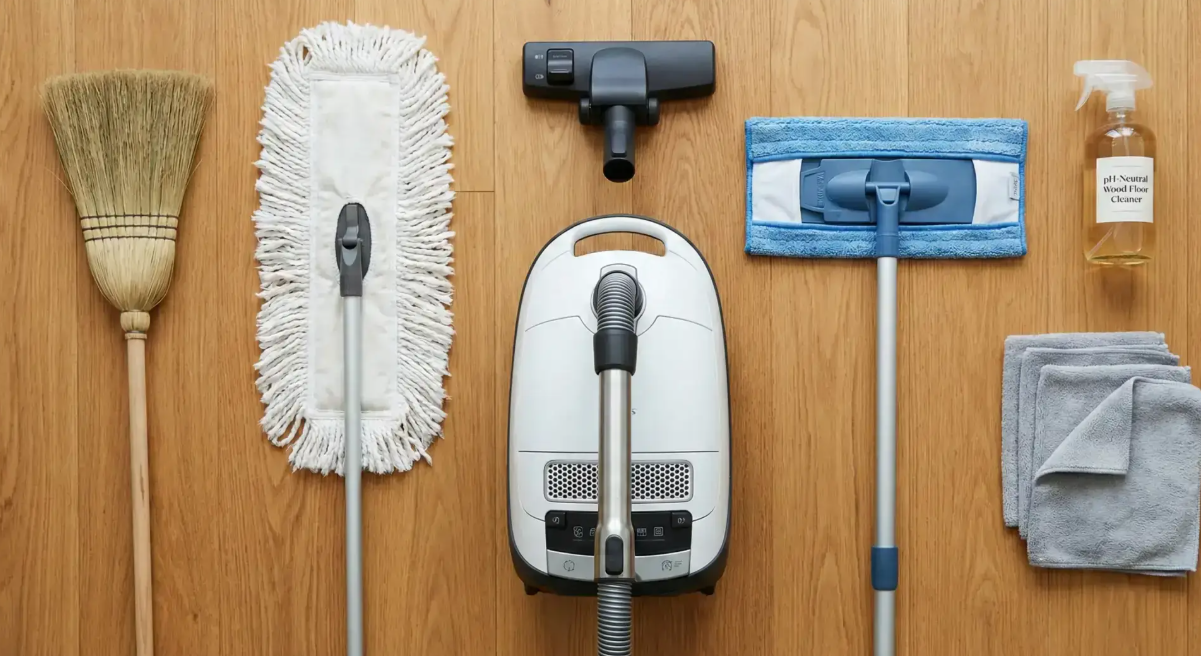
Enzymatic cleaner applied sparingly to seams and crevices is appropriate for urine odor on hardwood floors. Baking soda should not be left on hardwood surfaces for extended periods, as the mild abrasiveness can dull the polyurethane finish when walked on. For general hardwood floor odor, a damp mop with a pH-neutral cleaner is safer than either baking soda or enzymatic cleaner for routine use.



Write Your Review
No reviews yet. Be the first to share your experience!