

Why Speed Matters With Hardwood Floors
Hardwood floors and dog urine operate on a timer. A sealed polyurethane finish gives you roughly 30 minutes before urine begins seeping into the seams between boards. Once urine reaches raw wood underneath the finish, it reacts with the tannins in the wood and causes dark staining that no amount of surface cleaning will fix. Biscuit had an accident on our oak floors last winter while I was out for groceries, and by the time I found it two hours later, the urine had already darkened the wood between two planks. That spot required sanding and refinishing. The approach below works differently depending on whether you’re dealing with a fresh accident or a dried stain, so identify your situation first.
Step-by-Step: Fresh Accident (Under 30 Minutes Old)
Step 1: Blot Immediately With Paper Towels
Place several layers of paper towels directly over the puddle and press down firmly with your foot. Do not wipe or scrub, as this pushes urine into the board seams and spreads it across a larger area. Replace the paper towels and repeat until no more moisture transfers. For large puddles, use a stack of old towels instead. The goal is to remove as much liquid as possible before it finds its way into any gap in the floor’s finish.
Step 2: Clean With a pH-Neutral Hardwood Floor Cleaner
Spray a pH-neutral hardwood floor cleaner directly onto the area. Avoid vinegar, ammonia, or hydrogen peroxide at this stage, as all three can damage polyurethane finishes over time. Wipe with a damp (not wet) microfiber cloth in the direction of the wood grain. Microfiber is important here because it picks up residue rather than redistributing it the way cotton towels do. For a recommended product, see our guide to the best hardwood floor cleaners safe for pets.
Step 3: Apply Enzymatic Cleaner to the Seams
Even after surface cleaning, urine may have seeped between board seams. Apply a small amount of enzymatic cleaner along any seams within the accident zone using a cotton swab or precision applicator. The enzymes will break down uric acid crystals that standard cleaners leave behind. Let the enzymatic cleaner sit for 15 to 20 minutes, then blot dry. This step prevents the “phantom smell” that returns during humid weather. Our comparison of enzymatic cleaners vs baking soda explains why enzymes are specifically necessary for urine on wood.
Step 4: Dry the Area Completely
Moisture is hardwood’s enemy even without urine. After cleaning, dry the area thoroughly with a clean towel, then aim a fan at the spot for 20 to 30 minutes. This prevents warping and ensures no moisture sits in the seams. In humid climates, run a dehumidifier in the room for several hours after cleaning.
Step-by-Step: Dried or Old Urine Stains
Step 1: Locate All Affected Areas
Dried urine isn’t always visible on hardwood. Use a UV blacklight (available for under $15) in a darkened room to identify all urine deposits. Fresh stains glow bright yellow-green, while older stains appear duller. Mark the boundaries with painter’s tape so you know the full treatment area. You’ll often find the stain extends further than visible damage suggests, because urine wicks along the grain of the wood.
Step 2: Saturate With Enzymatic Cleaner
Apply enzymatic cleaner generously enough to reach the same depth the urine penetrated. For dried stains, this means applying enough liquid that it can seep into the seams and reach uric acid crystals below the surface. Cover with plastic wrap to prevent evaporation and maintain the moisture the bacterial cultures need to work. Leave for 12 to 24 hours. This extended dwell time is not optional for dried stains, as the enzymes need sustained contact to break crystallized uric acid. Check our list of the best enzymatic cleaners for dog urine for products that work specifically on hardwood.
Step 3: Address Dark Staining
If the wood has darkened from urine contact, the tannins in the wood have reacted with the ammonia. Odor removal (enzymatic cleaner) and color restoration are separate problems. For light discoloration, apply hydrogen peroxide (3 percent household concentration) with a soaked cloth and leave it for 8 to 12 hours. For deep black stains, the floor will likely need sanding down past the stained layer and refinishing. This is a job for a professional floor refinisher if the stain covers more than a small area.
Step 4: Reseal the Finish
After any urine incident on hardwood, inspect the polyurethane finish. If you can feel roughness or see a dull spot where the accident occurred, the finish has been compromised. Apply a thin coat of polyurethane to the affected area to restore the protective barrier. This prevents future accidents from penetrating the wood at that spot. Full room refinishing is only necessary if multiple areas are compromised.
What Not to Do
Do not use vinegar on hardwood. While vinegar can neutralize some urine odor, its acidity (pH 2.4) degrades polyurethane finishes with repeated use. A single application won’t destroy your floors, but it’s not a habit you want to build. Do not steam clean hardwood. Steam forces moisture into the wood grain and seams, potentially causing warping and creating conditions that worsen urine odor rather than resolving it. Do not use bleach. Bleach lightens wood unevenly and damages the finish. Do not sand without cleaning first. Sanding a urine-stained area without enzymatic treatment simply opens the wood pores and exposes more uric acid crystals to air.
Preventing Future Damage
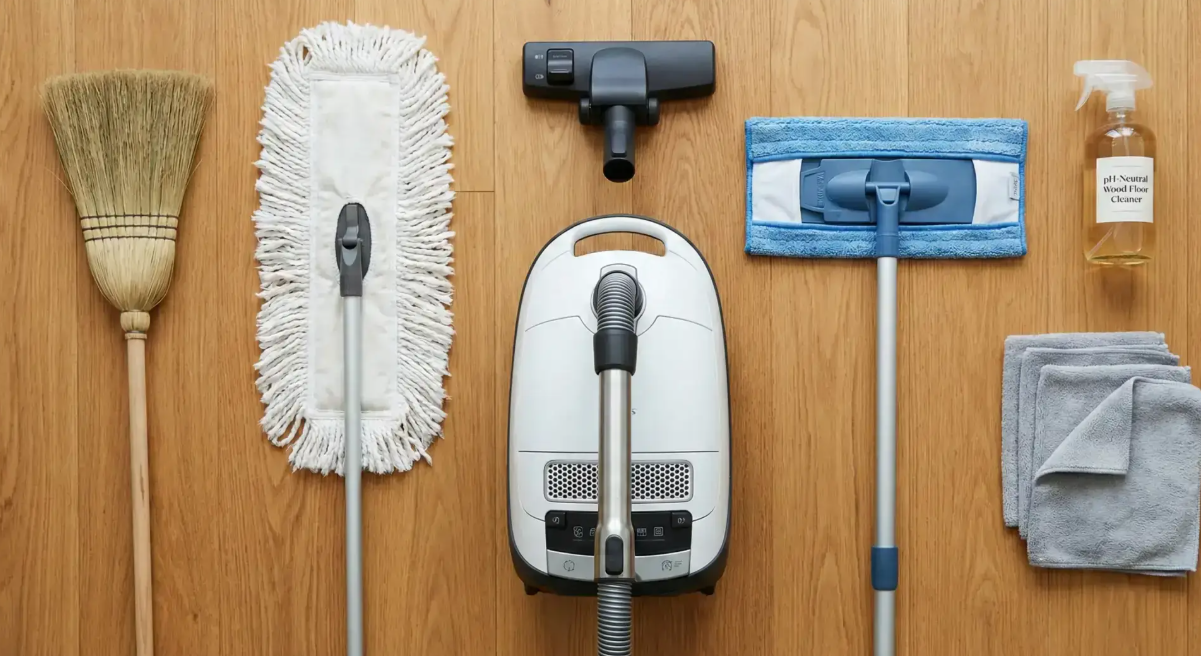
Keep enzymatic cleaner and paper towels accessible near your most vulnerable areas. Train all household members on the blot-don’t-wipe protocol. Consider placing washable rugs in high-risk zones: near doors where arriving dogs might have full bladders, in rooms where senior dogs sleep, and anywhere puppies spend unsupervised time. For daily maintenance that protects your floors from all pet-related wear, our guide on how to keep hardwood floors clean with dogs covers the full routine. If you prefer a hands-free approach to daily cleaning, a pet-safe mop system reduces the effort significantly.
Frequently Asked Questions
Can dog urine permanently damage hardwood floors?
Yes, dog urine can permanently damage hardwood floors if left for more than 1 to 2 hours on sealed floors or within minutes on unsealed wood. The ammonia in urine reacts with wood tannins to produce dark staining, and uric acid can degrade the polyurethane finish. Prompt cleanup within the first 30 minutes prevents most permanent damage.
Does the type of wood affect urine damage?
Higher-tannin woods like oak, walnut, and cherry are more susceptible to dark urine staining because ammonia reacts with tannins to produce black iron-tannate compounds. Lighter, lower-tannin woods like maple and birch show less dramatic color change but are still vulnerable to odor retention and finish damage. The quality and age of the floor’s sealant matters more than wood species.
How long does it take for dog urine to soak into hardwood?
On properly sealed hardwood with an intact polyurethane finish, dog urine takes 30 minutes to 2 hours to penetrate between board seams. On older floors with worn or damaged finishes, penetration can begin within minutes. Engineered hardwood with tight click-lock seams provides somewhat more resistance than traditional nail-down planks with wider seam gaps.



Write Your Review
No reviews yet. Be the first to share your experience!