

Dry Dog Food vs Wet Dog Food for Senior Dogs
Neither dry nor wet food is categorically better for senior dogs — the right choice depends on your specific dog’s health conditions, dental status, hydration needs, and appetite. Many veterinary nutritionists recommend a combination of both. Understanding the specific advantages of each helps you make a decision based on your senior dog’s individual needs rather than marketing claims.
| Factor | Dry (Kibble) | Wet (Canned/Pouch) |
| Hydration | 8-10% moisture | 75-80% moisture |
| Calorie density | Higher per cup | Lower per cup (more volume needed) |
| Dental benefit | Moderate — some abrasive action | None — no mechanical cleaning |
| Palatability | Good | Excellent — stronger smell and flavor |
| Shelf life (opened) | 4-6 weeks | 3-5 days refrigerated |
| Cost per calorie | Lower | Higher |
| Protein per calorie | Variable | Often higher |
| Digestibility | Good for most dogs | Slightly easier to digest |
Head-to-Head Comparison
When Wet Food Is Better for Senior Dogs
Dental disease or missing teeth: Senior dogs with advanced dental disease, tooth extractions, or oral pain cannot chew kibble effectively. Wet food is softer and requires minimal chewing.
Kidney disease: Chronic kidney disease — common in senior dogs — requires increased hydration. Wet food delivers significantly more water per meal than kibble, supporting kidney function.
Reduced appetite: Senior dogs often lose interest in food due to reduced sense of smell or general appetite decline. Wet food has a stronger aroma and flavor that stimulates appetite more effectively than kibble.
Difficulty maintaining weight: Some senior dogs struggle to eat enough kibble volume to maintain weight. Wet food’s higher palatability encourages larger meal consumption.
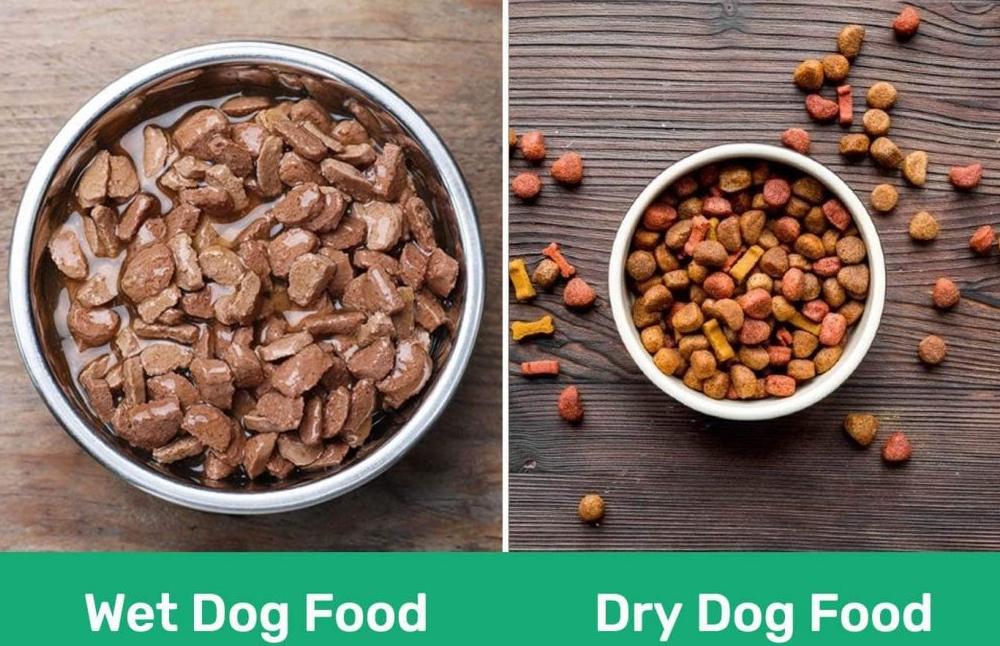
When Dry Food Is Better for Senior Dogs
Dental health maintenance: The abrasive texture of kibble provides some mechanical cleaning of tooth surfaces — not a replacement for dental care, but a modest daily benefit that wet food does not provide.
Weight management: Senior dogs prone to obesity benefit from the lower moisture content of kibble, which makes precise calorie control easier. Wet food’s higher volume per calorie can be advantageous or problematic depending on the dog’s tendency. See how to tell if your dog is overweight.
Convenience and cost: Kibble is more practical for multi-dog households, automatic feeders, and budget-conscious owners. Cost per calorie is significantly lower.
The Best Approach: Combination Feeding
Many veterinary nutritionists recommend mixing dry and wet food for senior dogs — typically a base of kibble with wet food mixed in or served as a separate meal. This provides the dental benefits of kibble, the hydration and palatability benefits of wet food, and the nutritional variety that reduces the risk of developing food sensitivities. For label-reading guidance, see how to read a dog food ingredient label.
What to Look for in Senior Dog Food
Regardless of format, senior dog food should provide: moderate to high protein from named animal sources (maintains muscle mass), controlled phosphorus (supports kidney function), adequate omega-3 fatty acids (supports joints and cognitive function — see fish oil for dogs), glucosamine and chondroitin (joint support — see best glucosamine for senior dogs), and appropriate calorie density for the dog’s activity level.
Frequently Asked Questions
At what age should I switch to senior dog food?
Most veterinarians recommend transitioning to senior formulas at age 7 for large breeds and age 9 to 10 for small breeds. The transition should be gradual — mix increasing proportions of new food over 7 to 10 days to avoid digestive upset.
Is grain-free food better for senior dogs?
There is no evidence that grain-free diets benefit senior dogs unless the dog has a diagnosed grain allergy. The FDA is investigating a potential link between grain-free diets and heart disease in dogs. Most veterinary nutritionists recommend grain-inclusive diets for senior dogs unless a specific allergy is confirmed.
More FurlyHome Guides
- How to Read a Dog Food Ingredient Label
- How to Tell If Your Dog Is Overweight
- How to Help Dog with Joint Pain
- Best Omega-3 Fish Oil for Dogs
Verdict
For most senior dogs, a combination of dry and wet food provides the best balance: kibble for dental maintenance and calorie control, wet food for hydration and palatability. Choose wet food when dental disease, kidney issues, or appetite loss are primary concerns. Choose dry food when weight management and cost are priorities. Both formats can meet senior nutritional needs — what matters most is protein quality, appropriate supplementation, and consistency with your senior dog’s individual health requirements.







Write Your Review
No reviews yet. Be the first to share your experience!