

Why Pet Urine Has Such a Powerful Smell
Pet urine smells strong because it contains uric acid, ammonia, and bacterial metabolites that intensify as the urine dries and ages. Fresh pet urine has a relatively mild odor, but as bacteria break down urea into ammonia, the smell becomes sharper and more pungent within hours. Cat urine is particularly notorious because it contains higher concentrations of urea and felinine, a sulfur-containing amino acid unique to cats that produces volatile compounds as it degrades. Understanding this chemistry is the first step toward actually solving the odor problem rather than just masking it with air fresheners. If you’re currently dealing with lingering pet odor throughout your home, our guide on how to get dog smell out of your house permanently covers a whole-house approach.
The Three Chemical Stages of Urine Odor
Stage one begins immediately after your pet urinates. Fresh urine is slightly acidic with a pH around 6.0 to 6.5 and contains urea, creatinine, uric acid, sodium, potassium, and various proteins. At this point, the smell is noticeable but manageable. Stage two starts within 24 hours as bacteria begin breaking urea down into ammonia through a process called hydrolysis. The pH shifts from acidic to alkaline, typically reaching 9.0 or higher. This alkaline shift is what makes the ammonia smell intensify dramatically. Stage three is the real problem. Uric acid, which is barely soluble in water, crystallizes as the urine dries. These microscopic crystals bind to carpet fibers, wood grain, and fabric threads. They can remain dormant for months or even years, reactivating every time humidity rises or the surface gets wet. This is why a carpet can smell fine for weeks and then suddenly reek after a rainy day.
Why Cat Urine Smells Worse Than Dog Urine
Cat urine contains felinine, an amino acid that cats produce as a territorial marker. When felinine breaks down through bacterial and oxidative processes, it produces 3-mercapto-3-methylbutan-1-ol (MMB), an extremely potent thiol compound. Thiols are among the most odorous molecules known to chemistry, and MMB has a detection threshold of just a few parts per billion. This means even trace amounts are detectable by the human nose. Intact male cats produce the highest concentrations of felinine, which is why unneutered tomcat urine has the most intense odor. Female cats and neutered males still produce felinine but in lower quantities.
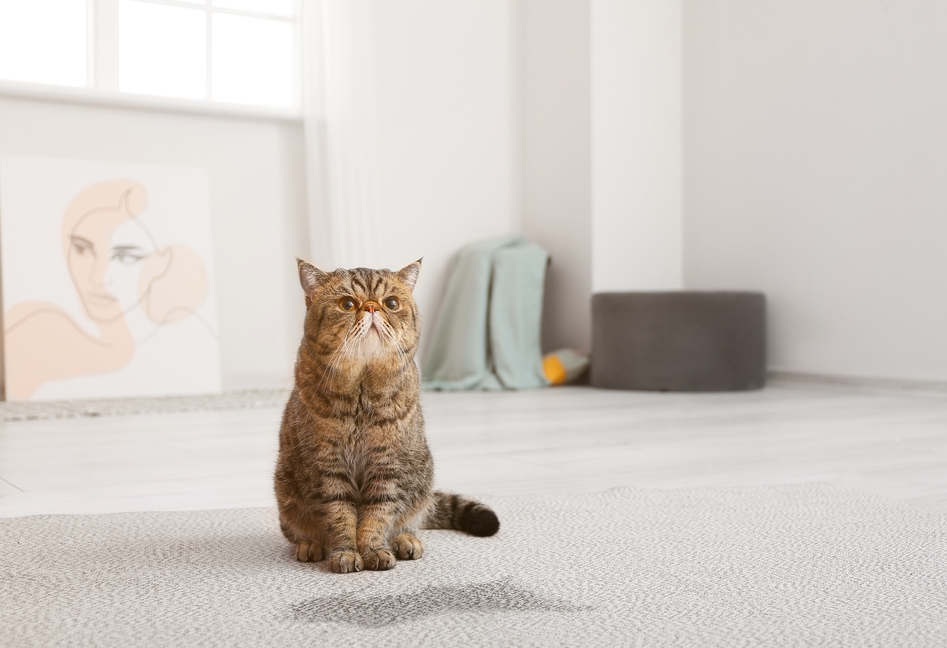
Dog urine, while still unpleasant, lacks felinine entirely. Its odor comes primarily from ammonia, various volatile organic compounds, and bacterial byproducts. Dog urine volume tends to be larger per incident, which means more total uric acid deposited on surfaces, but the concentration per milliliter is generally lower than cat urine. Diet significantly affects urine odor in both species. High-protein diets increase urea concentration, and certain amino acids like asparagine produce more pungent breakdown products. Dehydrated pets produce more concentrated urine with stronger odor, which is one reason indoor cats who don’t drink enough water often have particularly pungent urine. For cat owners specifically, our guide on how to get cat pee smell out of carpet addresses the unique challenges of feline urine removal.
Why the Smell Comes Back After Cleaning
The most frustrating aspect of pet urine odor is its tendency to return after you’ve cleaned the area. This happens because most household cleaners fail to break down uric acid crystals. Standard cleaners, including soap, vinegar, and baking soda, can remove the water-soluble components of urine, specifically urea, urochrome (the yellow pigment), and surface bacteria. The area smells clean temporarily because the ammonia and bacterial components are gone. But the uric acid crystals remain embedded in the material. These crystals are not water-soluble and resist most cleaning agents. When humidity increases or the area gets wet again, the crystals release their stored compounds and the odor returns. This is why enzymatic cleaners outperform baking soda for urine specifically: enzymes like urease and uricase break the uric acid molecule into allantoin and carbon dioxide, both of which are odorless and easily rinsed away.
Why Uric Acid Crystals Are So Persistent
Uric acid has a molecular structure that makes it exceptionally stable. Its purine ring contains nitrogen atoms that form strong hydrogen bonds with textile fibers, wood cellulose, and even concrete pores. Once crystallized, uric acid has very low water solubility, roughly 6 milligrams per 100 milliliters at room temperature. For comparison, table salt dissolves at about 36 grams per 100 milliliters, making it roughly 6,000 times more soluble than uric acid. This extreme insolubility is why hot water, steam cleaning, and vigorous scrubbing often fail to remove the smell completely.
Temperature and humidity dramatically affect how uric acid crystals behave. In dry conditions, the crystals remain compact and relatively inert. When relative humidity exceeds 50 to 60 percent, the crystals absorb moisture from the air through a process called deliquescence, partially dissolving and releasing volatile compounds. This explains the common experience of pet odor worsening during rainy seasons or in humid climates. Air conditioning helps not just because it cools the air, but because it dehumidifies, keeping uric acid crystals in their dormant state.
Health Conditions That Change Urine Odor
If your pet’s urine suddenly smells different or significantly stronger, it may indicate a health issue worth discussing with your veterinarian. Urinary tract infections cause bacteria to proliferate in the bladder, producing additional ammonia and other volatile compounds that make the urine smell foul or unusually strong. Kidney disease reduces the kidneys’ ability to concentrate waste products efficiently, often producing urine that smells different from normal. Diabetes mellitus can cause sweet or fruity-smelling urine due to the presence of ketones, a byproduct of fat metabolism when glucose isn’t being processed correctly.
Dehydration is the most common non-pathological cause of strong-smelling urine. When pets don’t drink enough water, their kidneys concentrate waste products into a smaller volume of urine, making each drop more odorous. This is particularly common in cats, who evolved as desert animals and have a naturally low thirst drive. Ensuring adequate water intake, especially for cats, can meaningfully reduce urine odor intensity. Some veterinarians recommend wet food for cats partly for this reason, as it contributes to overall hydration. Diet changes can also affect odor: fish-based foods tend to produce more pungent urine than poultry-based formulas due to differences in amino acid profiles.
How Different Surfaces Trap Urine Odor
Not all surfaces hold urine odor equally. Carpet is the worst offender because urine soaks through the visible carpet fibers, saturates the carpet pad underneath, and can reach the subfloor. The carpet pad acts like a sponge, holding urine and providing an ideal environment for bacterial growth. Even professional carpet cleaning often fails to reach the pad, which is why repeated accidents in the same spot can make permanent odor removal nearly impossible without replacing the pad entirely.
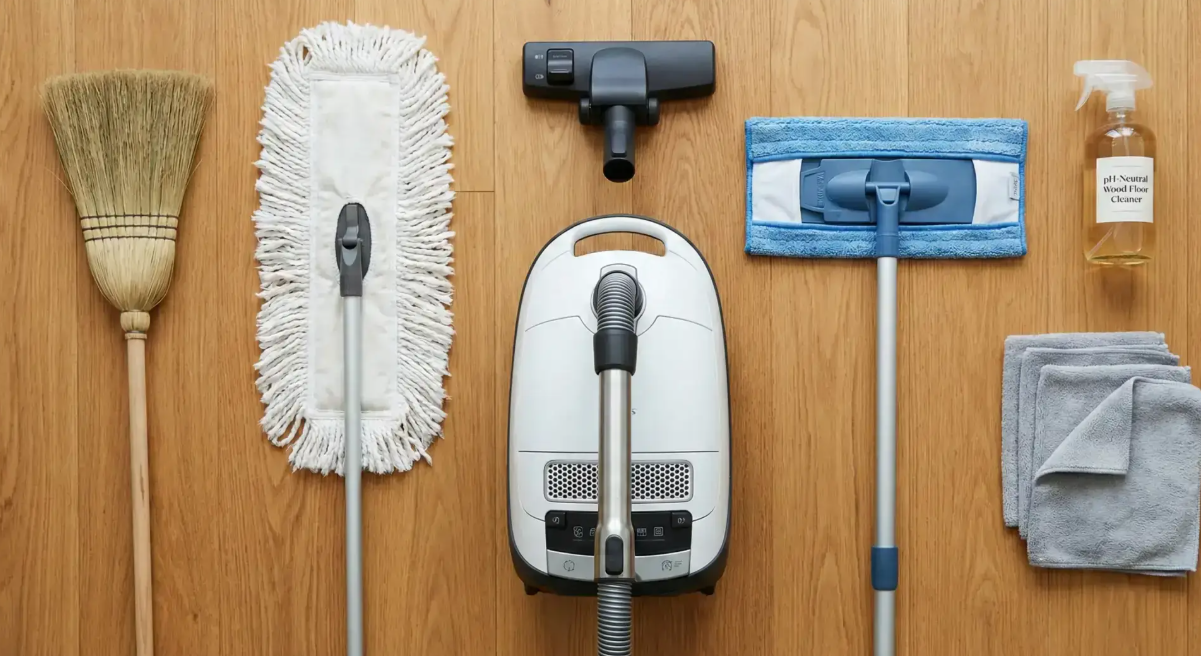
Hardwood floors present a different challenge. Sealed hardwood resists urine penetration for the first several minutes, giving you a window to clean up before damage occurs. But if urine sits for hours, it seeps into the seams between boards and penetrates the finish. Once urine reaches raw wood, the uric acid bonds with wood cellulose and can darken the wood permanently. Our detailed guide on cleaning dog pee off hardwood floors covers time-sensitive steps for each stage of penetration.
Concrete in garages and basements is surprisingly porous. Unsealed concrete can absorb urine to a depth of several inches, making surface cleaning ineffective. Sealing concrete before using it as a pet area is far easier than trying to deodorize it afterward. Tile and laminate surfaces are generally the easiest to clean because their non-porous surfaces prevent urine absorption, though grout lines between tiles can trap urine if not sealed properly.
The Only Approach That Actually Works Long-Term
Effective pet urine odor removal requires addressing all three chemical components: the water-soluble waste (urea, salts), the bacterial population, and the uric acid crystals. No single product handles all three. The most reliable approach uses enzymatic cleaners as the primary treatment. These products contain specific bacterial cultures that produce enzymes (protease, urease, and lipase) capable of breaking down all organic components of urine, including uric acid. The bacteria need time and moisture to work, typically 10 to 24 hours of dwell time on the affected area.
For best results, saturate the affected area with enzymatic cleaner to the same depth the urine penetrated. This means for carpet, you need to soak through to the pad. Cover the area with plastic wrap to maintain moisture and prevent the cleaner from drying out before the enzymes finish working. Avoid using other cleaners before the enzymatic treatment, as many chemicals, particularly bleach, ammonia-based cleaners, and strong detergents, kill the beneficial bacteria in the enzymatic formula and render it useless. If you’ve been relying on household remedies, our comparison of enzymatic cleaners vs baking soda explains exactly where each method succeeds and fails. For the best commercial options, check our roundup of the best enzymatic cleaners for dog urine.
Preventing Future Odor Problems
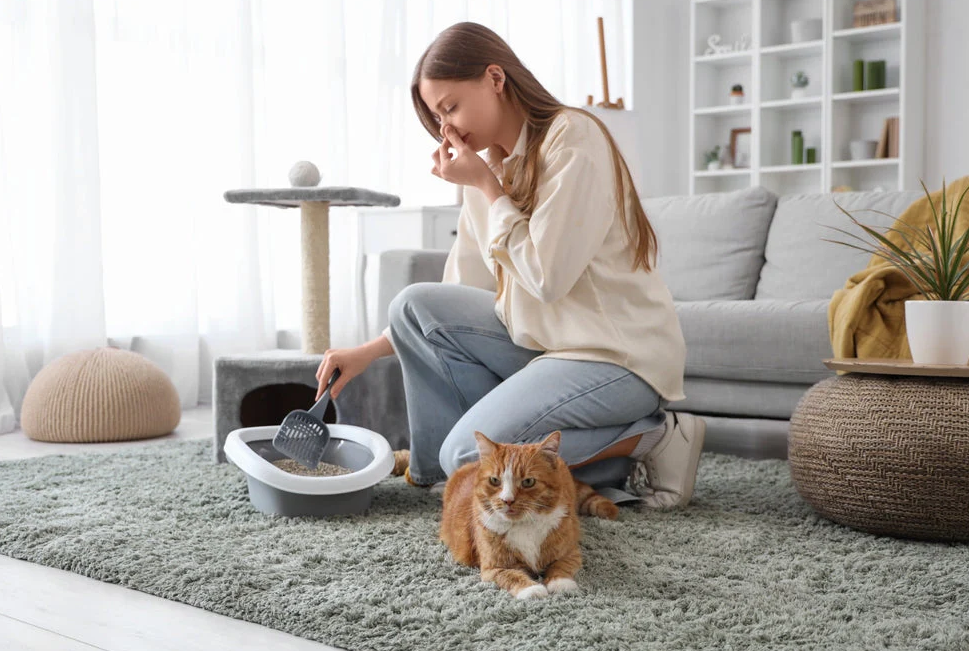
Prevention is more effective than remediation. For dogs, prompt cleanup within 15 minutes of an accident prevents most long-term odor issues. Keep enzymatic cleaner accessible rather than buried under the sink. For cats, maintaining a clean litter box is the single most important factor. Most cats will avoid a dirty box and find alternative locations, which is how carpet and furniture problems begin. The general guideline is one litter box per cat plus one extra, scooped daily and fully changed weekly.
Consider your flooring materials when living with pets. Porcelain tile, luxury vinyl plank, and sealed concrete are the most urine-resistant options. If you have carpet, treat it with a protective sealant designed for pet households. For hardwood floors, maintain the polyurethane finish and refinish every 3 to 5 years to prevent urine penetration. And ensure your pets stay well-hydrated: more dilute urine means less concentrated odor compounds per incident. Biscuit drinks roughly 40 to 50 ounces of water daily, which keeps his urine light yellow and far less odorous than when he occasionally gets picky about his water bowl. Our guide to the best odor eliminators for pet owners covers maintenance products for ongoing odor management between deep cleans.
Frequently Asked Questions
Why does pet urine smell get worse over time?
Pet urine odor intensifies because bacteria convert urea into ammonia while uric acid crystallizes and concentrates as the liquid evaporates. These crystals are extremely stable and can reactivate for years when exposed to moisture, making old stains smell nearly as strong as fresh ones during humid weather.
Why does my house smell like pet urine when it rains?
Humidity reactivates dormant uric acid crystals embedded in carpet fibers, wood, and other porous materials. When relative humidity exceeds 50 to 60 percent, these crystals absorb moisture and release volatile odor compounds. This means old, seemingly resolved urine stains can produce noticeable odor during rain or in humid seasons.
Does neutering or spaying reduce urine odor?
Neutering significantly reduces urine odor in male cats because it lowers production of felinine, the sulfur-containing amino acid responsible for the most pungent compounds in cat urine. Neutered male cats produce substantially less felinine than intact males. In dogs, the effect on odor is less dramatic but still present, as hormonal changes slightly alter urine composition.
Can old pet urine stains be completely removed?
Old pet urine stains can be removed if the uric acid crystals haven’t permanently damaged the material. Enzymatic cleaners applied with adequate dwell time (12 to 24 hours) can break down even crystallized uric acid. However, urine that has penetrated carpet padding, unsealed wood, or concrete may require material replacement rather than cleaning, as the crystals can be too deeply embedded to reach.



Write Your Review
No reviews yet. Be the first to share your experience!