

When Should I Take My Dog to the Vet?
The most practical framework is urgency-based triage: true emergencies that require immediate care (within minutes to hours), urgent issues that need same-day or next-day attention, and non-urgent concerns that can wait for a scheduled appointment. Misjudging in either direction is costly — rushing to an emergency vet for a minor issue wastes hundreds of dollars, while waiting on a genuine emergency risks your dog’s life.
Emergency: Go to the Vet Immediately
These symptoms require immediate veterinary care — call ahead while driving so the clinic can prepare.
Difficulty breathing: Rapid, labored, or noisy breathing at rest. Blue or grey gums. This indicates oxygen deprivation and is always urgent.
Bloated or distended abdomen with restlessness: Gastric dilatation-volvulus (GDV/bloat) is life-threatening, especially in large deep-chested breeds like German shepherds, goldens, and Great Danes. The stomach twists and cuts off blood supply. Death can occur within hours without surgery.
Seizures lasting more than 2 minutes or multiple seizures in succession. A single brief seizure (under 60 seconds) in an otherwise normal dog should be reported to your vet but is not always an immediate emergency. Prolonged or repeated seizures cause brain damage.
Inability to stand or sudden paralysis. Particularly in dachshunds and other long-bodied breeds — this may indicate IVDD requiring emergency surgery. See why dachshunds have back problems.
Uncontrolled bleeding, severe trauma, or suspected poisoning. If your dog ingested a toxic substance, call the ASPCA Poison Control (888-426-4435) or your vet immediately. See safe and toxic foods list.
Collapse or unresponsiveness. Any loss of consciousness requires immediate veterinary evaluation.
Urgent: Same Day or Next Day
Persistent vomiting or diarrhea: Occasional vomiting is normal. Vomiting more than 3 times in 24 hours, vomiting with blood, or vomiting combined with lethargy needs same-day attention. Diarrhea lasting more than 48 hours or containing blood also qualifies as urgent.
Refusing food for more than 24 hours: A dog skipping one meal is usually nothing. Missing two or more meals — especially when combined with lethargy — warrants a vet call.
Severe limping or inability to bear weight: Particularly if sudden onset. See how to tell if your dog is in pain for assessment guidance.
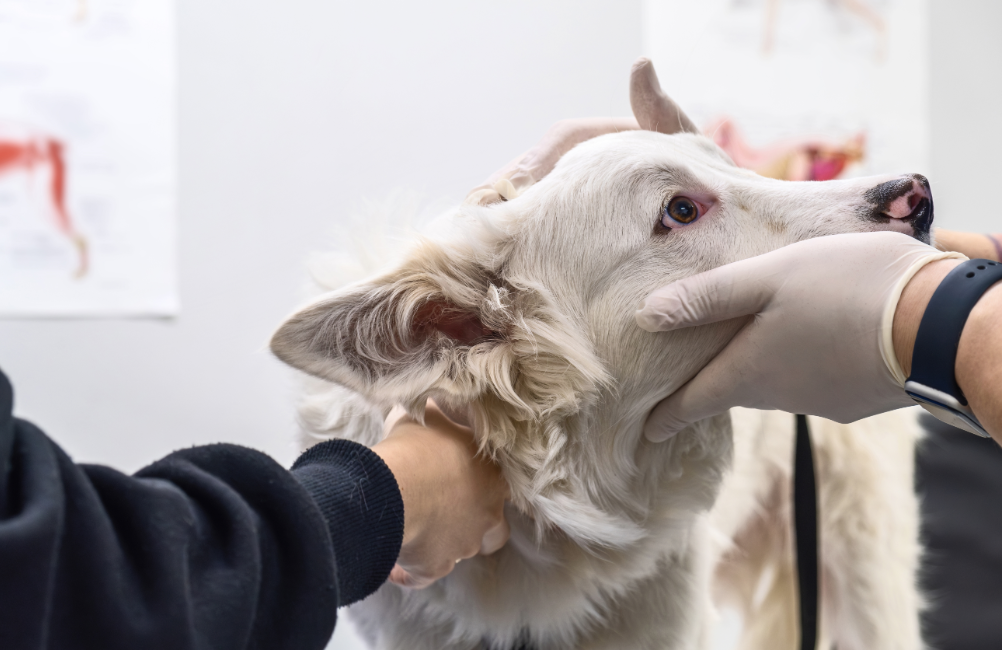
Significant eye issues: Squinting, excessive tearing, visible redness, swelling, or discharge. Eye conditions can deteriorate rapidly — same-day evaluation is appropriate.
Urinary issues: Straining to urinate, blood in urine, or inability to urinate. A male dog that cannot pass urine is a true emergency — urinary blockage is life-threatening.
Non-Urgent: Schedule an Appointment
Mild limping that improves with rest. Monitor for 48 hours. If limping persists or worsens, upgrade to urgent.
Skin changes: New lumps or bumps, mild rashes, mild hair loss, or changes in coat quality. These are important to evaluate but rarely urgent — schedule within one to two weeks.
Ear issues: Head shaking, ear scratching, or mild ear odor without severe pain. Ear infections are uncomfortable but not emergencies — schedule within a few days.
Mild digestive changes: Slightly soft stools, minor appetite changes, or occasional vomiting (once or twice) without other symptoms. Monitor and schedule if it persists beyond 48 hours.
Behavior changes: Subtle shifts in energy, mood, or habits that do not fit the urgent criteria above. These are worth discussing at the next appointment or scheduling a check-up if they persist for more than a week.
Routine Vet Visits
For cost management, see how much does dog insurance cost per month.
Frequently Asked Questions
My dog ate something it should not have — when do I call the vet?
Call immediately if the item is toxic (chocolate, xylitol, grapes), sharp (bone fragments, needles), or large enough to cause blockage. For non-toxic items the dog can likely pass (small pieces of fabric, paper), monitor for vomiting, lethargy, or loss of appetite over 24 hours and call if symptoms appear.
Is it worth going to an emergency vet at night?
Yes for true emergencies — breathing difficulty, bloat, seizures, collapse, inability to urinate, and severe trauma cannot wait until morning. For urgent-but-not-emergency issues, most can wait for a morning vet visit if the dog is otherwise stable, alert, and comfortable.
More FurlyHome Pet Health Guides
- How to Tell If Your Dog Is in Pain
- How Much Does Dog Insurance Cost Per Month?
- What Human Food Can Dogs Eat Safely?
- How to Calm an Anxious Dog at Home
Verdict
The key skill is urgency triage: breathing problems, bloat, seizures, paralysis, and uncontrolled bleeding are true emergencies requiring immediate care. Persistent vomiting, severe limping, urinary issues, and food refusal beyond 24 hours need same-day or next-day attention. Mild skin changes, ear issues, and subtle behavior shifts can wait for scheduled appointments. When in doubt, call your vet — a phone consultation costs nothing and helps you make the right decision about whether to come in.
| Life Stage | Recommended Frequency | Focus Areas |
| Puppy (under 1 year) | Every 3-4 weeks until 16 weeks for vaccines | Vaccinations, deworming, spay/neuter discussion |
| Adult (1-7 years) | Annual wellness exam | Vaccines, dental check, weight, bloodwork baseline |
| Senior (7+ years) | Every 6 months | Bloodwork, joint assessment, dental, cancer screening |










Write Your Review
No reviews yet. Be the first to share your experience!