

How to Give a Dog a Pill at Home
Start with the least stressful method and escalate only if needed. Most dogs accept pills hidden in food. Dogs that consistently detect and spit out pills may require the direct (manual) method. The key principle: stay calm, be quick, and make the experience as positive as possible. A stressed owner creates a stressed dog, which makes pill-giving harder for both of you.
Method 1: Hide in a Pill Pocket or Treat
Commercial pill pockets (Greenies Pill Pockets are the most widely available) are soft, moldable treats with a hollow center designed to enclose a pill. Press the pill into the center, seal the treat around it, and offer it as a normal treat. This works for the majority of dogs, particularly food-motivated breeds like Labradors and golden retrievers.
If your dog detects the pill in a commercial pocket, try wrapping the pill in a small piece of cheese, a thin slice of deli turkey, a spoonful of peanut butter (check for xylitol — see safe human foods for dogs), or a piece of banana. The key is using just enough food to cover the pill without making the treat so large that the dog has to chew it extensively, which increases the chance of detecting the pill.
Method 2: The Three-Treat Technique
This method exploits the dog’s anticipation reflex. Prepare three identical treats: the first without a pill, the second with the pill hidden inside, and the third without a pill. Give the first treat to build trust and excitement. Immediately offer the second (pill) treat while the dog is still chewing the first and can see the third treat waiting. The dog is focused on swallowing quickly to get the next treat rather than examining what is in its mouth. Give the third treat immediately as a reward.
Method 3: Mix into Wet Food
For small pills, mix the pill into a small amount of wet food — not a full meal, but a tablespoon or two. The dog should eat the doctored portion quickly before being given the rest of the meal. This works less reliably than wrapping in a treat because some dogs eat around pills even in wet food, and if the dog does not finish the doctored portion, you cannot be sure the pill was consumed.
Check with your vet whether the specific medication can be mixed with food. Some medications must be given on an empty stomach or lose efficacy when taken with certain foods.
Method 4: Crush and Mix (If Allowed)
Some pills can be crushed and mixed into food or a small amount of broth. This eliminates the solid pill entirely. However, many medications cannot be crushed — enteric-coated tablets, extended-release formulations, and some antibiotics lose their effectiveness or become dangerous when crushed. Always confirm with your vet or pharmacist before crushing any medication.
Method 5: Manual Technique (Direct Pill Placement)
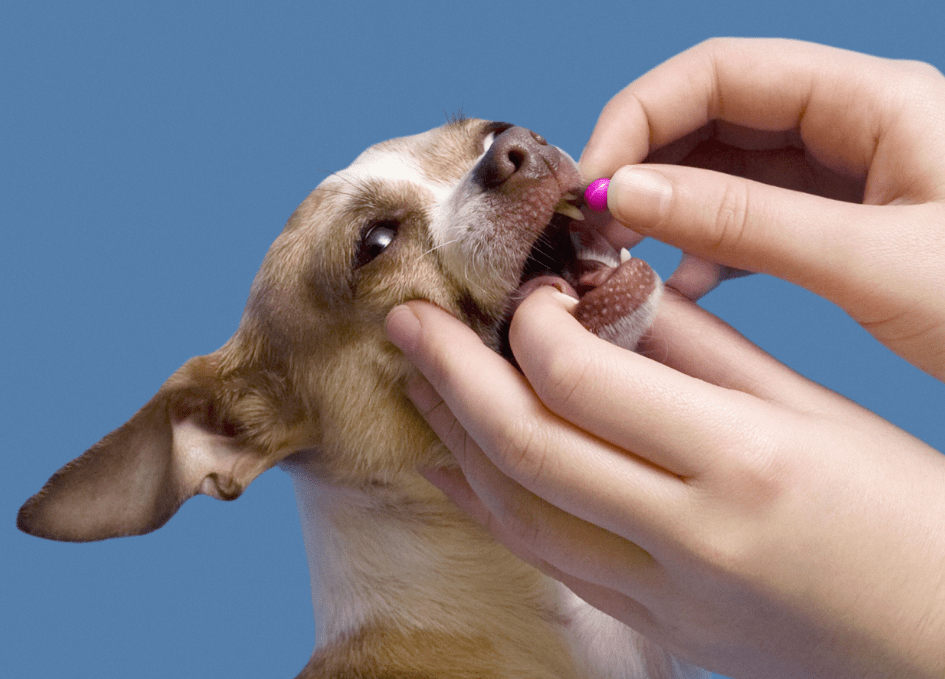
When hiding fails — and with some dogs, it will — the manual technique is reliable when done correctly.
Step 1: Hold the pill between the thumb and index finger of your dominant hand.
Step 2: With your non-dominant hand, gently tilt the dog’s head upward by placing your hand over the top of the muzzle and pressing gently inward on the upper lips, just behind the canine teeth. This naturally opens the mouth.
Step 3: Place the pill as far back on the tongue as you can reach — past the hump of the tongue. If the pill lands too far forward, the dog will push it out.
Step 4: Close the mouth gently and hold it closed while stroking the throat downward to encourage swallowing. Blowing gently on the nose can also trigger the swallow reflex.
Step 5: Release and immediately offer a treat or praise. Check the floor — some dogs hold the pill and spit it out after you release their mouth.
Method 6: Pill Gun (Pill Popper)
A pill gun is a syringe-like device that places the pill at the back of the throat without putting your fingers in the dog’s mouth. Useful for dogs that bite, are head-shy, or have strong jaws. Load the pill into the end of the device, open the dog’s mouth as described above, insert the device to the back of the tongue, and press the plunger. Follow with water from a syringe to encourage swallowing.
Tips for Difficult Dogs
Do not let the dog see you prepare the pill. Dogs that have learned to associate certain actions with pill-giving will become avoidant before you even approach them. Prepare everything out of sight.
Stay calm and matter-of-fact. Anxiety and hesitation communicate to the dog that something unpleasant is happening. Approach with the same energy you would use for a normal treat.
Ask your vet about alternatives. Many medications are available in flavored chewable formulations, liquid suspensions, or compounding pharmacies can create flavored versions. If pill administration is genuinely distressing for you or the dog, these alternatives may be worth the extra cost.
Frequently Asked Questions
What if my dog bites when I try to give a pill?
Use a pill gun device to keep your fingers away from the teeth. If the dog is aggressive during pill administration, consult your vet about liquid or chewable medication alternatives. Never force a visibly distressed or aggressive dog — the risk of a bite injury is not worth it.
Can I give pills with milk or dairy?
Small amounts of cheese or plain yogurt are fine for most dogs as a pill-hiding vehicle. However, some antibiotics (particularly tetracycline-class drugs) bind to calcium in dairy and lose effectiveness. Check with your vet whether your specific medication interacts with dairy.
More FurlyHome Pet Health Guides
- What Human Food Can Dogs Eat Safely?
- How to Tell If Your Dog Is in Pain
- When Should I Take My Dog to the Vet?
- How to Calm an Anxious Dog at Home Naturally
Verdict
Most dogs accept pills hidden in food — pill pockets, cheese, or the three-treat technique work for the majority. For dogs that detect and reject hidden pills, the manual technique or a pill gun is reliable when done confidently and quickly. The most important factors are preparation out of the dog’s sight, calm energy during administration, and an immediate reward after. If pill administration is a consistent struggle, ask your vet about liquid or chewable alternatives.





Write Your Review
No reviews yet. Be the first to share your experience!