

Why Cat Urine Is Harder to Remove Than Dog Urine
Cat urine contains felinine, a sulfur-based amino acid that no other common household pet produces. As felinine breaks down through bacterial action and oxidation, it produces 3-mercapto-3-methylbutan-1-ol, a thiol compound detectable by the human nose at concentrations of a few parts per billion. This is the same class of compounds that gives skunk spray its potency. Cat urine also tends to be more concentrated than dog urine because cats evolved as desert animals with highly efficient kidneys that conserve water by producing smaller volumes of more concentrated waste. The combination of felinine-derived thiols and higher overall waste concentration means cat urine requires more aggressive treatment than dog urine, and the margin for error is smaller. If the first cleaning attempt doesn’t reach every affected fiber and all the way into the carpet pad, the odor will return.
Step 1: Find Every Affected Area
Cats often urinate in the same spot repeatedly once they’ve established a location outside the litter box. Before treating any visible stains, use a UV blacklight in a darkened room to identify all affected areas. Cat urine fluoresces bright yellow-green under UV light. Mark the boundaries of each stain with painter’s tape, extending the marked area 3 to 4 inches beyond the visible fluorescence because urine wicks outward through carpet fibers. You may find stains you didn’t know existed, which explains lingering odor that seemed to come from nowhere. Check behind furniture, along baseboards, near doors, and in closets, as cats prefer quiet, enclosed areas for inappropriate elimination.
Step 2: Blot Fresh Stains or Rehydrate Old Ones
For fresh urine, blot with paper towels or clean white cloths, pressing firmly to absorb as much liquid as possible. Do not rub. For dried stains, apply warm water to the area and allow it to sit for 10 minutes to rehydrate the uric acid crystals and felinine residue before treatment. Rehydrating old stains is essential because enzymatic cleaners need moisture to activate the bacterial cultures, and dry uric acid crystals are more resistant to treatment than hydrated ones.
Step 3: Saturate With Enzymatic Cleaner
Apply enzymatic cleaner generously. The most common treatment failure is under-application. Cat urine in carpet doesn’t just sit on the surface fibers; it soaks through the carpet pile, saturates the carpet pad, and can reach the subfloor. Your enzymatic cleaner must reach the same depth. For a typical 12-inch diameter stain, expect to use 8 to 12 ounces of enzymatic cleaner. Pour the cleaner directly onto the stain and allow it to soak through to the pad. You should be able to feel dampness if you press firmly on the carpet surrounding the stain.
Cover the treated area with a sheet of plastic wrap or a plastic bag weighted with a book. This prevents the enzymatic solution from evaporating before the bacteria complete their work. Evaporation is the enemy: if the treatment dries prematurely, the bacteria die and partially processed uric acid remains, still capable of producing odor. Leave the plastic covering for 12 to 24 hours. For severe or old stains, a second application after the first has dried may be necessary. For product selection, our guide to the best enzymatic cleaners covers options that work on both cat and dog urine.
Step 4: Neutralize Remaining Odor
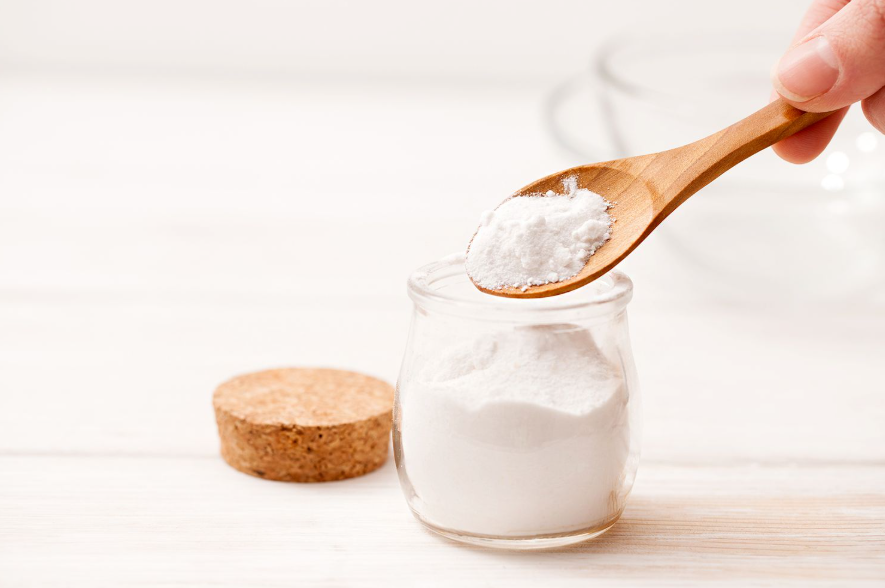
After the enzymatic treatment has dried completely (24 to 48 hours after removing the plastic wrap), assess the odor. If a faint smell remains, sprinkle baking soda over the treated area and leave it for 12 to 24 hours, then vacuum thoroughly. Baking soda adsorbs residual volatile compounds that the enzymatic treatment may have loosened but not fully eliminated. Do not apply baking soda while the area is still damp from enzymatic cleaner, as the alkaline pH of baking soda will kill the beneficial bacteria. For understanding why this sequencing matters, our comparison of enzymatic cleaners vs baking soda explains the chemistry of each approach.
Step 5: Verify Complete Removal
Wait 3 to 5 days after treatment, then check the area with the UV blacklight again. Successfully treated areas will show reduced or no fluorescence. Also check during a humid day or after running a humidifier near the area, as residual uric acid crystals will reactivate and produce odor if any remain. If the smell returns under humid conditions, a second enzymatic treatment targeting the carpet pad is necessary. In some cases, particularly with old, repeated staining, the carpet pad must be replaced because it has absorbed more urine than surface treatment can reach.
When the Carpet Pad Must Be Replaced
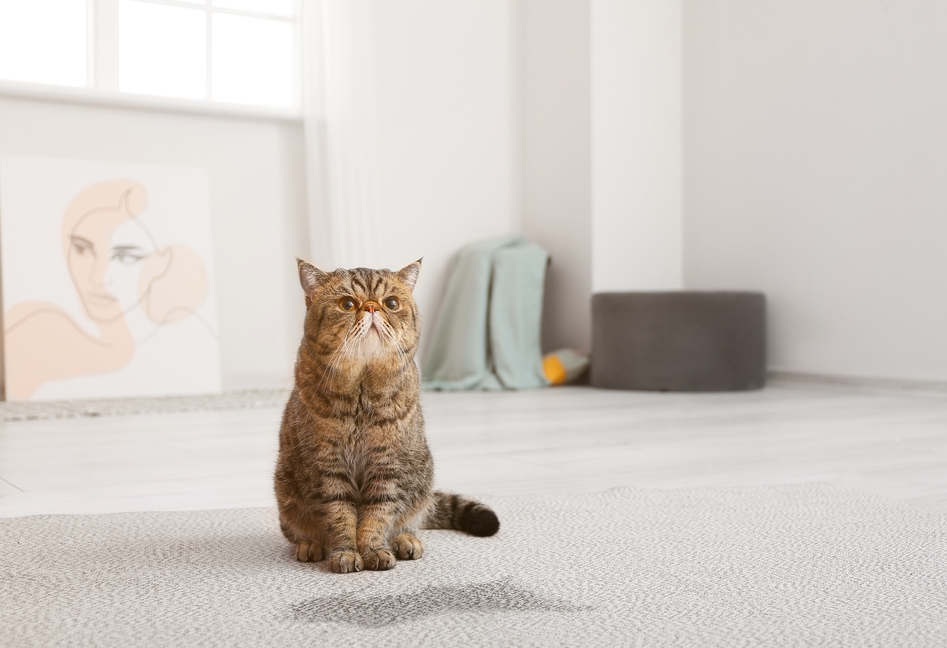
If a cat has urinated in the same spot repeatedly over weeks or months, the carpet pad has likely absorbed urine to the point where enzymatic treatment cannot penetrate deeply enough. Signs that pad replacement is necessary include odor that returns after two complete enzymatic treatments, visible staining or dampness when the carpet is pulled back from the tack strip, and a musty or ammonia smell that emanates from the floor level even when the carpet surface smells clean. Pad replacement is a localized repair: a professional can cut out and replace just the affected section rather than re-padding the entire room. The subfloor should be sealed with a shellac-based primer (such as Zinsser BIN) before installing new pad to prevent any residual odor from migrating upward.
Preventing Future Accidents
Cats urinate outside the litter box for specific reasons, and cleaning the stain without addressing the cause guarantees recurrence. The most common reasons are litter box aversion (box is dirty, wrong litter type, box is in a high-traffic location, or not enough boxes for multi-cat households), medical issues (urinary tract infection, kidney disease, diabetes, arthritis making box access painful), stress (new pets, new people, schedule changes, territorial disputes), and marking behavior (intact cats or cats responding to outdoor cats visible through windows). One litter box per cat plus one extra, scooped daily, is the standard recommendation. If a previously reliable cat starts eliminating outside the box, a veterinary visit should be the first step to rule out medical causes before assuming behavioral issues. For a comprehensive approach to pet urine science, our guide on why pet urine smells so strong covers the chemistry that drives both the problem and the solution.
Frequently Asked Questions
Does hydrogen peroxide remove cat urine odor from carpet?
Hydrogen peroxide (3 percent household concentration) can oxidize some odor compounds in cat urine and lighten visible staining, but it does not break down uric acid crystals or felinine-derived thiols effectively. It also bleaches many carpet dyes, making it risky on colored carpet. Enzymatic cleaners are more effective and safer for colored carpet because they work biologically rather than through oxidation.
Why does my cat keep peeing on the same carpet spot?
Cats return to previous elimination sites because they can detect residual urine scent at concentrations far below human detection thresholds. Even after cleaning that removes all odor detectable to you, trace compounds guide the cat back to the same location. Complete enzymatic treatment that destroys all uric acid and felinine residue is necessary to break this cycle. Until the spot is fully treated, block the cat’s access to it with furniture or a physical barrier.
Can professional carpet cleaning remove cat urine smell?
Professional hot water extraction can remove cat urine from carpet fibers more effectively than consumer-grade machines, but standard carpet cleaning solutions do not contain the enzymes necessary to break down uric acid crystals. Request enzymatic pre-treatment when booking a professional cleaning. Some carpet cleaning companies offer specific pet odor packages that include enzymatic application, extended dwell time, and subsurface extraction targeting the carpet pad.



Write Your Review
No reviews yet. Be the first to share your experience!