

Why General Cleaning Doesn’t Eliminate Dog Odor
Dog odor in a house comes from multiple simultaneous sources, and addressing only one or two leaves the overall smell largely unchanged. Sebaceous gland secretions in your dog’s skin produce oils that transfer to every surface your dog contacts. Apocrine glands in the paw pads and ears release proteins that bacteria break down into volatile fatty acids. Saliva residue from licking and chewing accumulates on toys, bedding, and furniture. And if your dog has ever had a urine or vomit accident, uric acid crystals may be embedded in flooring and upholstery where standard cleaning can’t reach them. Maple has a particular fondness for rubbing her face along our couch cushions, and after two years, those cushions held her scent so thoroughly that even guests who loved dogs would comment. Eliminating dog smell permanently requires a systematic approach that treats every odor source in order of severity.
Step 1: Identify and Treat Urine and Accident Spots First
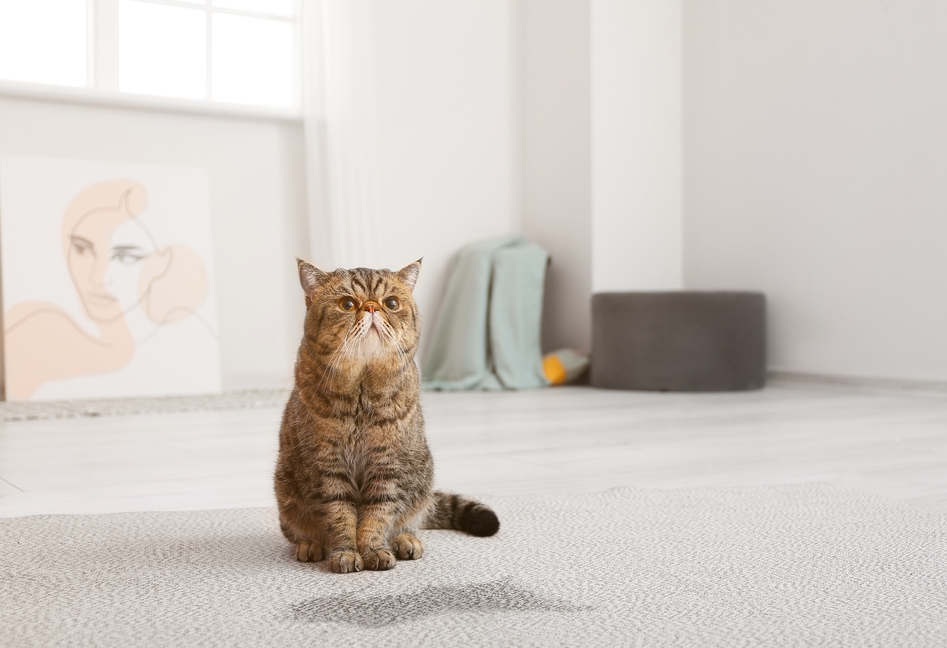
Before addressing general dog odor, locate and treat any old urine, vomit, or fecal accident sites. These produce concentrated odor that overpowers all other improvements. Use a UV blacklight in a darkened room to scan all carpeted areas, the base of furniture legs, and any spots your dog frequents when unsupervised. Treat each spot with enzymatic cleaner, saturating to the depth of the original accident. Cover with plastic wrap and allow 12 to 24 hours of dwell time. Do not skip this step. No amount of general deodorizing will overcome active uric acid deposits. For specific stain treatment protocols, see our guide on why pet urine smells so strong and how the chemistry determines the right approach.
Step 2: Deep Clean All Soft Surfaces
Carpet
Carpet fibers trap dog dander, oils, and hair at every level from the visible surface down to the carpet pad. Vacuuming removes only surface-level debris. Rent or purchase a hot water extraction carpet cleaner (commonly called a steam cleaner, though it uses hot water, not actual steam). Use an enzymatic carpet cleaning solution rather than standard carpet shampoo. Clean all carpeted rooms, moving furniture to treat the areas underneath. The carpet pad absorbs odor over time and cannot be cleaned in place. If your carpet has been in a dog household for more than 5 years without professional cleaning, replacing the pad while keeping the carpet is sometimes more cost-effective than repeated deep cleaning.
Upholstery and Fabric Furniture
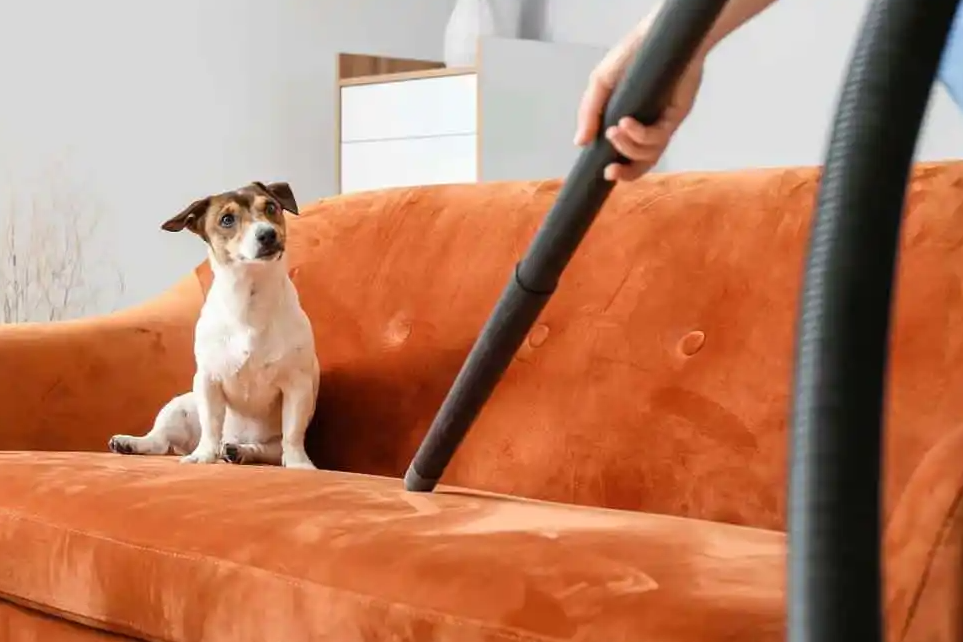
Remove all cushion covers and wash them on the hottest setting the fabric allows. For non-removable upholstery, use a handheld steam cleaner (real steam, above 200 degrees Fahrenheit) which kills odor-producing bacteria without chemicals. Follow with a light mist of enzymatic cleaner and allow to air dry. Pay attention to armrests, headrests, and any surface where your dog regularly rests, as these areas accumulate the heaviest concentration of skin oils.
Bedding, Blankets, and Dog Beds
Wash all pet bedding and any blankets your dog uses in hot water with one cup of white vinegar added to the rinse cycle. The vinegar helps break down oil residue that standard detergent can leave behind. For dog beds with non-removable covers, spray thoroughly with enzymatic cleaner and place in direct sunlight to dry. UV radiation from sunlight has a mild disinfecting effect and helps break down residual odor compounds. Replace dog beds that have been in use for more than 2 years without thorough cleaning, as the foam interior absorbs oils and bacteria that surface cleaning cannot reach.
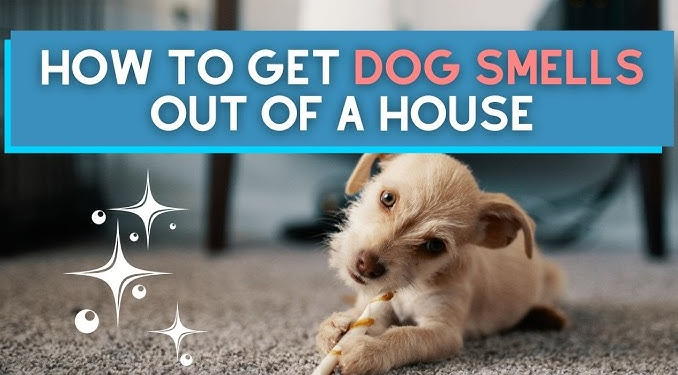
Step 3: Clean Hard Surfaces and Walls
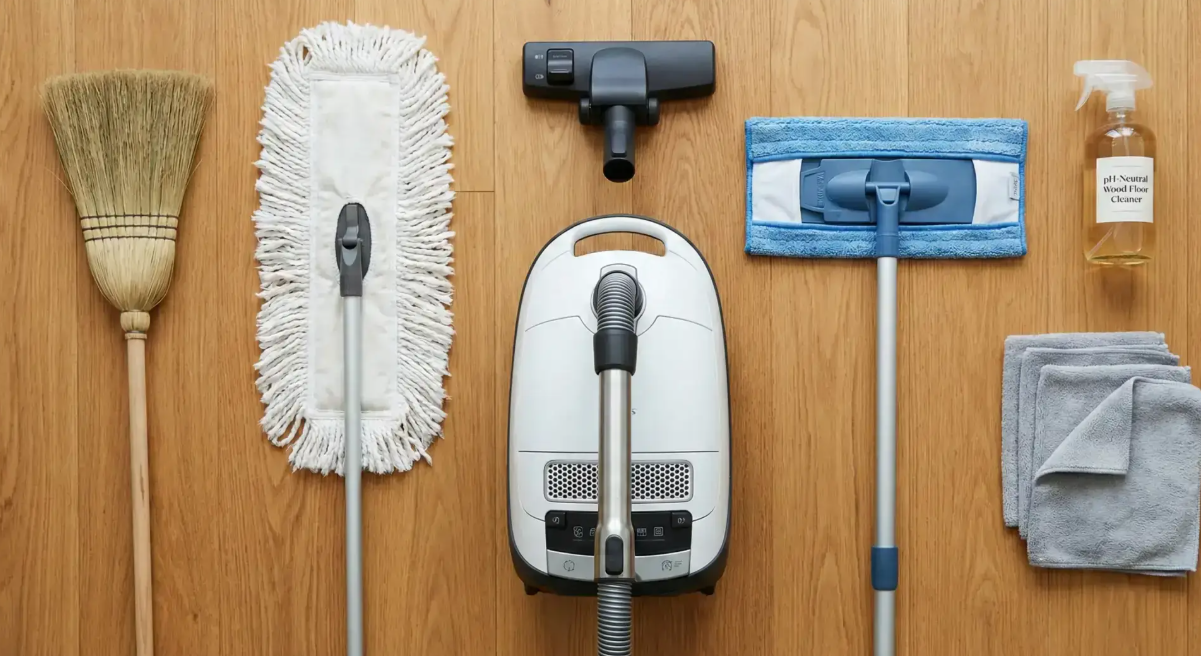
Dog odor molecules settle on walls, baseboards, door frames, and hard floors, especially in rooms with poor ventilation. Wash all walls from floor to roughly 4 feet high (the “dog contact zone”) with a solution of warm water and mild dish soap. Pay special attention to areas near dog beds, feeding stations, and doors where your dog waits. Clean baseboards and door frames with the same solution, as these surfaces collect oil residue from brushing contact. For hard floors, use a pH-neutral cleaner designed for your specific flooring material. Our guide to the best pet-safe hardwood floor cleaners covers products that clean effectively without leaving residue that attracts more dirt and odor.
Step 4: Address Your HVAC System
Your heating and cooling system circulates air through the entire house, and if the ductwork contains dog dander and hair, cleaned rooms will smell again within days. Replace all HVAC filters with high-efficiency filters rated MERV 11 or higher, which capture pet dander particles. Consider professional duct cleaning if the house has had dogs for more than 3 years without duct service. Clean all air return vents and registers with soapy water, as dander accumulates on the grilles. Running the HVAC fan continuously for 24 hours after deep cleaning helps circulate fresh air through the system and accelerates odor dissipation. An air purifier with activated carbon filtration in the most-used rooms provides ongoing odor control between deep cleans.
Step 5: Ongoing Maintenance to Prevent Odor Buildup
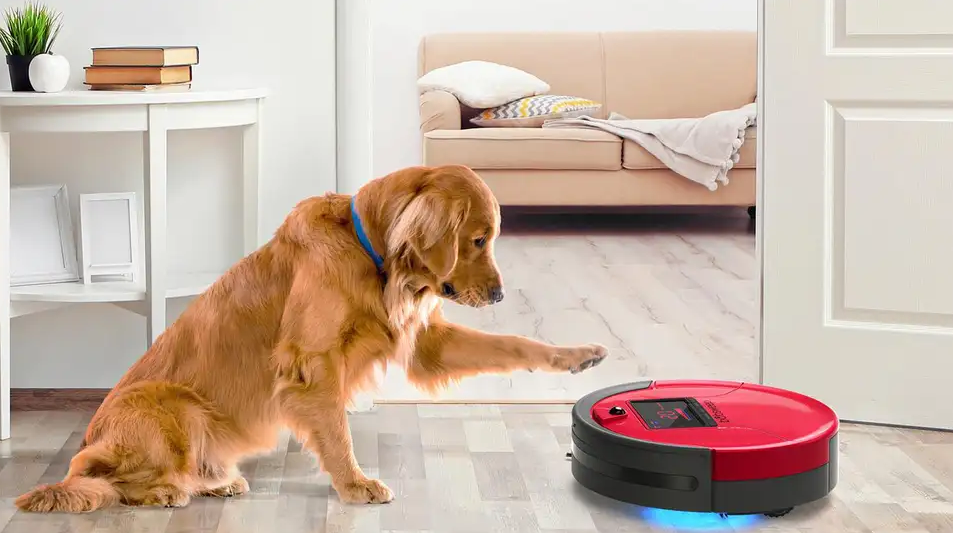
Permanent odor elimination requires consistent maintenance, not just one deep clean. Vacuum all carpeted areas and soft furniture at least twice weekly with a vacuum designed for pet hair. Wash dog bedding weekly. Bathe your dog every 4 to 6 weeks (more frequently causes dry skin and increases dander, which paradoxically worsens house odor). Wipe your dog’s paws and underbelly with a damp cloth after walks to reduce the amount of outdoor bacteria and dirt introduced into the house. Replace HVAC filters every 60 days rather than the standard 90-day cycle. For products that work between deep cleans, our best odor eliminators for pet owners guide covers daily-use options that complement rather than replace proper cleaning.
Frequently Asked Questions
How long does it take to fully remove dog smell from a house?
A thorough deep clean following the steps above takes 2 to 3 days of active work and 1 to 2 weeks for residual odors to fully dissipate. Enzymatic treatments need 12 to 24 hours per treated area. After the initial deep clean, maintaining an odor-free environment takes consistent weekly effort including vacuuming, bedding washing, and regular grooming.
Do air fresheners or candles help with dog odor?
Air fresheners and candles mask dog odor temporarily but do not remove it. Many contain volatile organic compounds that can irritate pets’ respiratory systems, particularly in dogs with brachycephalic (flat-faced) anatomy. Odor-neutralizing sprays containing cyclodextrin (the active ingredient in Febreze) can trap some odor molecules, but they work on airborne odor only and have no effect on odor embedded in surfaces.
Will an ozone generator remove dog smell permanently?
Ozone generators can oxidize airborne odor molecules effectively, but they require evacuating all people and pets from the space during treatment and for several hours afterward, as ozone is a respiratory irritant at the concentrations needed for odor removal. Ozone does not penetrate deeply into carpet pads or upholstery foam, so it works best as a supplement to physical cleaning rather than a replacement. Professional restoration companies use ozone as one step in a multi-step process.



Write Your Review
No reviews yet. Be the first to share your experience!