

How to Keep Your Outdoor Cat Safe
The average lifespan of an exclusively outdoor cat in the US is 2 to 5 years, compared to 12 to 18 years for an indoor cat. The risks — traffic, predators, disease, poison, and fights — are real and well-documented. However, many cats benefit from outdoor stimulation, and the research on welfare shows that indoor enrichment combined with safe outdoor access provides the best balance of safety and quality of life. The approaches below are ranked from safest to least restrictive.
Option 1: Catio (Enclosed Outdoor Space)
A catio — an enclosed outdoor structure connected to the house via a cat door or window — provides fresh air, sunlight, and outdoor stimulation with zero access to traffic, predators, or fights. Catios range from small window-box enclosures ($100-$300) to full backyard structures ($500-$3,000+). This is the gold standard for safe outdoor access and is recommended by most veterinary organizations.
Option 2: Cat-Proof Fencing
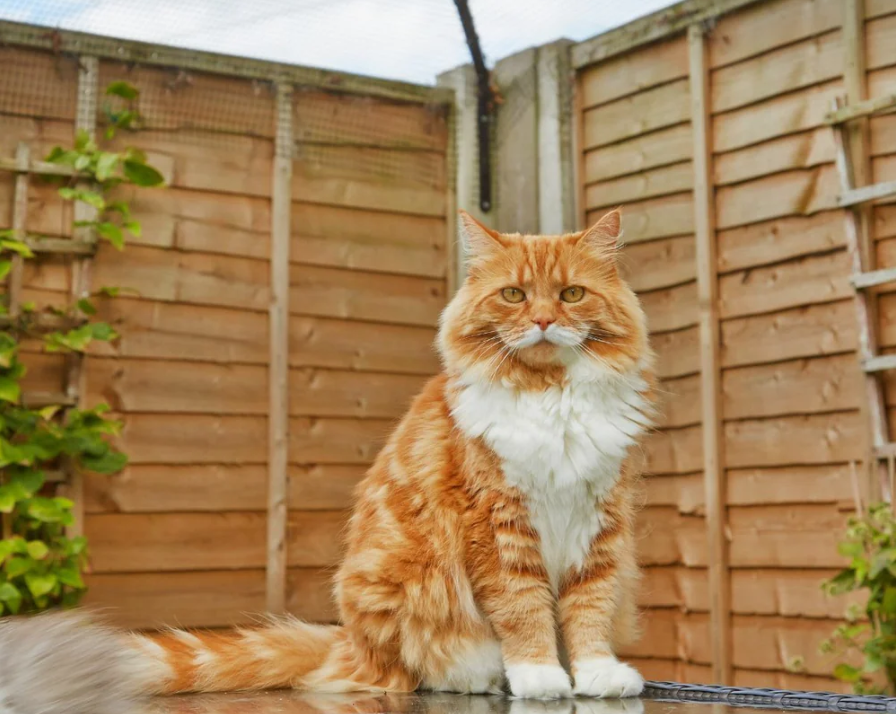
Roller bars or angled netting at the top of existing fences prevent cats from climbing over while allowing free movement within a fully enclosed yard. Systems like Oscillot (roller bar) and ProtectaPet (netting) are designed specifically for this purpose. Effective only if the yard has no gaps in fencing and no trees or structures that allow bypass.
Option 3: Harness and Leash
Supervised outdoor time on a harness and leash gives the cat direct outdoor experience under your control. Not all cats accept harness training — start indoors, let the cat wear the harness without the leash for several days, then add the leash indoors before attempting outdoor walks. Cats that panic or freeze on a harness should not be forced.
Option 4: Supervised Yard Time
Allowing the cat outdoors only when you are present and actively supervising. The cat is free in the yard but never unsupervised. This requires an enclosed or fenced yard and constant vigilance — cats can escape a standard fence in seconds. This is a compromise that provides some benefit but carries higher risk than the options above.
Essential Safety Measures for Any Outdoor Access
Microchip and collar with ID: Even with the safest outdoor setup, escapes happen. A microchip is permanent identification that cannot be lost.
Current vaccinations: Outdoor access increases exposure to feline diseases including FeLV, FIV, and rabies. Full vaccination is non-negotiable for any cat with outdoor exposure.
Flea and tick prevention: Year-round parasite prevention for any cat that goes outdoors, even briefly.
Spay or neuter: Prevents roaming, fighting, and unwanted litters — all of which increase outdoor risk substantially.
Indoor Enrichment as a Complement
Cats that transition from unrestricted outdoor access to supervised-only often need increased indoor enrichment to compensate: tall cat trees near windows, puzzle feeders, interactive play sessions, and bird feeders visible from indoor perches. See best cat trees for large cats for indoor vertical space options.
Frequently Asked Questions
Can indoor cats be happy without outdoor access?
Yes — cats raised indoors from kittenhood typically adapt well to indoor-only life when given adequate enrichment. Cats transitioned from outdoor to indoor life need a longer adjustment period and more environmental enrichment to compensate.
More FurlyHome Guides
- Why Is My Cat Not Drinking Water?
- Best Cat Tree for Large Cats
- Maine Coon Home Setup Guide
- Is Pet Insurance Worth It for Indoor Cats?
Verdict
A catio provides the safest outdoor access for cats — full outdoor stimulation with zero risk from traffic, predators, or disease. Cat-proof fencing and supervised harness walks are practical alternatives. Any outdoor access requires current vaccinations, microchipping, and year-round parasite prevention. The goal is not to eliminate outdoor time but to eliminate uncontrolled outdoor risk while preserving the mental health benefits of outdoor stimulation.








Write Your Review
No reviews yet. Be the first to share your experience!