

Why Is My Cat Not Drinking Water?
Cats evolved as desert-adapted hunters that derived most of their hydration from prey — a mouse is approximately 70% water. This evolutionary background means domestic cats have a naturally low thirst drive compared to dogs. A healthy cat on dry food typically drinks 3.5 to 4.5 ounces of water per 5 pounds of body weight daily. Cats on wet food may drink very little visible water because the food provides most of their hydration.
The concern is not low intake per se — it is a change from your cat’s normal pattern, or total refusal to drink.
6 Common Reasons
1. The Cat Is Getting Water from Wet Food
A cat eating primarily wet food (which is 75-80% water) may appear to drink very little from a water bowl because its hydration needs are largely met by the food itself. This is normal and not a concern if the cat is otherwise healthy with normal urination patterns.
2. Water Bowl Placement or Cleanliness
Cats are particular about water freshness and bowl location. Common issues: water bowl placed next to the food bowl (cats instinctively prefer water sources separate from food sources), stale water that has been sitting for 24+ hours, plastic bowls that retain odors (ceramic or stainless steel is preferred), or a bowl placed in a high-traffic or noisy area where the cat feels vulnerable while drinking.
3. Water Temperature or Source Preference
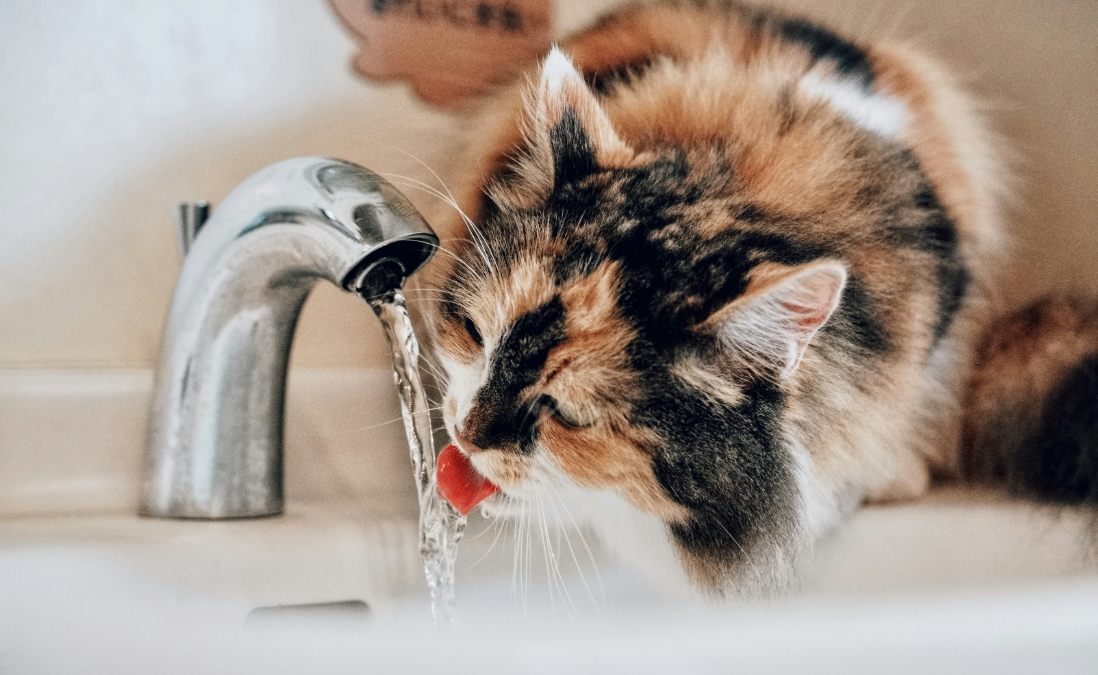
Many cats prefer running water over still water — a cat that ignores a bowl may drink readily from a dripping faucet. Cat water fountains that circulate and filter water encourage drinking in cats that are reluctant with static bowls. Some cats prefer cool water; others prefer room temperature.
4. Dental Pain
Dental disease — including tooth resorption, gingivitis, and fractured teeth — causes pain during eating and drinking. A cat that approaches the water bowl, attempts to drink, and then pulls away may be experiencing oral pain. Dental disease is extremely common in cats over three years old.
5. Kidney Disease
Chronic kidney disease (CKD) is the most common serious illness in older cats. Paradoxically, early-stage CKD often causes increased drinking (as the kidneys lose concentrating ability), while advanced CKD may cause decreased intake as the cat feels generally unwell. Any significant change in drinking pattern — up or down — in a cat over eight years old warrants a veterinary check including bloodwork and urinalysis.
6. Stress or Environmental Change
A new pet, a move, construction, or changes in household routine can cause cats to reduce food and water intake. Cats are creatures of habit, and disruptions to their environment affect behavior including hydration habits.
How to Encourage Drinking
Cat water fountain: Running water attracts many cats that ignore static bowls. Choose a fountain with a filter and clean it weekly.
Multiple water stations: Place water bowls in several locations around the house — away from food bowls and litter boxes.
Fresh water daily: Change water at least once daily. Cats can detect staleness that humans cannot.
Add wet food: If your cat eats only dry food, adding wet food or mixing water into kibble increases total fluid intake significantly.
When to See a Vet
Seek veterinary care if your cat has not consumed any water for 24+ hours, shows signs of dehydration (skin tenting, dry gums, sunken eyes, lethargy), has a dramatic change in drinking patterns (much more or much less than normal), or is not eating alongside reduced drinking. See when to see a vet — urgency guide for triage principles that apply to cats as well.
Frequently Asked Questions
How much water should a cat drink per day?
Approximately 3.5 to 4.5 ounces per 5 pounds of body weight daily from all sources (food and water combined). A 10-lb cat on dry food should drink roughly 7 to 9 ounces of water daily. A cat on wet food may drink significantly less from a bowl because the food provides most of its hydration.
Do cats prefer running water?
Many cats prefer running water over still water — an instinct from avoiding stagnant water sources in the wild. A cat water fountain is one of the most effective tools for increasing feline water intake.
More FurlyHome Guides
- Is Pet Insurance Worth It for Indoor Cats?
- How to Keep an Outdoor Cat Safe
- Maine Coon Home Setup Guide
- How Much Do Maine Coon Cats Weigh?
Verdict
Cats naturally drink less than dogs — this is normal feline biology. Low water bowl intake in a cat eating wet food is typically not a concern. Practical solutions for increasing hydration include cat water fountains, multiple water stations, daily fresh water, and adding wet food to the diet. Any sudden change in drinking patterns — significantly more or less than your cat’s normal baseline — warrants a vet check, particularly in cats over eight years old.




Write Your Review
No reviews yet. Be the first to share your experience!