

How to Tell If Your Dog Is in Pain
Dogs are evolutionarily programmed to hide pain. In the wild, showing vulnerability made an animal a target for predators and competitors. This instinct persists in domesticated dogs, which means that by the time a dog is showing obvious pain signs — limping, whimpering, refusing to move — the pain is often already significant. Learning to recognize the subtle early signs allows you to intervene sooner, which typically means simpler and less costly treatment.
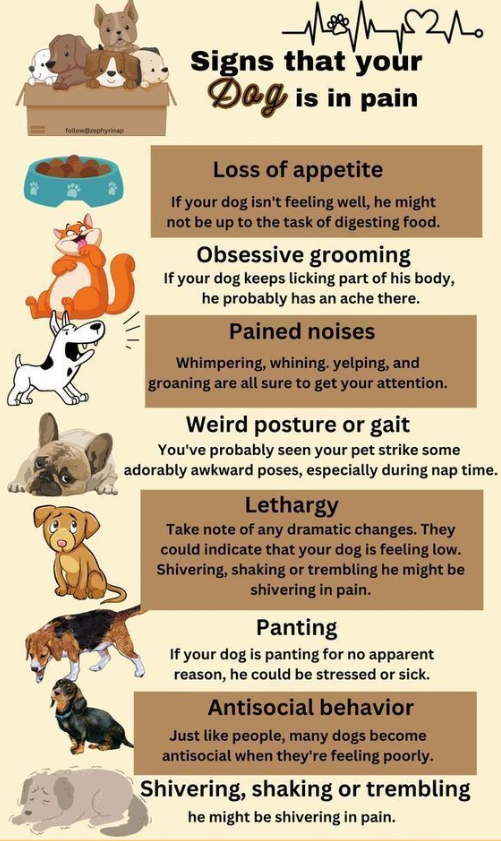
12 Signs Your Dog May Be in Pain
Behavioral Changes
- Reduced appetite or refusal to eat: Pain frequently suppresses appetite. A dog that normally eats enthusiastically and suddenly shows disinterest in food — particularly for more than 24 hours — may be experiencing pain. Dental pain is an especially common cause of appetite changes: dogs with tooth fractures, gum disease, or oral tumors often eat more slowly, drop food, or favor one side of the mouth.
- Unusual withdrawal or hiding: A dog that seeks isolation, hides under furniture, or avoids family interaction when it normally seeks attention may be in pain. This is one of the earliest and most commonly missed signs.
- Increased aggression or irritability: Pain makes dogs defensive. A normally gentle dog that snaps, growls, or pulls away when touched in a specific area is likely telling you that area hurts. This is not a behavior problem — it is a pain response.
- Changes in sleep patterns: Restlessness at night, inability to settle, frequent position changes, or conversely sleeping significantly more than usual can all indicate pain. Biscuit’s torn ligament manifested primarily as nighttime restlessness before any visible limping appeared.
- Reduced interest in play or walks: A dog that usually gets excited for walks or play and becomes unenthusiastic or reluctant may be experiencing pain that worsens with activity. This is common with joint pain, muscle injuries, and abdominal discomfort.
Physical Signs
- Changes in posture: A hunched back, lowered head, or reluctance to stand fully upright often indicates back or abdominal pain. Dogs with spinal pain frequently adopt a rigid, guarded posture. Dachshunds with IVDD often show this sign first — see our guide on why dachshunds have back problems for breed-specific detail.
- Limping or gait changes: Obvious limping is a clear pain indicator. More subtle gait changes include shorter stride length, reluctance to jump onto furniture they normally access easily, hesitation at stairs, or sitting down more slowly than usual. For older dogs with chronic joint pain, see how to help a dog with joint pain at home.
- Excessive licking or chewing at a specific area: Dogs often lick or chew at the site of pain. Persistent licking at a joint, paw, or flank without visible skin irritation may indicate underlying pain in that area. This can progress to hot spots or hair loss at the licking site.
- Changes in breathing: Rapid shallow breathing at rest (not related to heat or exercise), panting when the dog should be relaxed, or labored breathing can indicate pain. Abdominal pain and chest pain both alter normal respiratory patterns.
- Shaking or trembling: Pain-related trembling occurs even when the dog is not cold and is not frightened. It is a physiological response to pain signals and is common with moderate to severe pain. Small breeds may be more visibly affected.
Vocalization
- Whimpering, whining, or yelping: Vocalization during specific movements — getting up, lying down, climbing stairs, being picked up — often pinpoints the pain location. A dog that yelps when you touch a specific area is clearly communicating pain.
- Unusual silence: Counterintuitively, some dogs become quieter when in chronic pain. A normally vocal dog that goes silent and withdrawn may be coping with sustained discomfort. This is one of the harder signs to recognize because it is the absence of normal behavior rather than the presence of an abnormal one.
Pain Scale: How Urgent Is It?
Common Causes of Pain in Dogs by Age
Puppies and young dogs: Fractures, sprains, growing pains (panosteitis in large breeds), intestinal foreign bodies from swallowing objects, dental teething.
Adult dogs: Torn ligaments (ACL/cruciate injuries), ear infections, dental disease, gastrointestinal issues, insect stings, allergic reactions, soft tissue injuries from play or exercise.
Senior dogs: Arthritis and joint degeneration, dental disease, cancer, intervertebral disc disease, organ-related pain (kidney, liver, pancreas). For senior dog joint support, see how to help a dog with joint pain at home and best glucosamine supplement for senior dogs.
What Not to Do
Do not give human pain medication. Ibuprofen (Advil), acetaminophen (Tylenol), and naproxen (Aleve) are toxic to dogs and can cause liver failure, kidney damage, or gastrointestinal bleeding even in small doses. Aspirin carries risks even at dog-appropriate doses. Never medicate a dog with human drugs without explicit veterinary guidance.
Do not force the dog to move or exercise. If a dog is reluctant to walk or play, forcing activity risks worsening the injury. Rest is appropriate until a vet has assessed the cause.
Frequently Asked Questions
Do dogs cry when they are in pain?
Dogs do not cry tears from pain the way humans do. They vocalize — whimpering, whining, yelping, or groaning — and some dogs become quieter rather than louder when in sustained pain. Tear production in dogs is related to eye irritation, not emotional distress.
Can dogs feel pain but not show it?
Yes. Dogs are instinctively driven to mask pain, and many dogs — particularly stoic breeds like Labradors and huskies — can experience significant discomfort without obvious external signs. Subtle behavior changes are often the only clue.
How can I comfort a dog in pain at home?
Provide a quiet, comfortable resting space. Limit activity. Offer food and water in an easily accessible location. Do not force interaction but remain nearby. Do not apply ice or heat without veterinary guidance as the wrong choice can worsen some conditions. Schedule a vet visit as soon as practical.
More FurlyHome Pet Health Guides
- How to Help a Dog with Joint Pain at Home
- Best Glucosamine Supplement for Senior Dogs
- When Should I Take My Dog to the Vet?
- How to Calm an Anxious Dog at Home Naturally
- Why Does My Dachshund Have Back Problems?
Verdict
Dogs hide pain by instinct, which means the obvious signs — limping, whimpering, refusal to eat — often indicate that pain is already well established. Learning to recognize the subtle signs earlier gives you and your vet more treatment options and typically better outcomes. When in doubt, a vet visit is always preferable to waiting and watching — dogs do not exaggerate pain, and a behavior change that looks minor to you may represent significant discomfort to the dog.
| Urgency | Signs | Action |
| Emergency (go now) | Difficulty breathing, collapse, bloated abdomen, severe bleeding, inability to stand, seizures | Emergency vet immediately |
| Urgent (same day) | Refusing all food 24+ hours, severe limping, persistent vomiting, screaming when touched, sudden inability to use hind legs | Vet appointment same day |
| Soon (within 2-3 days) | Mild limping, decreased appetite, subtle behavior changes, increased sleeping, reluctance on walks | Monitor and schedule vet visit |
| Monitor | Occasional stiffness after exercise, slight gait change, intermittent appetite changes | Track pattern, bring up at next vet visit |










Write Your Review
No reviews yet. Be the first to share your experience!