

Short answer: most don’t, and the ones that do require specific conditions and daily preparation. Here’s what actually happens when you try it.
The core problem is mechanical. Most automatic feeders use an auger — a rotating screw — to move dry kibble from a hopper into a bowl. Wet food is too dense, too sticky, and too irregular in texture to move through an auger. It clogs within the first cycle. The motor jams. The food sits in the hopper and spoils.
The Food Safety Constraint
Wet cat food is a bacterial growth risk above 40°F. The AVMA recommends not leaving wet food at room temperature for more than 4 hours. This is the real constraint — not the feeder mechanism, but food safety. Even a perfect wet food feeder can only dispense what will be consumed in one sitting.
This rules out the “fill the hopper for 3 days and forget it” approach that works with dry kibble. Any wet food feeder solution requires daily loading.
Three Feeder Types and What They Can Actually Do
Timed tray feeders: Rotating covered sections open at scheduled times. You load each section with wet food in advance. Works for 2–5 meals, then requires manual refill. The Cat Mate C500 is the most reliable example — 5 meal sections with ice pack underneath.
Ice pack feeders: Timed tray with ice pack chamber beneath the food sections. Keeps wet food below 40°F for 4–8 hours depending on ambient temperature. Only viable for 2-meal schedules, not 24-hour loading.
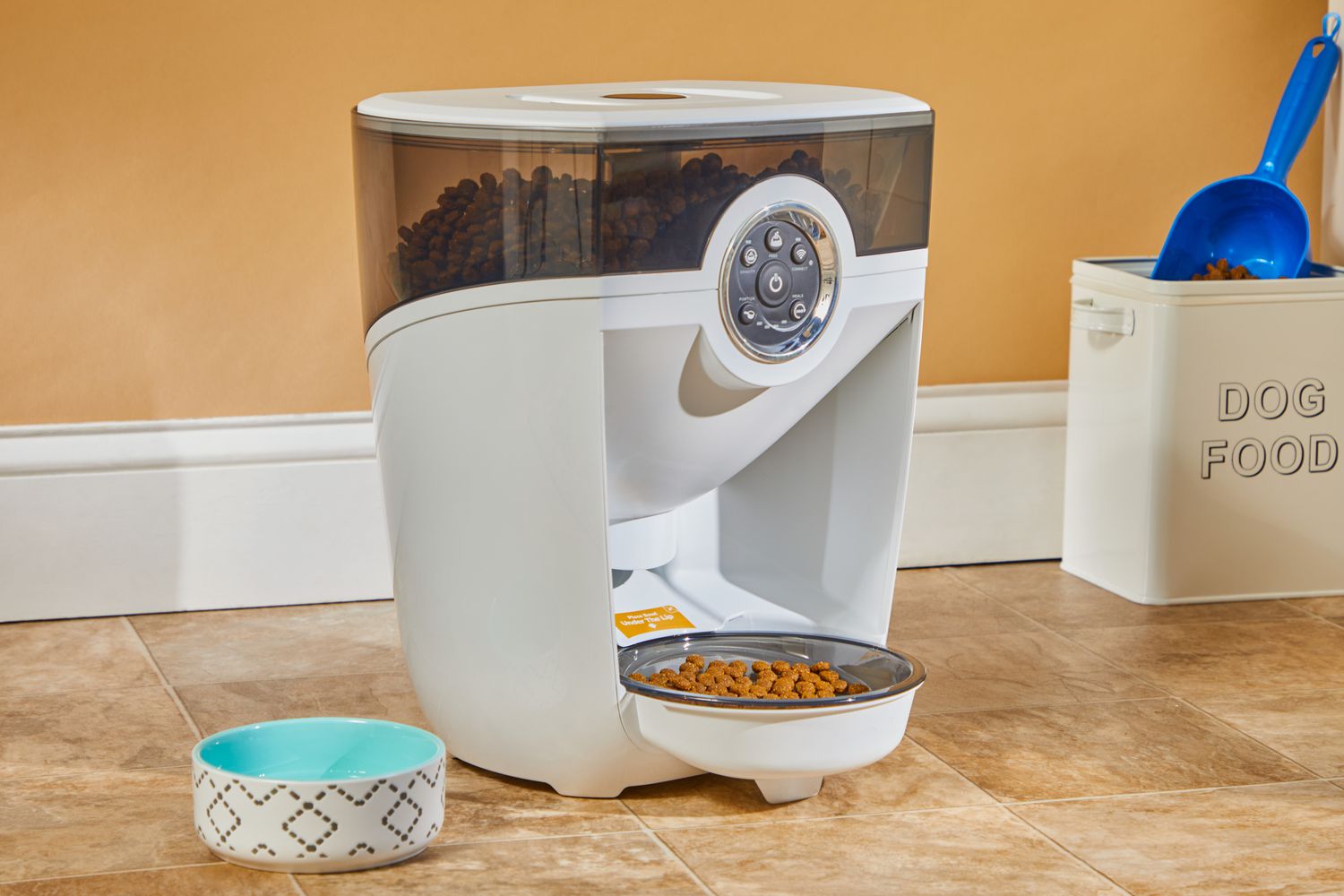
Standard hopper feeders (avoid for wet food): Auger-based dry food feeders. Cannot handle wet food. Loading wet food will jam the mechanism within 1–2 feeding cycles and void most warranties.
What Actually Works in Practice
For Maple’s partial wet food diet, the approach that works: a timed tray feeder with ice pack for the midday meal while we’re at work, and manual feeding morning and evening. Not fully automated, but reliable for the one meal we can’t cover in person.
If your cat eats primarily dry food with occasional wet food as a topper, a standard hopper feeder handles the dry portion automatically and you add wet manually at mealtimes. That hybrid approach is more practical than searching for a single wet-food-only automated solution.
For multi-cat households where one cat needs wet food and another doesn’t, the SureFeed Microchip Pet Feeder allows individual access control — the lid opens only for the registered pet’s microchip, so each cat’s diet stays separate.
Common Mistakes
Putting wet food in a hopper feeder: Will jam the auger and spoil in the hopper. There’s no workaround for this — it’s a mechanical incompatibility.
Loading a tray feeder more than 24 hours ahead: Wet food deteriorates even under refrigeration in an open feeder compartment. Load the same day.
Skipping the ice pack in warm climates: In rooms above 72°F, wet food in a tray feeder without cooling reaches unsafe temperatures within 2–3 hours. The ice pack isn’t optional in summer.
Quick Answers
Can I put wet food in a Petlibro feeder? No. Petlibro’s hopper feeders use an auger designed for dry kibble. Loading wet food will jam the mechanism.
How long can wet cat food sit in a feeder? Maximum 4 hours at room temperature, per AVMA guidelines. With an ice pack, up to 8 hours. Plan feeder schedules around these limits.
Is there a fully automated wet food feeder? Not at the consumer level. All viable wet food feeder options require daily manual loading. The automation covers timing and portioning — not sourcing the food.




Write Your Review
No reviews yet. Be the first to share your experience!