

The setup matters more than the feeder choice. A good feeder on a bad schedule creates feeding anxiety, food guarding, weight problems, and a dog that wakes you up at 4am demanding breakfast. The feeder is just the mechanism — the schedule is the system.
Step 1: Calculate the Right Daily Portion
Start with the kibble bag’s feeding guide as a baseline, then adjust by 15–20% based on your dog’s actual activity level and body condition score. Automatic feeders dispense exactly what you set — they don’t adjust for a week of missed walks or extra play sessions. You’re taking on the adjustment role.
Weigh portions in grams rather than cups for the first two weeks. Cup measurements vary by kibble shape and density. One cup of Biscuit’s kibble is 120g; one cup of Maple’s is 98g. The same cup measurement with different kibble = meaningfully different calorie intake. After two weeks of weighing, you can convert to consistent cup measurements if the feeder requires volume input.
Step 2: Calibrate the Feeder’s Portion Setting
Every automatic feeder has a portion setting that corresponds to a certain volume of kibble per dispense. The advertised sizes (1/4 cup, 1/2 cup) are approximate — they vary by kibble density and shape. Before relying on the feeder, run 5 consecutive manual dispense cycles, weigh each one, and calculate the average. If the feeder says “1/2 cup” but consistently dispenses 55g and your target is 120g, you need approximately 2.2 settings-units per meal — round to 2 and add a small manual top-up, or adjust timing.
Recalibrate whenever you switch kibble brands or sizes. The portion setting that was accurate for your previous kibble may be meaningfully off for the new one.
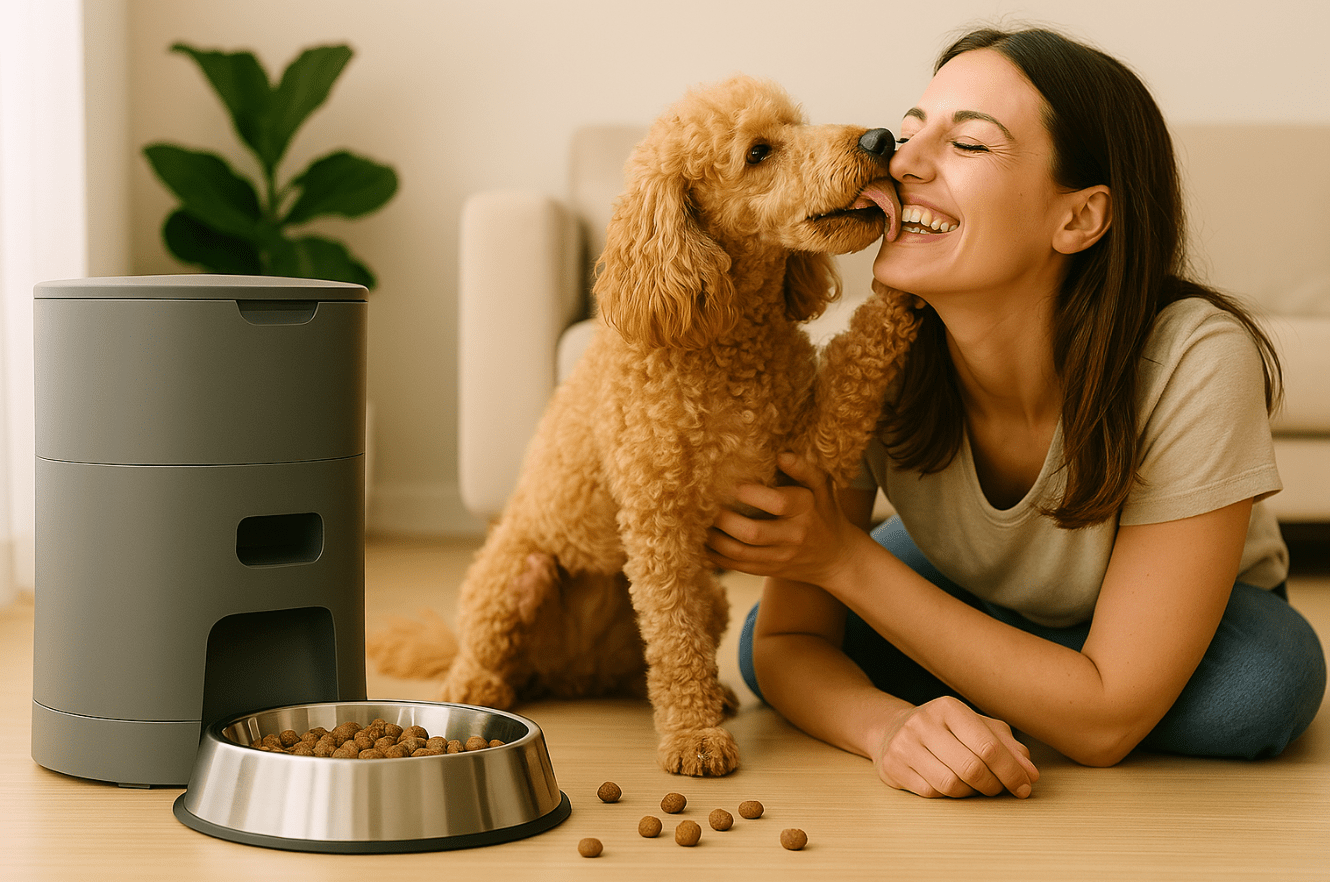
Step 3: Set the Feeding Schedule
Two meals per day is the veterinary standard for adult dogs. Split the daily portion into two equal meals, spaced 10–12 hours apart. 7am and 6pm works for most households with standard work schedules.
Deep-chested breeds: For dogs prone to GDV/bloat (Great Danes, standard Poodles, German Shepherds, Weimaraners) — three smaller meals spread 6–8 hours apart reduces risk. Split daily portion into thirds.
Puppies under 6 months: Three to four meals per day. Puppies’ blood sugar regulation requires more frequent feeding than adults. Most automatic feeders handle this schedule.
Senior dogs: Two meals, earlier timing if the dog has been waking up before the morning feed. Shift the first meal 30 minutes earlier rather than waiting for early-morning disruption to become a pattern.
Step 4: Run a Full Test Day While You’re Home
Before the first workday using the feeder without supervision, run the complete schedule while you’re home. Watch whether the dog eats immediately when the feeder dispenses, guards the feeder between meals, finishes the entire portion or leaves some, and seems settled or restless between meals. Make portion and timing adjustments on the test day — not after a 9-hour absence.
Step 5: Dealing With Early Morning Wake-Ups
Dogs anticipate scheduled feeding times. A dog scheduled for 7am will often wake up at 6:30am in anticipation. Two approaches: shift the morning meal to 6:30am so the anticipation window falls when you’re already up, or add a small pre-scheduled “anticipation dispense” 10 minutes before the main meal to satisfy the early waking without rewarding early demands.
Quick Answers
How do I stop my dog eating too fast from the automatic feeder? Split the daily portion into more meals so each is smaller. Some feeders have a slow-dispense mode that drops kibble in intervals over several minutes. A slow-feeder bowl placed under the dispense port works for any feeder model.
Should I use the automatic feeder every day or just when I’m away? Consistency is better than selective use. A dog fed by feeder some days and by hand others will regulate their eating to the hand-feeding schedule, not the feeder schedule. Use the feeder daily for stable routine.
My dog ignores the feeder and waits for me to feed them manually. How do I break this? Stop offering manual feeding entirely. The feeder is the only food source. Most dogs accept the feeder within 3 days when the manual alternative is consistently absent.






Write Your Review
No reviews yet. Be the first to share your experience!