

The honest answer: cellular GPS trackers have unlimited range in theory, but real-world range is limited by cell coverage, not GPS satellite coverage. Understanding this distinction prevents buying the wrong tracker for your actual use case.
GPS Range vs Cellular Range — The Key Distinction
GPS satellites cover the entire Earth. A GPS chip determines its location anywhere with clear sky. But that location is useless unless it can be transmitted to you. Cellular GPS trackers transmit location via mobile networks (4G/LTE). Where there’s no cell signal, you get no location update even if the GPS chip is working perfectly.
This is why “unlimited range” in GPS tracker marketing means “unlimited within cell coverage” — which covers most urban and suburban areas but not remote wilderness, most ocean surfaces, or dead zones between rural cell towers.
Range by Tracker Technology
Cellular GPS (4G/LTE): Effective range: Unlimited within cell coverage. Works across cities, suburbs, most parks. Fails in remote wilderness, mountains above treeline, and rural dead zones. Requires monthly subscription.
Bluetooth trackers: Effective range: 100–400 feet (30–120m) in open space, less with interference. Only shows last known location when within Bluetooth range. No subscription, no monthly fee. Useful for confirming a dog is in the immediate vicinity, not for finding an escaped dog.
RF radio trackers: Effective range: 5–9 miles in open terrain, less in forests and hilly areas. No subscription needed. Best for hunting dogs and hiking in areas without cell coverage. Heavier devices, directional antenna required.
AirTag / Tile (crowdsourced): “Range” depends on nearby Apple or Android devices. In dense urban areas, very effective — your tag’s location updates whenever any Apple device passes near it. In rural areas, may update once every few hours if at all.
Urban vs Rural Dogs: Which Technology Fits
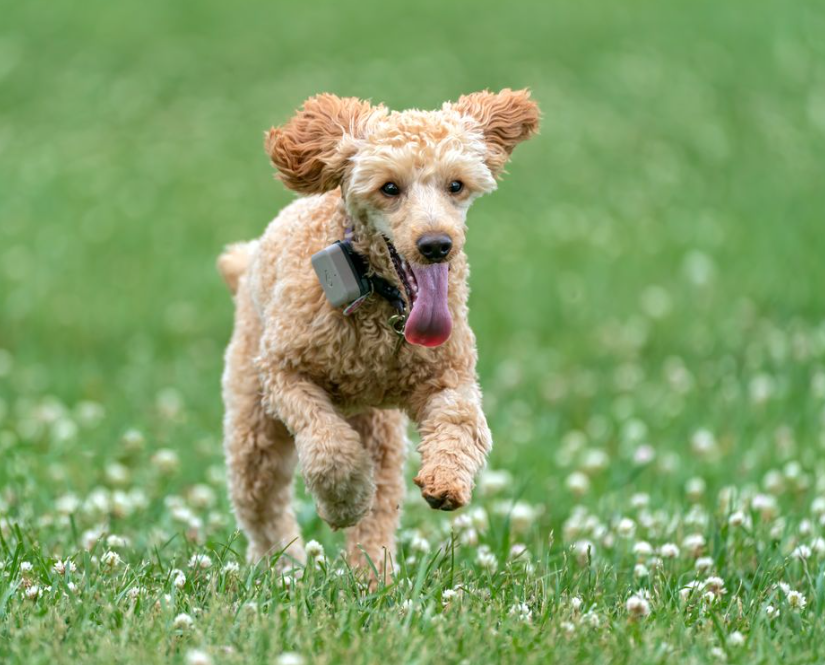
For a suburban dog with no cell dead zones nearby — which describes Biscuit’s situation — cellular GPS is the clear choice. The tracker updates every 30 seconds, the app shows location within 5 meters, and the cell network is reliable enough that coverage gaps almost never occur in our neighborhood.
For a dog taken hunting or hiking in areas without cell coverage, the right tool is an RF tracker like the Garmin Alpha system. Higher cost, heavier device, no subscription — but it works because it doesn’t depend on cell towers. Cellular GPS in a dead zone shows the dog’s last known location before coverage was lost, which may be miles away from where they currently are.
International Travel Considerations
Most cellular GPS trackers operate on country-specific or regional cellular networks. Before traveling internationally with your dog, verify your specific tracker supports coverage in the destination country. Tractive covers 175+ countries. Fi collar is US-focused. Some trackers require SIM card swaps for international use. This matters for dogs relocated internationally or taken on cross-border trips.
Quick Answers
Does a GPS tracker work in a rural area? If there’s cell coverage in the rural area, yes. If it’s genuinely off-grid (no cell bars on your phone), a cellular GPS tracker won’t update. RF trackers work without cell coverage and are the right choice for consistently rural locations.
Will a GPS tracker work if my dog goes underground? GPS signal and cellular signal both struggle with significant soil/concrete overhead. Underground parking, basements, and buried pipes are typically tracking dead zones. Most trackers show last known outdoor location.
Does GPS work on a boat? GPS chip works on water — satellites have clear sky access. Cellular transmission requires being within range of a coastal cell tower. Open ocean is a cellular dead zone. For boating dogs, an AIS or marine-specific tracker is the appropriate tool.










Write Your Review
No reviews yet. Be the first to share your experience!