

The honest answer depends on how long “all day” actually is, how old the dog is, what setup is in place, and — most importantly — whether the dog’s total exercise and social needs are being met in the hours they’re not alone.
Time Guidelines by Age
Puppies 8–16 weeks: Maximum 1–2 hours. Bladder control is not developed — accidents every 2 hours are normal and expected. More than 2 hours alone causes distress and creates lasting house-training setbacks. A puppy cannot manage an 8-hour workday without a midday visit at absolute minimum.
Adolescent 4–12 months: Maximum 3–4 hours. Bladder control improving but not adult-level. Destructive behavior peaks in this age range when the dog is bored and under-exercised. A dog walker or midday check-in is important during this period.
Adult 1–7 years: Maximum 6–8 hours for most breeds. Adult bladder capacity. Boredom remains a risk for high-energy breeds — morning exercise before leaving is not optional, it’s the primary variable in whether the day goes well.
Senior 8+ years: Varies by individual. Some seniors are calmer alone and sleep most of the day. Others develop increased separation anxiety or need more frequent bathroom breaks as bladder control decreases with age. Monitor with a camera when changing a senior dog’s alone-time routine.
What a Safe Adult Dog Setup Looks Like
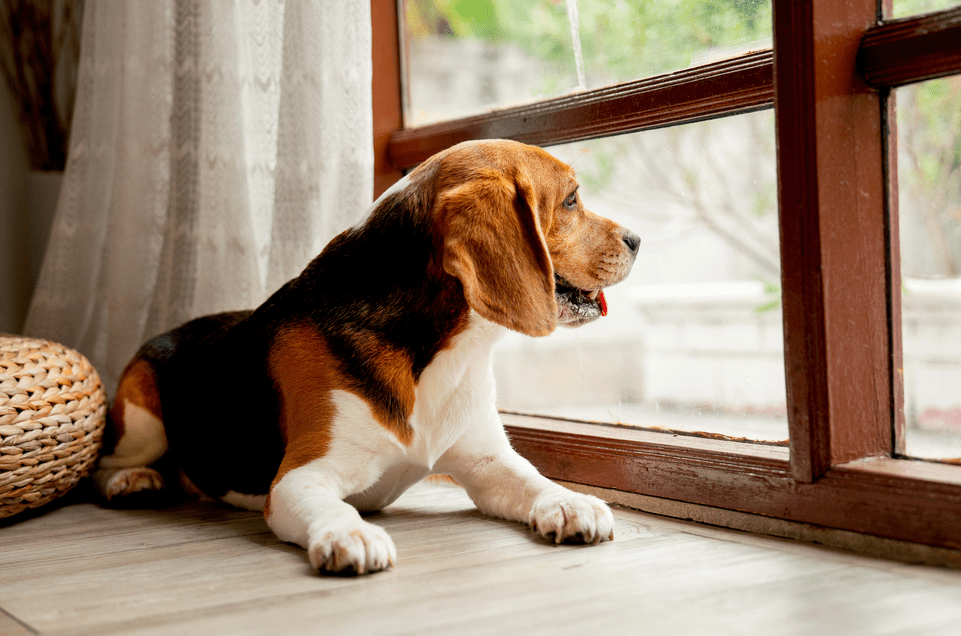
Biscuit has been on a 7am–4pm alone schedule since he was two years old. What makes it work: a 45-minute walk before leaving, continuous access to water (automatic fountain), a camera checked twice during the day, and a dog walker 3 days per week for a midday run. Without the morning exercise, the afternoon is noticeably worse — restless behavior, chewed objects, more demanding reunion behavior.
The research on this is consistent: dogs tolerate 6–8 hours alone regularly if their total exercise and social needs are met in the surrounding hours. The 8 hours of solitude isn’t the primary problem — the 16 hours of inadequate exercise and interaction around it is.
High-Energy Breeds Need More
Border Collies, Australian Shepherds, Vizslas, Weimaraners, and Belgian Malinois are breeds that require 2+ hours of vigorous daily exercise for psychological stability. An 8-hour alone period is survivable for these dogs if the other 16 hours include adequate activity — but it requires deliberate management that most working schedules make difficult without help.
Lower-energy breeds that generally handle solitude better: Basset Hound, Chow Chow, Shar-Pei, Maltese, Greyhound (surprisingly calm indoors despite their athletic build). This isn’t a hard rule — individual temperament varies significantly within any breed.
Signs the Current Setup Isn’t Working
If any of these are happening, the current alone-time arrangement needs adjustment — more exercise, shorter duration, additional midday contact, or professional behavior support:
- Destructive behavior focused on exit points (doors, window frames)
- Eliminating inside despite reliable house training when supervised
- Excessive vocalization reported by neighbors
- Hyper-attachment immediately after reunion — jumping, unable to settle for 30+ minutes
- Pacing or repetitive behaviors visible on camera during the day
Using Technology to Bridge the Gap
For working households where a 9-hour absence is unavoidable, a combination approach works: automatic feeder for reliable meal timing, automatic water fountain for continuous hydration, a camera for remote check-ins, and a midday dog walker 3–4 days per week. This isn’t about replacing your presence — it’s about reducing the practical hardship of the hours alone.
Quick Answers
How do I know if my dog is OK alone? Set up a pet camera and review the footage for the first few weeks of a new alone-time schedule. Look for settled rest periods vs continuous activity, and note when problematic behavior occurs — immediately after departure, or throughout the day.
Can I leave my dog alone for 12 hours? Twelve hours exceeds what most adult dogs can manage comfortably — bladder capacity, boredom threshold, and social needs all become significant at that duration. If a 12-hour absence is unavoidable, a midday visit or dog walker is strongly recommended.





Write Your Review
No reviews yet. Be the first to share your experience!