

Biscuit got out through a gate gap last spring. Thirty-two minutes of running the neighborhood before a neighbor called. That was the week I stopped treating GPS trackers as optional.
Most people assume GPS dog trackers work like car navigation — satellite signal, instant location. The reality is more layered, and understanding it changes which tracker you buy.
The Three-Part System
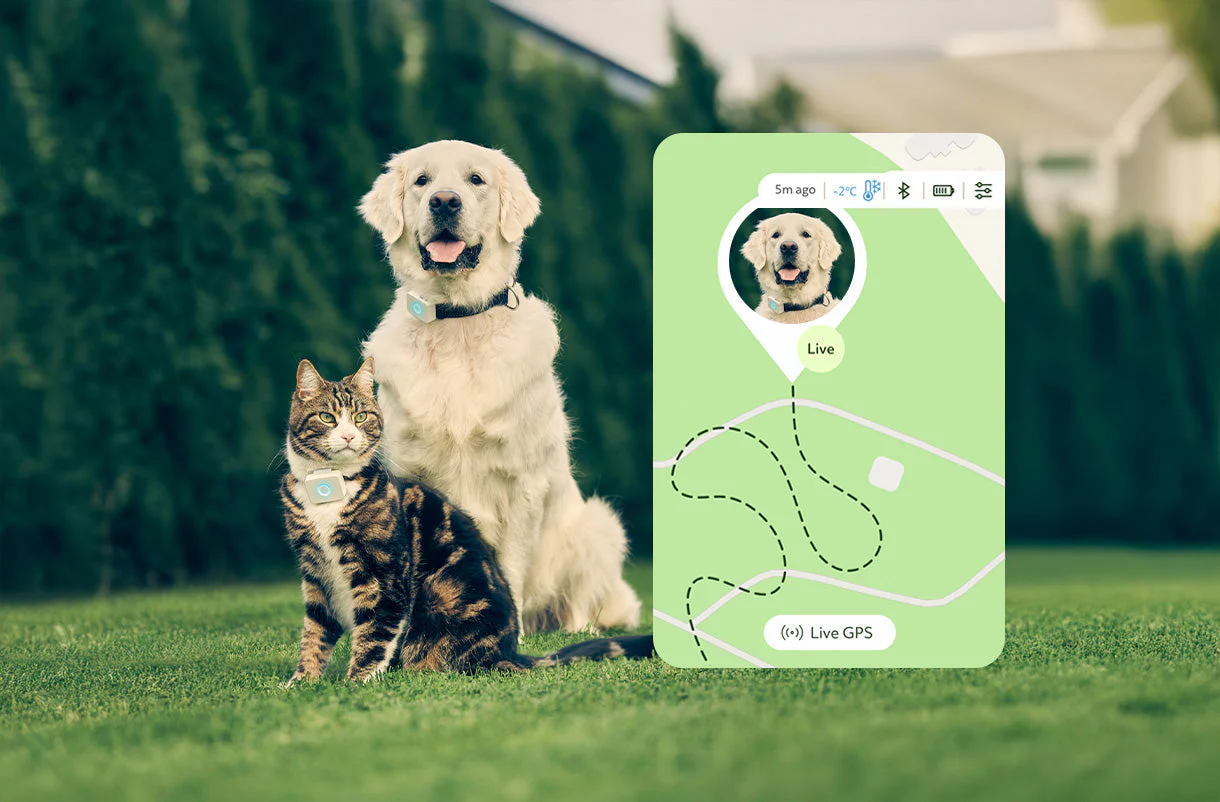
A GPS dog tracker combines three separate technologies: GPS satellites locate the device, a cellular network transmits that location to a server, and the app on your phone pulls data from that server and displays it. Remove any one of those three and the system breaks.
This is why GPS trackers require a subscription. The cellular data transmission — sending location updates from the tracker to the server every few seconds — costs money. Trackers marketed as “no subscription” typically use Bluetooth or a proprietary radio frequency instead of cellular, which limits range significantly.
GPS vs Bluetooth vs Radio Frequency
GPS + Cellular: True real-time tracking, unlimited range within cell coverage. Monthly fee $5–$15. Best for dogs that escape or roam outside familiar areas.
Bluetooth only: No subscription, no monthly fee. Range 100–400 feet only. Only shows last known location when in Bluetooth range. Fine for small, fenced yards.
Radio Frequency (RF): Works without cell coverage — useful for hiking in remote areas. Range 5–9 miles depending on terrain. Heavier devices, simpler display.
Hybrid GPS + WiFi: Switches between GPS outdoors and WiFi indoors. Saves battery at home. Less accurate indoors but longer battery life overall.
How Accurate Is GPS for Dogs?
Consumer GPS accuracy is typically 3–10 meters under clear sky. In dense urban environments or under tree cover, accuracy degrades to 10–30 meters. For a dog in a yard, the tracker shows Biscuit “somewhere in the backyard” rather than “behind the third bush.” Useful for finding an escaped dog — not useful for monitoring exactly where they’re lying down.
Some trackers use “Live Tracking” mode — updating location every 2–3 seconds instead of every 30–60 seconds. This burns battery faster but gives a closer-to-real-time picture when a dog is actively moving.
What Affects Battery Life
Three things drain GPS tracker batteries: GPS polling frequency, cellular transmission frequency, and temperature. Cold weather reduces lithium battery capacity by 20–40%. A tracker rated for 7 days in normal conditions might last 4 days in winter.
If a GPS tracker claims to work without a subscription, it’s almost certainly using Bluetooth or a limited-range radio frequency — not true cellular GPS. “GPS, no subscription” in marketing typically means GPS chip inside but Bluetooth transmission. Read the fine print before buying.
The Live Tracking Trade-off
Standard mode (update every 30–60 seconds) is sufficient for most daily use — confirming the dog is in the yard, tracking a dog walker route. Live Tracking (every 2–3 seconds) is for active escapes or off-leash hiking where real-time data matters. Battery life in Live Tracking drops by 60–80% compared to standard mode.
“A GPS tracker tells you where your dog went after they escaped — not before. It is not a substitute for a secure yard.”
Quick Answers
Do GPS trackers work inside the house? GPS signal struggles to penetrate ceilings. Inside, most trackers switch to WiFi positioning or show the last known outdoor location. Use a pet camera for indoor monitoring — GPS is designed for when a dog leaves home.
Does my dog need to wear it all the time? Only if your dog can escape or goes off-leash. For indoor-only dogs with no escape risk, a GPS tracker is unnecessary — the battery drains and the subscription is wasted.








Write Your Review
No reviews yet. Be the first to share your experience!