

The kitchen is the natural home for your dog’s food bowl — close to the water line, easy to wipe clean, and where the family gathers. But where you set the bowl shapes how calmly your dog eats and how safe mealtime is.
Quick answer
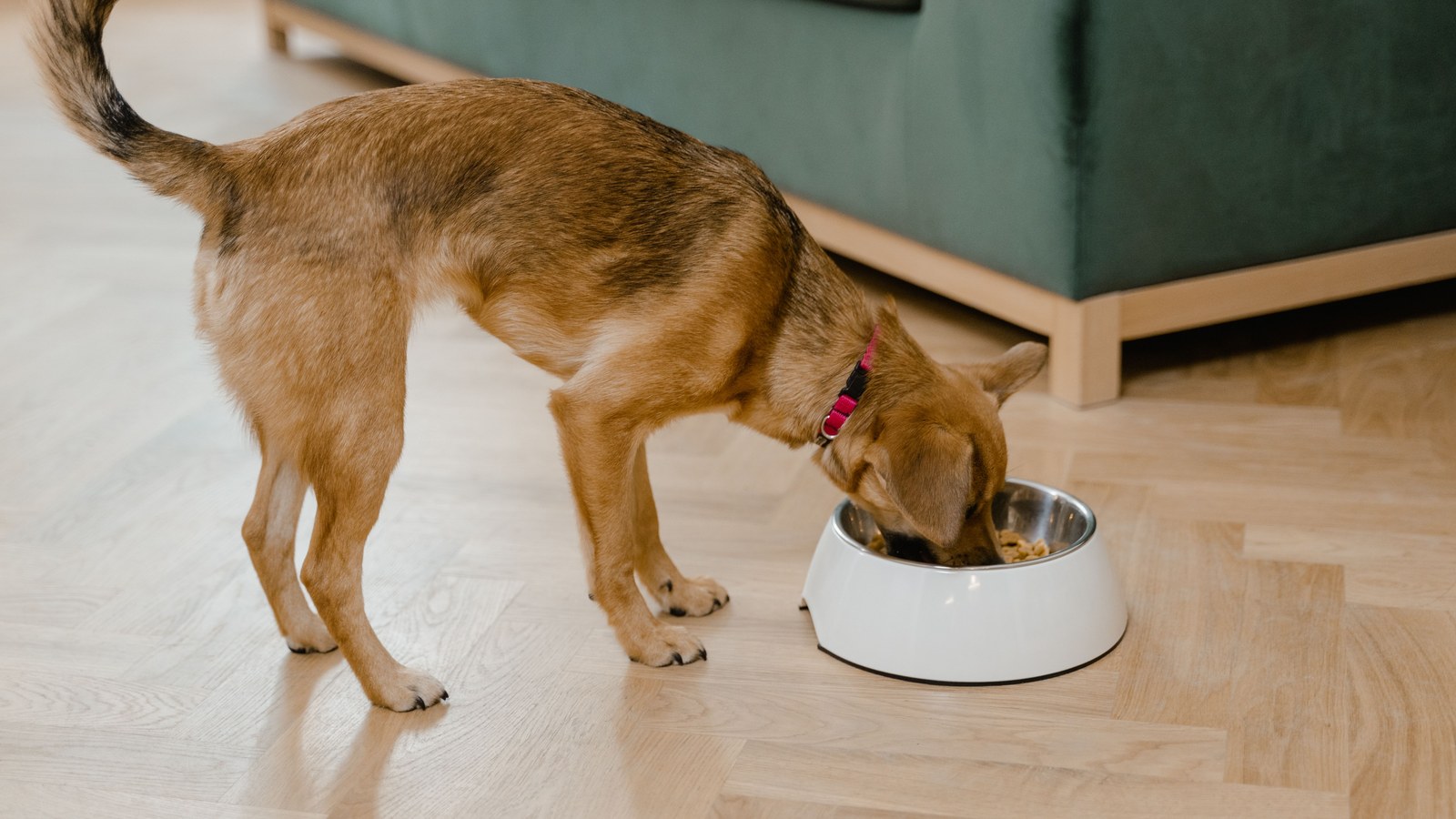
Put your dog’s food bowl in a calm, low-traffic corner of the kitchen, on a non-slip mat, set back from the main walkway so your dog isn’t bumped while eating. Keep fresh water easy to reach, and position the food well away from any cat litter box. For height, floor level or a low bowl suits most dogs. If you have a large, deep-chested breed, do not raise the bowl on your own — elevated bowls are a recognized risk factor for bloat, a life-threatening emergency, so ask your veterinarian before raising anything.
Safety first: the one placement choice that can be dangerous
The most important safety point about where the bowl goes is not the corner you pick — it’s the height. Gastric dilatation-volvulus (GDV), usually called bloat, is a life-threatening emergency that is most common in large, deep-chested dogs. Veterinary guidance from Cornell University’s Riney Canine Health Center lists using a raised food bowl as a risk factor for bloat and specifically advises avoiding raised food bowls.
So do not elevate your dog’s bowl by default. For most dogs, a bowl on the floor or at a low height is completely fine. If you have a large or deep-chested breed and you are considering a raised feeder for any reason, talk to your veterinarian first rather than raising the bowl on your own.
Bloat itself is a medical emergency, not a home-care situation. A swollen or hard belly, unproductive retching, heavy drooling, pacing or restlessness, or collapse all call for an immediate trip to your veterinarian or the nearest emergency clinic. This article is about calm, clean, safe bowl placement in the kitchen — it is not a substitute for veterinary advice about your individual dog.
Who this is for
This guide is for anyone setting up or rethinking a dog’s feeding station in the kitchen and wondering where the bowl should actually go. The advice below is about comfort, calm, hygiene, and safe footing — the practical side of placement — with one genuine safety flag around bowl height.
- This is for you if: you want a low-stress, easy-to-clean feeding spot and you’re deciding on a corner, a mat, water placement, and whether the bowl should sit on the floor or be raised.
- Read the height section closely if: you have a large or deep-chested breed, or a dog with any personal or family history of bloat — the raised-bowl question matters most for you.
- This isn’t medical advice if: your dog is refusing food, vomiting, drooling heavily, losing weight, or showing pain around eating. Those are reasons to call your veterinarian, not to rearrange furniture.
Where to put the bowl: five placement factors
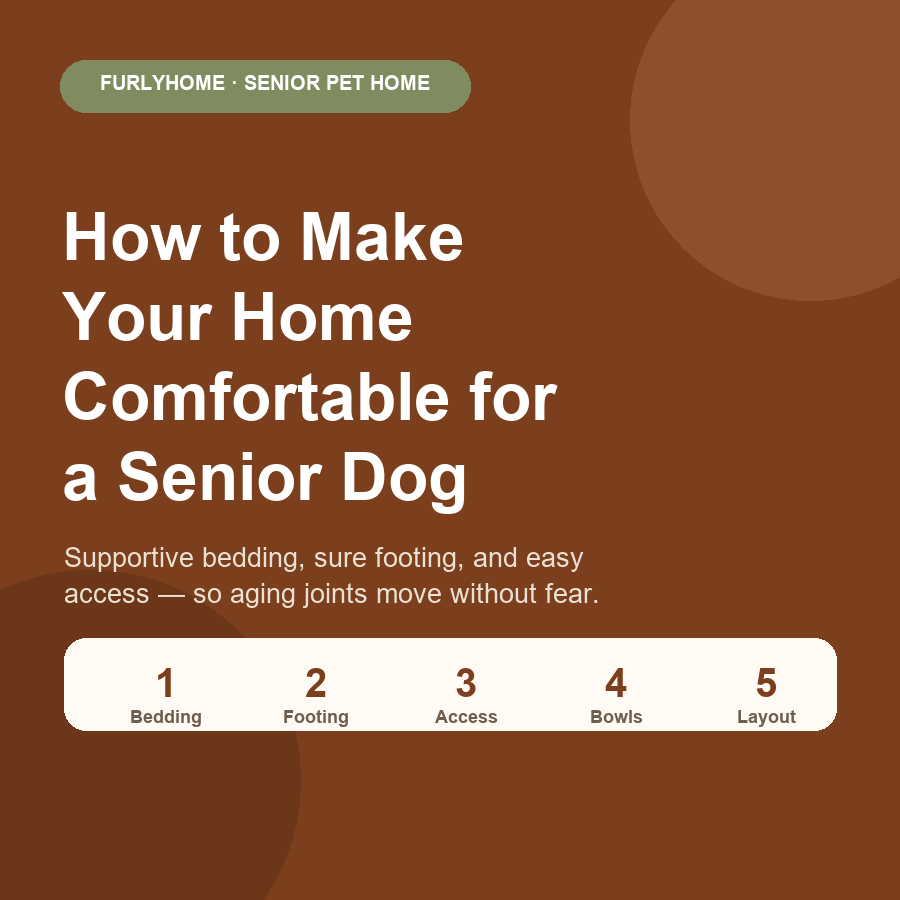
A good feeding spot in the kitchen comes down to five practical factors: a quiet corner, secure footing, sensible height, easy water, and distance from the litter box. The graphic below sums them up, and the sections after it explain each one.
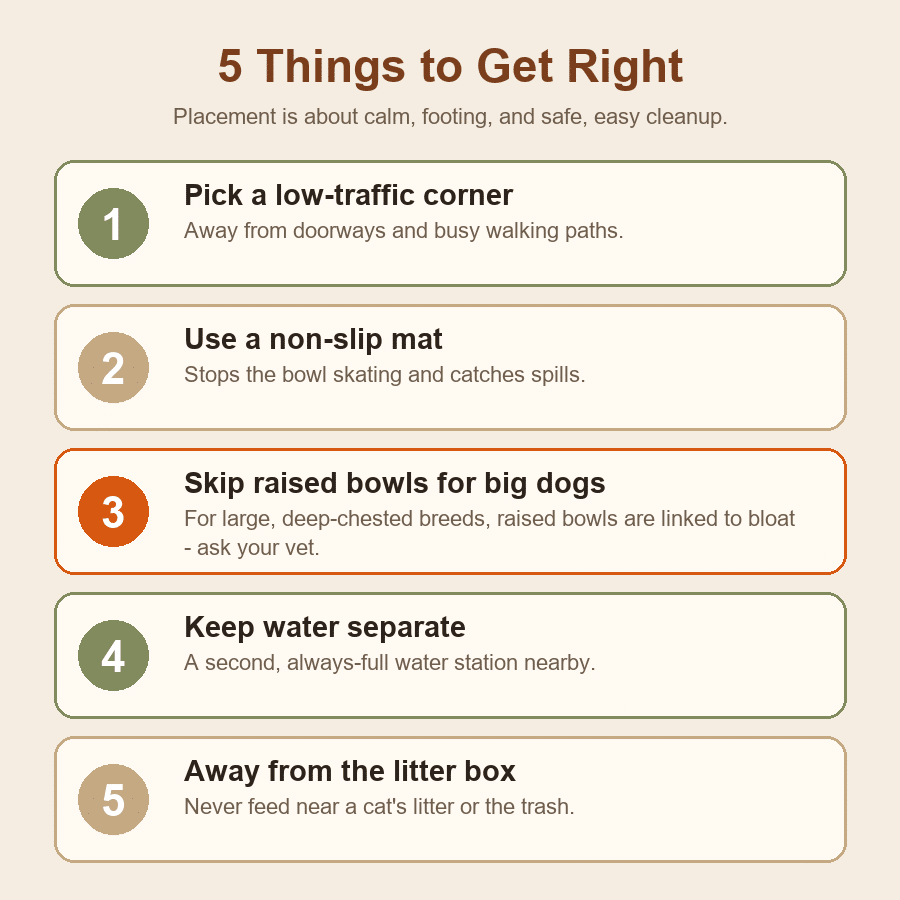
- Choose a calm, low-traffic corner. Everyday pet-care guidance suggests many dogs prefer to eat where they can see the room without being in the middle of the action. A corner or a spot along the wall — out of the main cooking-and-walking lane — lets your dog eat without being stepped over or startled.
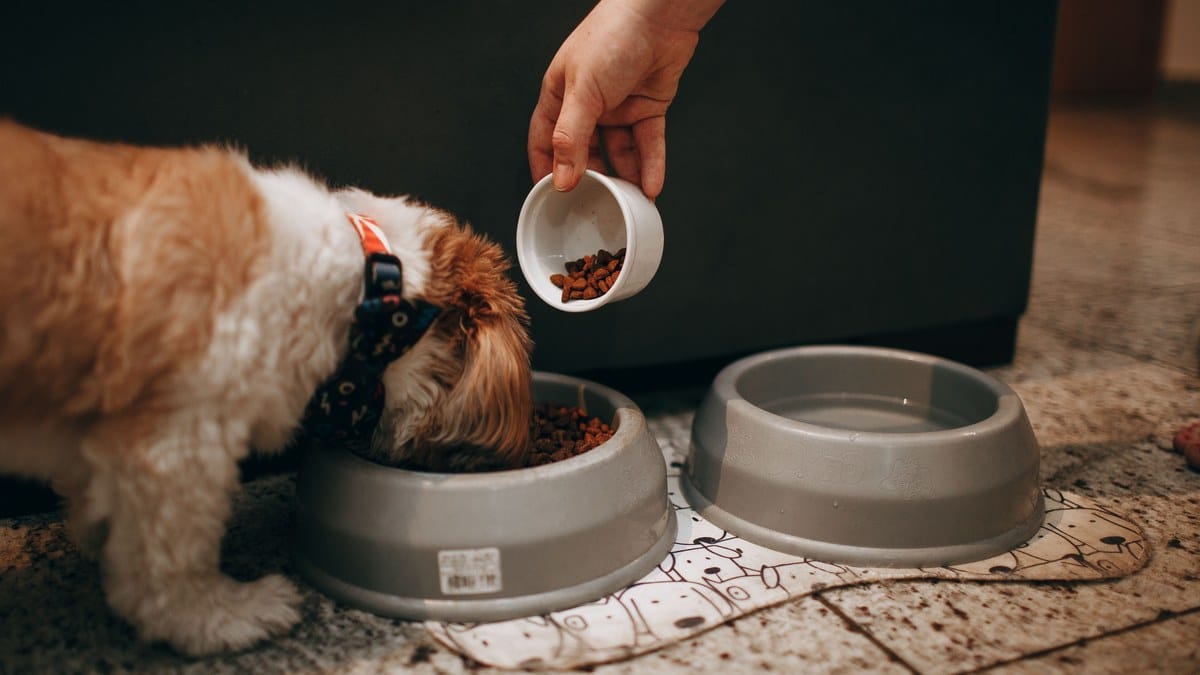
- Put a non-slip mat under the bowl. Kitchen tile, laminate, and hardwood are slick, and a chasing bowl or splayed paws make mealtime stressful. A grippy silicone or rubber-backed mat holds the bowl in place, catches spills, and gives your dog steady footing.
- Keep the height sensible for your dog. Floor level or a low bowl suits most dogs. Raising the bowl is not an automatic upgrade, and for large, deep-chested breeds it can be a real risk — see the height section below before you buy a stand.
- Make fresh water easy to reach. Keep clean water available and, where you can, give it its own nearby spot so it stays cleaner and doesn’t get knocked around at every meal. A separate water station also means hydration isn’t tied to whether the food bowl is full.
- Set food well away from the litter box. In homes with cats, the proximity of a litter box can put a dog (or cat) off eating and drinking, and it’s simply more hygienic to keep food and the toilet apart. Put the food bowl in a different zone of the room, or a different room entirely.
Two things worth naming plainly: the corner, mat, water, and litter-box tips above are comfort and common-sense placement, not veterinary prescriptions. They make feeding calmer and cleaner. The height question is the one with a genuine safety dimension, so it gets its own section.
How high should the bowl be? Floor vs. raised
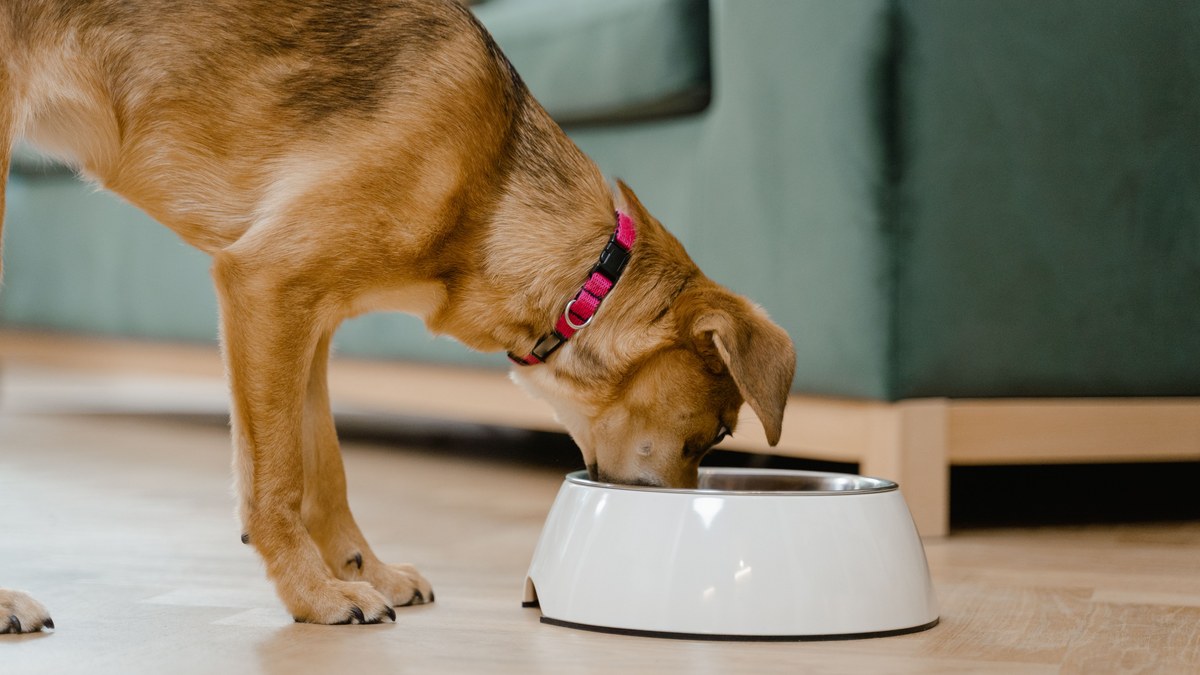
Height is the single choice on this page that can affect your dog’s health, so it’s worth getting right. For most dogs, a bowl on the floor or at a low height is perfectly good. The popular idea that every dog should have a raised feeder is where placement advice most often goes wrong.
The reason for caution is bloat. Gastric dilatation-volvulus is a life-threatening condition seen most often in large, deep-chested dogs, and veterinary guidance from Cornell lists using a raised food bowl among its risk factors — the same guidance advises avoiding raised food bowls. In other words, for the dogs most vulnerable to bloat, raising the bowl may add risk rather than remove it.
That flips the usual advice on its head. If you have a large or deep-chested breed, the safe default is to keep the bowl low and to ask your veterinarian before raising it for any reason — not to buy a tall feeder on the assumption that higher is healthier. For smaller dogs, or dogs your vet has specifically advised to eat from a raised bowl (for example, because of a diagnosed condition), follow that individual guidance. If you’re weighing the trade-offs, our comparison of elevated vs. floor dog bowls lays out who tends to benefit and who is better off at floor level.
Keep the feeding area clean
Wherever the bowl sits, keeping it clean matters as much as the location. Food and water bowls build up residue quickly, and a kitchen feeding station is easy to overlook when you’re wiping down counters.
The American Kennel Club recommends washing your dog’s food and water bowls daily to stop food residue and biofilm from accumulating; left unwashed, bacteria such as E. coli and Salmonella can grow. The AKC also notes that pet bowls rank among the germiest items in the home — fourth after dish sponges, kitchen sinks, and toothbrush holders. A daily wash with hot, soapy water, plus a non-slip mat you can wipe or toss in the laundry, keeps the whole station sanitary.
Bowl material plays into cleaning, too. Non-porous surfaces are generally easier to keep hygienic than scratched or porous ones. If you’re choosing new dishes, our guide to ceramic vs. stainless steel dog bowls compares durability, cleaning, and everyday practicality.
Decision guide: match your kitchen to the right spot
Your ideal placement depends on your dog and your kitchen. Use these if-then branches to land on the right setup, then check the graphic below.
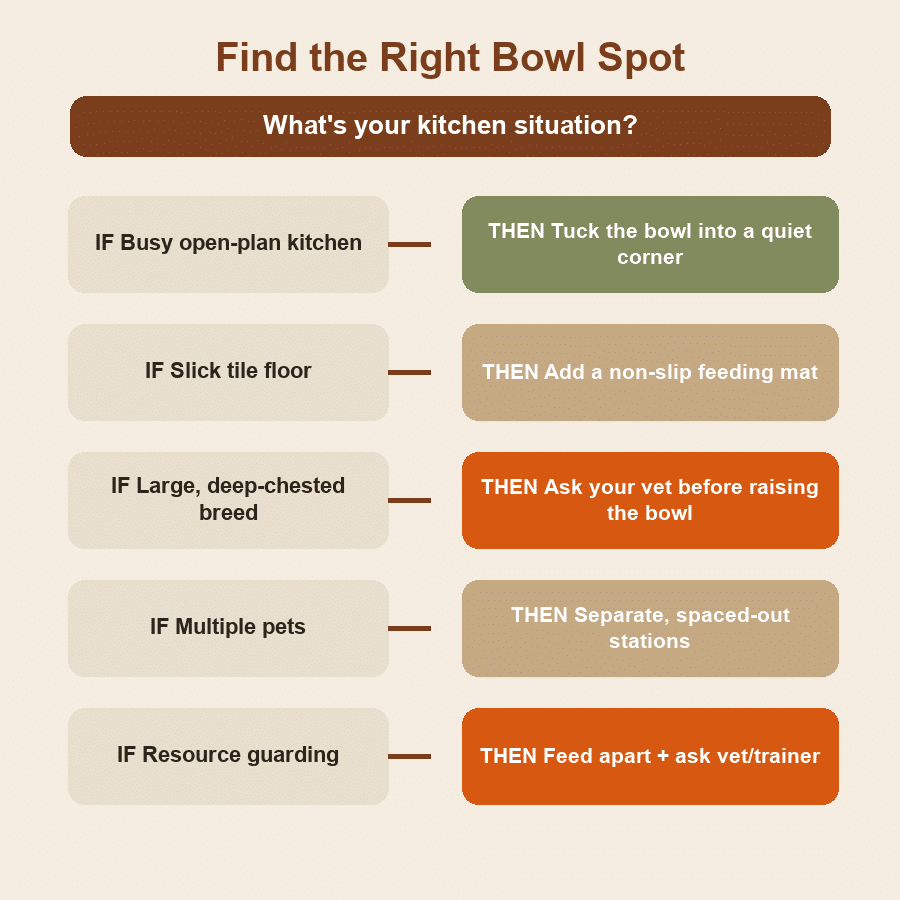
- If you have a large or deep-chested breed, then keep the bowl at floor or low height and ask your veterinarian before raising it — elevated bowls are a bloat risk factor for these dogs.
- If your kitchen has slick tile or hardwood, then put a non-slip mat under the bowl so it doesn’t slide and your dog doesn’t splay.
- If your dog gets jostled, rushes, or guards food when people move around, then choose a quiet corner or a spot along the wall away from the main walkway.
- If there’s a cat litter box in or near the kitchen, then move the food bowl well away from it — to another zone or another room.
- If you’re tempted by a raised feeder for a big dog because it looks tidier or you’ve heard it aids posture, then treat that as a vet conversation, not a default — the safest starting point for at-risk breeds is a low bowl.
- If you’re unsure which bowl to buy, then compare ceramic vs. stainless steel dog bowls for the material, and elevated vs. floor dog bowls for the height.
Do and don’t: bowl placement at a glance
If you remember nothing else, remember these. The left side is calm, clean, safe placement; the right side is what quietly makes mealtime harder or riskier.
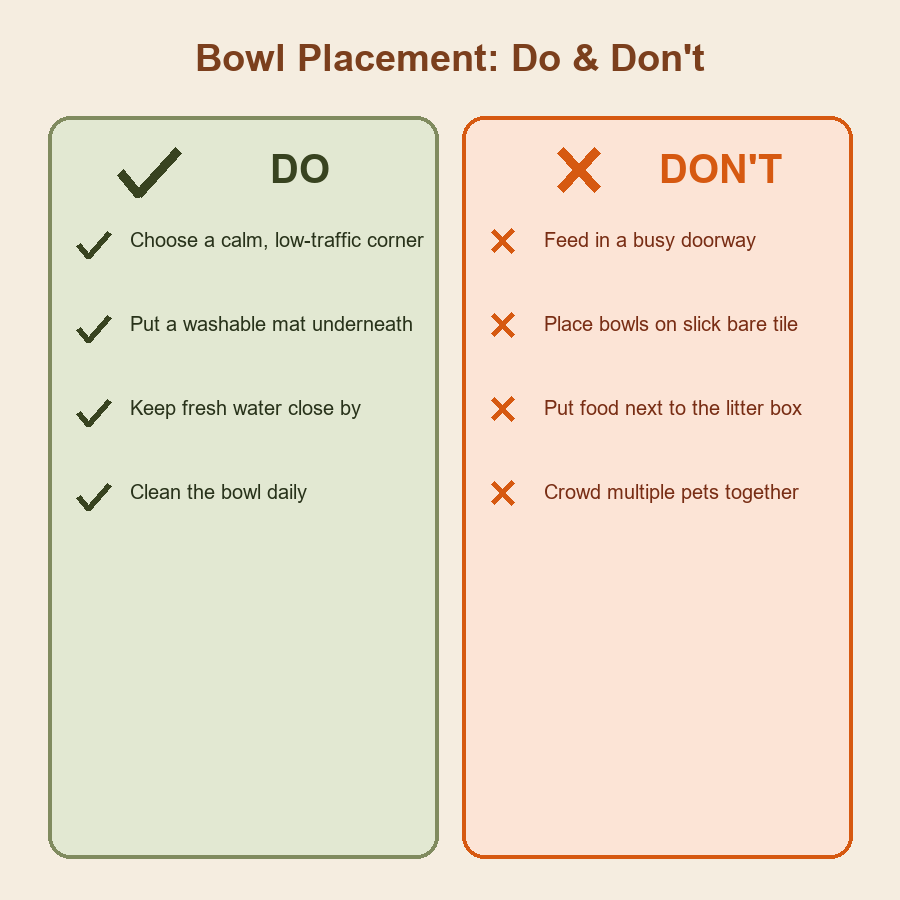
- Do put the bowl in a calm, low-traffic corner. Don’t set it in the main walkway where your dog gets bumped mid-meal.
- Do use a non-slip mat under the bowl. Don’t leave a bowl skating across slick tile.
- Do keep food well away from the cat’s litter box. Don’t feed your dog right next to the litter tray.
- Do keep most dogs at floor or low bowl height. Don’t raise the bowl for a large, deep-chested dog without asking your vet.
- Do wash food and water bowls daily. Don’t let residue and biofilm build up in a forgotten corner.
Common mistakes to avoid
- Raising the bowl by default. Cause: assuming a taller feeder is automatically better for posture or digestion. Sign: you bought a stand for a big, deep-chested dog on a hunch. Fix: keep the bowl low for most dogs, and ask your vet before elevating for an at-risk breed.
- Placing the bowl in the traffic lane. Cause: putting food wherever there’s floor space. Sign: your dog startles, gulps, or walks away mid-meal when people pass. Fix: move it to a quiet corner or along a wall.
- Ignoring slick footing. Cause: setting a bowl straight onto tile or hardwood. Sign: the bowl slides and your dog’s paws splay as they eat. Fix: add a grippy, wipeable non-slip mat.
- Feeding next to the litter box. Cause: convenience in a small kitchen. Sign: your dog eats less, hesitates, or ignores the food. Fix: separate the food bowl from the litter box by a good distance or into another room.
- Skipping the daily wash. Cause: bowls look fine, so they get refilled instead of cleaned. Sign: a slick film or faint odor in the bowl. Fix: wash food and water bowls daily with hot, soapy water.
What most guides get wrong
Plenty of bowl-placement articles reach for the same reflex: raise the bowl. It photographs well and sounds like an upgrade. But for the dogs most at risk, it’s the opposite of what the evidence supports.
- They recommend raised bowls as a blanket upgrade. Veterinary guidance from Cornell lists raised food bowls as a risk factor for bloat in large, deep-chested dogs and advises avoiding them. Recommending a raised feeder to every big dog gets the safety picture backwards for exactly the dogs who can least afford it.
- They present placement tips as science. The quiet corner, the non-slip mat, keeping water separate — these are sensible comfort choices, not clinically proven prescriptions. Honest guidance calls them what they are: practical, common-sense placement.
- They forget the litter box. In homes with cats, feeding a dog right beside the litter tray is a common, overlooked reason a pet eats or drinks less. Distance is a free fix that most product-focused guides skip.
- They stop at where, and ignore how clean. A perfectly placed bowl that never gets washed is still a hygiene problem — pet bowls are among the germiest items in the home. Placement and daily cleaning go together.
Choosing the bowl and stand
Once you’ve settled on a spot, two choices remain: the bowl itself and whether to raise it at all. Neither is about buying the flashiest product — it’s about matching the gear to your dog and your floors.
- Height: for most dogs a floor or low bowl is the safe default, and for large, deep-chested breeds it’s a vet question before you elevate. Our elevated vs. floor dog bowls comparison walks through who genuinely benefits from a raised bowl and who should stay low.
- Material: a non-porous, easy-to-clean bowl helps you keep the daily wash simple. Our ceramic vs. stainless steel dog bowls guide compares durability, cleaning, and value.
- Footing: whatever bowl you choose, a non-slip mat underneath keeps it steady and contains the mess.
Buy for your dog’s size, breed risk, and your vet’s advice — not for the tallest or shiniest listing. The best setup is the calm, clean, safe one your dog actually uses every day.
The bottom line
Give your dog’s food bowl a calm, low-traffic corner of the kitchen, on a non-slip mat, with fresh water easy to reach and the whole station kept well away from any litter box. Keep the bowl at floor or low height for most dogs, and — if you have a large, deep-chested breed — leave it low and ask your veterinarian before ever raising it, because elevated bowls are a recognized bloat risk. Then wash the bowls daily, and you’ve covered comfort, hygiene, and safety in one spot.
For more kitchen setups and pet-friendly layout ideas in one place, visit our FurlyHome kitchen ideas hub.
FAQ
Should I use a raised or elevated dog bowl?
For most dogs, a floor-level or low bowl is a fine, safe default. For large, deep-chested breeds, raised bowls are listed by veterinary guidance as a risk factor for bloat (GDV), so don’t raise the bowl on your own — ask your veterinarian first. Elevating is a decision to make with your vet, not an automatic upgrade.
Where’s the best spot in the kitchen for a dog’s food bowl?
A calm, low-traffic corner or a spot along the wall, set back from the main cooking-and-walking lane, on a non-slip mat. That lets your dog eat without being bumped or startled, and keeps the bowl from sliding on slick floors.
Can I put the food bowl near the cat’s litter box?
It’s better not to. Keeping food and water well away from the litter box is more hygienic and helps prevent a dog or cat from eating and drinking less. Put the food bowl in a different zone of the kitchen, or a different room entirely.
Should the food and water bowls be together or separate?
Both should be easy to reach. Many owners give water its own nearby spot so it stays cleaner and is always available, even between meals. There’s no single rule — the goal is steady access to fresh water and a calm place to eat.
How often should I wash my dog’s bowls?
Daily. The American Kennel Club recommends washing food and water bowls every day to prevent food residue and biofilm from building up, and notes that pet bowls are among the germiest items in the home. Hot, soapy water does the job.
Sources
- Cornell University College of Veterinary Medicine (Riney Canine Health Center) — Gastric Dilatation Volvulus (GDV) or Bloat — supports that bloat is most common in large, deep-chested dogs, that using a raised food bowl is a risk factor, and that raised food bowls should be avoided.
- VCA Animal Hospitals — Bloat: Gastric Dilatation and Volvulus in Dogs — supports that GDV is a life-threatening disorder seen most commonly in large, deep-chested dogs.
- American Kennel Club — How Often Should You Wash Dog Bowls? — supports washing food and water bowls daily to prevent residue and biofilm, and that pet bowls rank among the germiest items in the home.
- Houndsy — Where to Put Your Dog Food and Water Bowl — general pet-care guidance (a commercial pet blog, not a veterinary authority) for the practical placement tips: a quiet spot where a dog can see the room, keeping food away from a litter box, and using a non-slip mat on slick floors.
Last reviewed July 2026. Written by The FurlyHome Editorial Team.



Write Your Review
No reviews yet. Be the first to share your experience!