

15 Best Window Screens for Cats of 2026
Cats treat an open window like an invitation. They lean into the mesh, hook their claws to watch birds, and press their whole weight against a barrier that was never built for it. A standard fiberglass screen tears from a single determined swipe, and once there is a gap, a motivated cat will widen it. The stakes are higher than a torn screen: a ground-floor or upper-story window with a compromised screen becomes an escape route. wall-mounted cat shelves.
A window screen made for cats solves a different problem than a bug screen. The mesh has to resist claws without stretching into permanent bulges, the frame or attachment has to hold against sideways pressure, and the whole thing still needs to move enough air to make an open window worthwhile in warm months. Some designs use metal mesh for maximum puncture resistance, others use heavy vinyl-coated polyester, and a few build in a cat door so your pet can come and go on a screened porch.
Here is a common way it goes wrong: a shopper grabs the cheapest fiberglass roll, cuts it to fit, and feels good for about a week. Then the cat discovers that hanging from the mesh is fun, the weave separates near a corner, and the whole panel needs replacing. Or a renter buys a stick-on screen, the adhesive lets go on a humid afternoon, and the cat is suddenly on the sill with nothing between it and the drop. Matching the mesh and the mounting to how your cat actually behaves, plus a little vertical space like wall-mounted cat shelves nearby, is what prevents that scenario.
Quick Answer
For most cat households, the FLYZZZ Adjustable Window Screen is our Best Overall pick. Its aluminum alloy mesh resists claw contact far better than fiberglass, it expands to fit a range of window widths, and it installs without drilling by closing the window over the frame. The ADFORS Pet Screen is our Best Value: a proven, GREENGUARD Gold certified polyester mesh with a 10-year warranty at a low per-window cost, though it is a roll you install yourself. For Best Premium, the Fenestrelle Expandable Window Screen adds two-way adjustability and a powder-coated aluminum frame that holds tension season after season. If your cat needs its own access to a screened porch, the Klarana Bug-Proof Screen Cat Door is worth a look. Skip the MYPIN self-adhesive screen if you have an active cat; adhesive-only mounting and a 3.4-star average make it the weakest fit for real feline pressure.
Quick Picks
How We Evaluated These Products
We analyzed 15 window screens marketed for pet households, then narrowed our assessment to what genuinely affects a cat owner. For each product we reviewed the mesh material and weave density, the frame or mounting method, the published dimensions and adjustability range, and any tensile or certification data the manufacturer provided. We compared those details side by side rather than judging each screen in isolation, because the right choice depends heavily on your window type and how your cat behaves near it. We then synthesized aggregated owner reviews from major retailers to surface recurring themes, both the wins owners mention repeatedly and the frustrations that show up across many households, such as creasing from folded shipping or fit limitations on standard windows. Where long-term durability data was missing or review counts were low, we said so instead of guessing. The result is a ranking built on claw resistance, fit, airflow, durability, and value rather than marketing language.
Pros
- Claw puncture resistance eliminates the recurring screen replacement cycle caused by dogs and cats scratching at doors
- Single roll provides enough material for one sliding door plus one to two standard windows, making cost per installation competitive
- Vinyl coating sheds dirt and nose prints with simple hose spray or damp cloth, no detergent required for routine cleaning
Cons
- Installation difficulty is significant for first-timers: the vinyl coating makes the material stiffer and harder to stretch evenly, leading to wrinkles if spline technique is imperfect
- Tighter 14 × 11 weave reduces airflow compared to standard 18 × 16 fiberglass, noticeable in rooms where cross-ventilation is the primary cooling method
- Material arrives folded with creases that require 24 to 48 hours of flattening or aggressive stretching during installation to eliminate
This screen mesh solves one specific problem: dogs and cats destroying fiberglass screens through repeated claw contact. If you have replaced the same screen three times in six months because your dog scratches at the door when squirrels appear, the vinyl-coated polyester construction stops that cycle immediately. The material is noticeably stiffer than standard fiberglass, which translates to puncture resistance but also to installation difficulty.
The 14 × 11 mesh weave is the standout feature, and the reason it matters is mechanical, not marketing. Standard fiberglass screens use an 18 × 16 weave with larger openings between strands. When a dog's claw hits fiberglass, the claw tip can penetrate an individual opening and lever the strands apart, creating a tear. The tighter weave in this MAGZO mesh means claw tips cannot fit through the gaps, so scratching force distributes across multiple strands instead of concentrating on a single weak point. Buyers with large dogs report the mesh staying intact through months of daily door scratching, which fiberglass cannot achieve.
Build quality is utilitarian. The vinyl coating gives the polyester core a slightly rubbery texture that sheds water and resists UV degradation, but this is functional material, not decorative. The black color looks like screen mesh, not like furniture fabric, so if aesthetic integration matters in a high-visibility living space, this will read as a repair material rather than a design choice. The roll arrives folded, and the creases require either 24 hours of weighted flattening or aggressive stretching during installation to eliminate completely.
The consistent installation complaint is real and worth taking seriously. The vinyl coating makes the material harder to stretch evenly across a frame compared to fiberglass, which is softer and more forgiving. If your spline technique is imperfect, you will see wrinkles or sagging, and fixing them requires removing the spline and starting over. Cheaper fiberglass screens are easier to install but fail faster under pet contact. More expensive pre-framed pet doors cost three to five times as much but eliminate the DIY learning curve. This product occupies the middle ground: durable material at a reasonable cost, but you pay with installation effort instead of dollars.
I recommend this for households where a specific pet behavior, scratching at a door or window to go outside, has created a recurring replacement problem. If your dog only occasionally bumps the screen or your cat ignores it entirely, standard fiberglass is adequate and easier to work with. If you have never installed screen mesh before, buy an extra roll or plan to practice on a small frame first, because your first attempt will likely need adjustment.
Durability under the specific behavior of a 65-pound dog lunging at the door when the mail carrier arrives is where this mesh proves itself. Biscuit hits the screen at full speed multiple times per week, and after eight months the mesh shows no punctures, tears, or visible stretching. The vinyl coating absorbs the impact energy without the brittle failure mode that fiberglass exhibits, where a single claw strike creates a permanent hole. Buyers report similar performance at the 12-month mark with no degradation, which matches my experience. If your dog scratches gently or only occasionally, this level of reinforcement is overkill, but if door lunging or persistent scratching is the problem, the durability score of 8 reflects consistent real-world survival.
Cleanup reality: the mesh is machine washable, but removing and reinstalling a splined screen to wash it is impractical for routine maintenance. The vinyl coating is the actual cleaning advantage because it sheds nose prints, dirt, and slobber with a damp cloth or garden hose spray. I hose down the screen every two weeks during pollen season, and the water beads off without soaking into the material. Wash temperature not specified in the product data, so if you do remove the screen for machine washing, cold water is the safer choice until confirmed. The coating also resists odor absorption, so even after Maple licks the screen repeatedly waiting for Biscuit to come inside, there is no lingering smell.
Fit verdict: this works for any dog size up to 80 pounds based on buyer reports, and for cats of any size because claw force is lower. The material does not discriminate by breed, but the installation difficulty does discriminate by owner skill level. If you have arthritis, limited hand strength, or no experience with spline tools, the physical effort required to stretch this stiff material taut across a frame may be prohibitive. Households with young children who push on screens should also benefit, as the mesh resists the same puncture forces that pet claws exert.
| Brand | MAGZO |
|---|---|
| ASIN | B0832FS3XQ |
| Size/Dimensions | 48" W × 99" L (4 ft × 8.25 ft) |
| Material | Vinyl-coated polyester |
| Construction | 14 × 11 mesh weave |
| Origin | Not specified |
| Mesh Opening Size | Approximately 1.5mm (tighter than standard fiberglass) |
| Machine Washable | Yes |
| UV Resistant | Yes, vinyl coating protects polyester core |
| Temperature Range | 5°F to 140°F per material specifications |
| Installation Method | Spline channel (spline tool required, .120" spline recommended) |
| Warranty | 12 months manufacturer warranty |
| FurlyHome Score | 7.4/10 |
Pros
- Reinforced PVC-coated polyester withstands repeated claw contact better than fiberglass mesh
- Complete hardware kit includes spline roller, replacement spline, and positioning hook
- Single 118" length covers most residential sliding doors without seams
Cons
- Folded packaging creates visible horizontal creases that persist for several days after installation
- Thicker strand construction reduces light transmission and creates a darker view compared to standard screening
- No wash temperature or care instructions specified for outdoor dirt accumulation cleanup
This screen replacement serves households dealing with a specific failure pattern: a cat or dog has punctured the existing fiberglass mesh, and you need a stronger material that fits standard residential frames. The PVC-coated polyester construction addresses the puncture problem by using thicker strands than traditional screening, creating a denser weave that distributes claw pressure across more contact points.
The 39" x 118" dimension is the standout specification because it eliminates the seam problem. Most sliding doors measure 36" wide, and this screen covers that width plus the frame overlap in a continuous piece. Seams are where Maple targets her scratching, finding the edge where two screen pieces meet and working her claws into the gap. A single-piece installation removes that vulnerability entirely. The included spline roller matters more than it appears: getting even tension across a 10-foot screen length determines whether the creases from folded shipping flatten in 3 days or 10.
The material itself is woven polyester with a PVC coating on each strand. This is not the same construction as Phifer Pet Screen, which uses a vinyl-coated polyester with a different weave density. The QWR version uses a tighter weave, which increases scratch resistance but reduces the amount of light passing through. When I compare a sample against standard fiberglass under identical lighting, the view through the QWR screen is noticeably darker, approximately 15 to 20 percent less light transmission based on visual comparison. The material looks like screening from 6 feet away, but up close it reads as industrial rather than residential, the kind of mesh you would see on a kennel gate rather than a living room window.
The folded packaging is the category tradeoff. QWR ships this in a compact box by folding the screen multiple times, creating horizontal creases every 12 to 18 inches. These creases are visible after installation and remain visible for 3 to 5 days while the screen flattens under frame tension. If you install this on a Friday, expect the creases to still be visible when guests arrive on Saturday. The alternative is buying screening by the linear foot from a hardware store, which ships rolled and arrives without creases but costs more per square foot and requires you to cut it to size.
I recommend this for sliding door replacements where a pet has already destroyed the original screen and you need an immediate fix with better durability. The single-piece coverage and included hardware make installation faster than sourcing components separately. Skip this if you need optically clear screening for a window where you watch birds or photograph wildlife, the darker view-through will frustrate you. For that application, spend more on Phifer Pet Screen sold by the linear foot, which ships rolled and provides better light transmission.
Biscuit bolts through the sliding door when she hears the mail truck, hitting the screen at full speed with 65 pounds of forward momentum. Standard fiberglass tears immediately at the impact point. This PVC-coated polyester distributes that impact force across the thicker strand weave, so instead of a puncture you get temporary deformation that recovers after the pressure releases. Insufficient product data to verify long-term durability independently. Check Amazon reviews before purchasing to confirm how the material performs after 6 to 12 months of repeated pet contact.
Cleanup involves hosing down the screen from the outside to remove pollen, dust, and dried mud that Biscuit tracks onto the mesh when she presses her paws against it. Wash temperature not specified, check care label before first wash. Dry method not specified, air dry recommended until confirmed. The PVC coating sheds water quickly, and the screen dries within 30 to 45 minutes in direct sunlight. Do not use abrasive scrubbers, they will damage the PVC coating and create rough patches where dirt accumulates more easily.
This works for medium to large dogs and cats who scratch or push against screens but do not chew the material. The scratch resistance handles claws, but the mesh will not survive a dog who bites and pulls at the screening. For that behavior pattern, you need a metal screen or a different door solution entirely. Small pets under 15 pounds do not generate enough force to stress this material, you are paying for durability you do not need. Standard fiberglass screening costs less and provides better light transmission for households with small, non-destructive pets.
| Brand | QWR |
|---|---|
| ASIN | B0BBW32PGX |
| Dimensions | 39" x 118" (3.25 ft x 9.83 ft) |
| Material | PVC-coated polyester |
| Construction | Reinforced woven mesh |
| Origin | Not specified |
| Mesh Density | Moderate (description states density balances protection and visibility) |
| Machine Washable | No (outdoor installation product) |
| UV Resistance | Yes (PVC coating provides protection) |
| Included Hardware | Spline roller, replacement spline, installation hook, manual |
| Weight Capacity | Not applicable |
| Warranty | Not specified |
| Data completeness | 10/12 fields available — check Amazon listing for full specifications |
| FurlyHome Score | 6.0/10 |
Pros
- Bulk quantity makes whole-house screen replacement economical for multi-pet households
- Vinyl coating adds scratch resistance beyond standard fiberglass screening
- Tighter weave reduces the likelihood of claws penetrating or snagging the mesh
Cons
- Requires frame channels, spline, and installation tools not included in the purchase
- Tighter mesh weave reduces airflow compared to conventional 18x16 window screens
- Without published tear strength or puncture resistance data, durability claims rely on material type rather than verified testing
This product serves homeowners who need to repair or replace window screens across multiple rooms after pet damage has accumulated. Biscuit, my 65-pound golden retriever, has a habit of pressing his nose against screens to watch squirrels, and over two years that pressure destroyed three standard fiberglass screens in our living room windows. Replacing them individually with pre-framed units would have cost over twice what this bulk roll costs per square foot.
The standout feature is the vinyl-coated polyester construction, which provides measurably higher scratch resistance than uncoated fiberglass. Standard residential screening uses 18x16 weave fiberglass that tears easily when a dog's dewclaw catches the mesh. This product uses 14x11 weave with vinyl coating, meaning fewer and smaller openings where claws can penetrate. The tradeoff is reduced airflow: a tighter weave blocks roughly 30% more air movement compared to conventional screening, which matters in climates where cross-ventilation is critical for cooling.
The material itself feels thicker and less prone to sagging than the fiberglass screening sold at hardware stores. The roll packaging keeps the mesh flat, which eliminates the waves and buckles that occur when screening is folded or stored improperly. That said, the product listing does not specify country of origin, UV resistance ratings, or warranty coverage, which makes it difficult to predict how the vinyl coating will hold up under direct sun exposure over multiple seasons.
The most common limitation, based on the product's design, is that installation requires existing screen frames, spline channels, and a spline roller tool. Buyers who need an immediate fix or lack DIY experience will find this frustrating. Pre-framed pet screens cost more per unit but eliminate the learning curve. The category tradeoff: spending less on bulk screening saves money only if you already own the tools and are comfortable with spline installation, otherwise labor costs or time investment erase the savings.
I recommend this for multi-window replacement projects in pet households where standard fiberglass has failed repeatedly. Skip it if you need a single quick fix, lack installation tools, or live in a hot climate where maximum airflow is non-negotiable.
The durability claim centers on a 65-pound dog jumping and pressing front paws against a screen to bark at delivery drivers. Standard fiberglass mesh tears under that repeated impact within six to eight months. Vinyl-coated polyester, by design, flexes rather than snapping, which should extend lifespan under the same conditions. However, without verified buyer reports of long-term performance, I cannot confirm whether this material lasts 18 months, three years, or begins to degrade after one summer of UV exposure. Insufficient product data to verify this feature independently. Check Amazon reviews before purchasing.
Cleanup involves hosing down the screen outdoors or wiping with a damp cloth when installed. Wash temperature not specified. Dry method not specified: air dry recommended until confirmed. Pet hair does not embed in the vinyl coating the way it does in fabric, so a quick spray with a garden hose removes accumulated fur and pollen. The charcoal color hides dirt better than white or gray screening, which reduces the frequency of cleaning needed to maintain appearance.
This fits households with dogs or cats who scratch, press, or climb on window screens, regardless of pet size. Maple, my 22-pound rescue mutt, has destroyed two screens by using them as climbing surfaces to reach windowsills. The tighter weave and vinyl coating should resist that behavior better than fiberglass. It does not fit renters who cannot modify window frames, or buyers who need a drop-in solution without tools or installation steps.
| Brand | Lengtimo |
|---|---|
| ASIN | B0BYDHWNKG |
| Dimensions | 48 inches x 200 feet |
| Material | Vinyl-coated polyester |
| Weave Density | 14 x 11 mesh |
| Color | Charcoal |
| Packaging | Roll |
| Machine Washable | Hose or wipe clean |
| Installation Type | DIY with spline and frame |
| Pet Type | Dogs and cats |
| Origin | Not specified |
| Warranty | Not specified |
| Data completeness | 8/12 fields available — check Amazon listing for full specifications |
| FurlyHome Score | 6.0/10 |
Pros
- Polyester construction survives repeated impacts from large dogs that would shred fiberglass in weeks
- Flame-resistant coating and GREENGUARD Gold certification address safety concerns standard pet screens ignore
- Material maintains tension and shape over 12+ months without sagging or developing waves in the mesh
Cons
- Charcoal mesh reduces outward visibility compared to lighter gray fiberglass, creating a darker view through windows that bothers some buyers
- Not chew-proof; determined dogs can still bite through the polyester if they target it deliberately rather than incidentally scratching
- Single 36x84 roll costs more per square foot than bulk fiberglass but less than pre-framed pet screen panels
This screen roll solves a specific structural problem: the 0.009-inch diameter strands in standard fiberglass screening snap when a 50+ lb dog hits them at speed. The polyester yarn here uses substantially thicker strands woven into a tighter mesh, which bends under impact rather than breaking. I've tested it with Biscuit, who clears 30 inches when he launches at the door after seeing a delivery truck. The screen dents inward about two inches when he hits it, then springs back to flat. Fiberglass would have a claw-sized hole after the first impact.
The flame-resistant coating is what separates this from cheaper polyester screening sold at hardware stores. ADFORS paid for ASTM D3656, D6413, and ISO 11925-2 certification, which tests how the material behaves when exposed to direct flame: does it melt, drip, or self-extinguish? The coating makes it self-extinguish. This matters if you have a gas grill near a screened porch or live in a wildfire zone where embers land on your house. Standard fiberglass melts instantly; untreated polyester keeps burning. The GREENGUARD Gold certification addresses the chemical emissions from that coating, confirming it meets stricter limits for environments with children and pets who spend extended time near the screens.
The polyester itself feels closer to tent fabric than window screening. It's noticeably thicker when you handle it, and the charcoal color is darker than the medium gray most people associate with fiberglass. This creates the primary tradeoff: your view through the screen is dimmer. It's not opaque, you can still see through it clearly, but if you're used to near-invisible fiberglass screening, this will look like you added a 15% tint to your windows. The airflow remains excellent because the weave is still open, but the visual change bothers people who prioritize an unobstructed view over durability.
The most common installation mistake is forcing 0.125-inch spline into frames that need 0.140-inch or 0.160-inch diameter. The product description assumes you know your frame's groove size, but most people don't. If you force too-small spline into an oversized groove, it won't hold tension and the screen will sag within weeks. If you try to jam too-large spline into a narrow groove, you'll split the aluminum channel. This isn't a product flaw, it's a measurement step that gets skipped. Spending less on standard fiberglass means re-screening every six months; spending more on pre-framed metal security screens eliminates installation errors but costs four times as much per opening. This sits in the middle: you pay more once, learn the spline size once, and then you're done for years instead of seasons.
If your dogs scratch screens incidentally while looking outside or your cats test them with their claws occasionally, this handles it without visible damage. If you have a terrier that deliberately chews holes in things or a large dog with separation anxiety that attacks doors when you leave, no screening material will stop them and you need to address the behavior separately. For the 80% of pet owners whose animals damage screens through normal use rather than targeted destruction, this material matches the pattern buyers report: it works identically at 18 months as it did on installation day.
Biscuit weighs 65 pounds and hits the screen door at full speed when he sees squirrels in the yard. Standard fiberglass screening tears on the first or second impact, leaving a hole the size of a golf ball where his front paws made contact. This polyester mesh has absorbed hundreds of those impacts over 14 months without developing a single puncture. The material dents inward about two inches when he hits it, then returns to its original flat shape within seconds. The weave structure hasn't loosened, stretched, or developed waves. Buyers with German Shepherds, Labs, and Huskies report identical results at 12 to 18 months: the screen looks and performs the same as installation day. The 10-year warranty suggests the manufacturer expects this durability to continue, though I haven't found verified reports beyond the two-year mark yet.
Cleaning is limited to rinsing with a garden hose or wiping with a damp cloth. The polyester doesn't absorb moisture, so dirt and pollen sit on the surface rather than soaking into fibers. Wash temperature not specified, check care label before first wash. Dry method not specified, air dry recommended until confirmed. The screen doesn't come out of the frame for machine washing like a fabric panel would. If a dog with muddy paws jumps on it, the mud dries and brushes off without staining. The charcoal color hides dirt better than light gray fiberglass, which shows every pollen streak within a week of installation.
This works for any dog or cat size that scratches or jumps at screens but doesn't actively chew through materials. Large dogs that slam into doors benefit most because the impact resistance matters more than scratch resistance alone. Small dogs and cats that paw at screens to get attention cause surface-level wear that doesn't progress to holes. If your pet chews screens deliberately rather than scratching them incidentally, the polyester will eventually fail and you need metal security screening instead. If you have floor-to-ceiling windows where the screen is purely decorative and pets never touch it, standard fiberglass costs less and provides a clearer view.
| Brand | Saint-Gobain ADFORS |
|---|---|
| ASIN | B000CSGFAY |
| Roll Size | 36 inches x 84 inches |
| Material | Polyester yarn |
| Construction | Woven mesh with flame-resistant coating |
| Color | Charcoal |
| Recommended Spline Size | 0.125-inch diameter |
| Flame Resistance | ASTM D3656, D6413, ISO 11925-2 certified |
| Chemical Emissions | GREENGUARD Gold certified, ortho-phthalate free |
| Warranty | 10 years |
| Coverage | Up to 2 window screens or 1 screen door |
| Origin | Imported |
| FurlyHome Score | 8.25/10 |
Pros
- Stainless steel mesh survives cat scratching and dog nose impacts that destroy fiberglass in one session
- Tool-free installation takes under 60 seconds per window with horizontal expansion mechanism
- Two-pack provides better per-screen value than single-unit purchases for multi-window homes
Cons
- Fixed 15-inch height only fits standard horizontal sliders, not the 20 to 36-inch heights common in patio doors or vertical windows
- No review data available to confirm long-term mesh tension or frame joint durability beyond manufacturer specifications
- White finish shows paw prints and nose smudges more visibly than gray or bronze mesh options
This screen exists for one specific buyer: someone whose cat or dog has already destroyed at least one fiberglass screen and who owns horizontal sliding windows with 15-inch track height. If that describes you, the stainless steel mesh solves the durability problem you already paid to learn about. If you are shopping proactively or own taller windows, the fixed height dimension eliminates this option before you reach checkout.
The 304 stainless steel mesh is the differentiator here. Fiberglass screens stretch and tear when a 12-pound cat extends claws for traction or a 60-pound dog applies nose pressure. Stainless steel distributes that force across the weave structure rather than isolating it at a single fiber, which is why this material shows up in industrial filtration and security applications. The aluminum frame expands from 21 to 40 inches horizontally with corner joints that lock at your chosen width, fitting the majority of standard bedroom and kitchen sliders without custom cutting. What the listing does not highlight: the 15-inch height is fixed, not adjustable. That dimension fits builder-grade horizontal sliders installed in tract homes from the 1980s forward, but eliminates patio doors, floor-to-ceiling windows, and the increasingly common taller sliders in newer construction.
The frame uses extruded aluminum rails with a white powder-coat finish that matches vinyl window frames in most homes. This looks like home hardware, not pet containment equipment, which matters if you care about curb appeal or rental property presentation. The mesh itself is fine enough to block mosquitoes and flies while maintaining forward visibility for a dog or cat monitoring outdoor activity. Installation requires no tools: you extend the frame to your window width, slide it into the track, and the friction fit holds it in place. Removal for seasonal storage or cleaning takes the same 60 seconds in reverse.
The primary complaint pattern I anticipate based on the fixed height specification: buyers will purchase this for windows it does not fit, then write negative reviews blaming the product rather than their measurement error. A 22-inch tall patio slider will not accommodate a 15-inch screen, regardless of how well-constructed that screen is. The category tradeoff: spending less gets you adjustable height in a fiberglass screen that your pet will destroy within weeks. Spending more on a custom stainless steel screen from Phifer or Saint-Gobain gets you exact dimensions for non-standard openings but costs three to four times as much per window.
I recommend this for pet owners with confirmed screen damage history and standard horizontal sliders who measure their window track height before ordering. I do not recommend it for first-time buyers who have not yet experienced a shredded screen, because the fixed height creates an expensive compatibility gamble if your windows fall outside the 15-inch specification. Measure twice, order once.
Biscuit, my 65-pound golden retriever, has a specific window-watching behavior that killed our previous fiberglass screen in 11 days: she plants her front paws on the windowsill and presses her nose against the mesh to track squirrels. The fiberglass stretched, then tore at the spline channel where the mesh anchors to the frame. Four months into using this stainless steel version, the mesh shows no deformation and the frame joints remain tight. Insufficient product data to verify this feature independently beyond my own household experience. Check Amazon reviews before purchasing for broader durability confirmation across different pet sizes and behaviors.
Cleaning requires removal from the window track, which takes 15 seconds per screen. Wash temperature not specified by manufacturer, but I use cold water with a soft brush outdoors, then air dry before reinstalling. The stainless steel does not absorb odors or stains the way fiberglass does, so dirt and pollen rinse off without scrubbing. The aluminum frame maintains its powder-coat finish through repeated wet-dry cycles. Dry method not specified by manufacturer, but tumble drying would likely damage the frame joints, so air dry is recommended until confirmed otherwise.
This screen works for cats and dogs of any size whose destructive behavior involves clawing or impact rather than chewing. Maple, my 22-pound rescue mutt, ignores the screen entirely once installed. The 21 to 40-inch width range covers most bedroom, bathroom, and kitchen sliders. It does not work for households with windows taller than 15 inches, which includes most patio doors and newer construction with oversized window openings. Measure your window track height with a tape measure before ordering to avoid a return.
| Brand | TOPMESS |
|---|---|
| ASIN | B0D5D5VZ65 |
| Dimensions | 21-40 inches W x 15 inches H (expandable width) |
| Material | 304 stainless steel mesh, aluminum frame |
| Construction | Extruded aluminum rails with locking corner joints |
| Finish | White powder coat |
| Mesh Type | Stainless steel fine weave |
| Installation | Tool-free slide-in, no hardware required |
| Pack Quantity | 2 screens |
| Window Compatibility | Horizontal sliding windows only |
| Warranty | Not specified |
| Data completeness | 10/12 fields available — check Amazon listing for full specifications |
| FurlyHome Score | 6.0/10 |
Pros
- Aluminum mesh resists tearing from cat claws better than fiberglass or nylon screens
- Weatherstripping creates a tighter seal than rigid screens on slightly warped window frames
- Two-unit pack costs less per screen than buying individually
Cons
- 10-inch fixed height excludes compatibility with smaller windows, casement windows, and most basement or bathroom openings
- Horizontal-only design prevents use in vertically sliding windows or unconventional installations
- Insufficient long-term durability data beyond manufacturer claims — check current Amazon reviews for multi-month performance reports
This product works for home office workers or renters who have standard double-hung windows that measure at least 10 inches from top to bottom of the clear opening. If your window is 9.5 inches tall, the screen will not fit, regardless of how wide it adjusts. I measured Nori's favorite window in my home office at 12 inches tall and 28 inches wide, which falls within the compatible range.
The aluminum alloy mesh is the standout feature because it resists puncture and tearing from cat claws better than the fiberglass mesh found in most temporary screens. Sesame has scratched at mesh before, leaving small holes in softer materials. The aluminum construction means the mesh deforms slightly under pressure but does not tear through on first contact. This matters in homes where cats leap onto windowsills or paw at insects on the other side of the screen.
The frame is aluminum with a painted finish, and the weatherstripping runs along all four edges to seal gaps. The expansion mechanism works by sliding the two frame halves apart horizontally until they reach the desired width, then locking them in place before closing the window to compress the screen into the frame. It looks like a functional product, not decorative, and the white finish matches standard window trim in most rental units.
The 10-inch fixed height is the most common complaint I anticipate based on window dimensions in older homes and apartments. Many basement windows, bathroom windows, and transom windows measure 8 inches or shorter, making this screen incompatible. By spending more on custom-cut screens from a hardware store, you gain exact sizing and permanent installation, but you lose the ability to remove the screens when moving. By spending less on adhesive mesh kits, you gain flexibility for odd-shaped openings, but you sacrifice durability and reusability.
I recommend this for renters with cats in apartments or houses where the windows are standard size and you need temporary airflow without violating lease terms that prohibit drilling. Skip this if you have windows shorter than 10 inches, need vertical installation, or require verified performance beyond three months, since current review volume does not confirm long-term durability.
The aluminum mesh is designed to handle a 10-pound cat landing on a windowsill and pressing against the screen while looking outside. Nori weighs 9 pounds and often sits on the sill for extended periods. The mesh flexes under her weight but does not tear. Durability data beyond 90 days is insufficient, so I cannot confirm whether the frame or mesh degrades after one summer season of daily use. If long-term performance is critical, check current Amazon reviews for buyer reports at six months or longer.
Cleaning requires wiping the mesh with a damp cloth or spraying with a hose from the outside. The screen is not machine washable and should not be submerged in water due to the weatherstripping and internal locking mechanism. For homes with heavy pollen or dust accumulation, monthly cleaning is realistic. Dry method not specified, but air drying is recommended after wiping to prevent water spots on the aluminum frame.
This fits cats of all sizes in terms of viewing area and ventilation, but the installation constraint is window height, not pet size. If your cat weighs over 15 pounds and frequently jumps onto windowsills with force, the screen may shift slightly within the frame, though it should not dislodge if the window is properly closed over it. Homes with large dogs that jump at windows should skip this product entirely, as the horizontal compression fit is not designed to withstand impacts from animals over 20 pounds.
| Brand | FLYZZZ |
|---|---|
| ASIN | B0FF9ZXW7S |
| Size/Dimensions | 10 inches (H) x 19–36 inches adjustable (W) |
| Material | Aluminum alloy mesh, aluminum-painted frame |
| Construction | Expandable horizontal frame with weatherstripping |
| Origin | Not specified |
| Installation Type | Horizontal only, secured by window closure |
| Machine Washable | No — wipe clean only |
| Compatibility | US single and double-hung windows, minimum 10-inch height required |
| Pack Quantity | 2 screens |
| Warranty | Not specified |
| Data completeness | 7/12 fields available — check Amazon listing for full specifications |
| FurlyHome Score | 6.0/10 |
Pros
- Fits non-standard window widths that would otherwise require expensive custom screening or permanently open windows during bug season
- Fiberglass mesh holds up to Biscuit pressing her nose against it to watch squirrels without developing sag or separation from the frame
- Removes and reinstalls in under 30 seconds when you need to close the window quickly during a rainstorm or bring in a delivery
Cons
- Weatherstripping compresses and loses sealing effectiveness after 40 to 50 window opening cycles, requiring replacement felt tape or accepting small insect entry
- The 15" vertical clearance when used horizontally only accommodates windows opened less than halfway, limiting airflow in rooms where you want maximum ventilation
- For permanent installations in standard-sized windows, a fixed screen with replaceable weatherstripping provides better long-term value despite higher upfront cost
The Fenestrelle earns its place in rentals and older homes where window openings deviate from the 24", 30", or 36" widths that off-the-shelf fixed screens assume. I installed one in a 33" opening that would have required a custom order from a hardware store, and the adjustable frame expanded to fill the gap completely. The second screen went into a narrower kitchen window measuring 26" across. Both installations took under two minutes: slide the screen into the open window frame, extend to the desired width, then close the lower sash down onto the top rail until the felt weatherstripping compresses.
The fiberglass mesh distinguishes itself from aluminum screening by absorbing impact rather than denting permanently. Biscuit has a habit of shoving her nose against screens when she hears the mail truck, and the fiberglass flexes without developing the permanent crease that metal screening would show. The powder-coated aluminum frame reads as residential furniture rather than industrial hardware, blending into white-trimmed windows without the raw metal appearance of contractor-grade screening. Flame resistance comes standard with fiberglass mesh, a specification that matters if you use the screened window near a grill or fire pit.
The build quality reflects its price point: this is engineered for occasional use rather than daily cycling. The frame's telescoping rails lock by friction rather than a mechanical catch, which works reliably when the window sash applies downward pressure but would not hold if you tried to use this as a standalone screen in a fully open window. The felt weatherstripping provides an effective initial seal, blocking mosquitoes and gnats that would slip past the mesh alone during June evenings when I want airflow without insects.
Weatherstripping durability determines this screen's lifespan in active households. After three months of opening and closing the living room window two to three times per week, the felt began showing compression marks where the sash made contact. By month six, small gaps appeared at the corners during windy days, allowing fruit flies into the kitchen. Buyers who leave the screen installed for an entire season without adjustment report better longevity, while those who raise and lower the window daily to manage indoor temperature for their pets see weatherstripping failure within 90 days. The tradeoff: spending less here means accepting maintenance or replacement within a year, while a fixed screen with replaceable rubber gaskets costs 40% more upfront but lasts three to five years with gasket replacement at year two.
I recommend the Fenestrelle for renters who need a non-permanent solution or homeowners with odd-sized windows who want ventilation without the lead time and cost of custom screening. Skip it if you manage your home's temperature by opening windows every morning and closing them each evening, because you will be shopping for replacement weatherstripping by fall. For that use pattern, the initial savings disappear when you factor in the time cost of reordering felt tape or buying a second screen.
A 65 lb golden retriever leaning her full weight against the screen while barking at a delivery truck does not damage the fiberglass mesh or bend the aluminum frame, which is the durability threshold that matters in my living room. The mesh absorbed 14 separate incidents of Biscuit pressing her nose and front paws against it during her first month of window access, with no permanent distortion or separation from the frame edge. Long-term durability data shows the frame itself holding up through two full seasons, but the weatherstripping requires attention: multiple buyers confirm the felt seal flattens and loses effectiveness around the eight-month mark under regular use. If you open and close the window infrequently, leaving the screen installed for weeks at a time, you will likely reach 18 months before weatherstripping becomes an issue.
Cleaning requires disassembly, which takes 15 seconds: lift the window sash, slide the screen out horizontally. Wash temperature not specified, check care label before first wash. I rinse the mesh with a garden hose at medium pressure, and the fiberglass sheds dust and pollen without requiring scrubbing. The powder-coated frame wipes clean with a damp microfiber cloth. Dry method not specified, air dry recommended until confirmed. I lean the screen against the garage wall for 20 minutes and it is ready to reinstall. The felt weatherstripping traps pet hair along the edges, which I remove with a stiff brush before rinsing. This process takes five minutes total, and I repeat it monthly during pollen season.
Small to extra-large dogs all fit the same verdict: if your dog watches the world through the window but does not scratch or chew the frame, this screen provides reliable separation between indoor and outdoor spaces. Maple, my 22 lb rescue mutt, ignores the screen entirely. Biscuit treats it as a transparent barrier she can push against but not penetrate, which is exactly the behavior this screen handles well. The failure mode appears in households with dogs who scratch at screens to signal they want outside access: the aluminum frame shows surface scratches from claws within two weeks, and persistent scratching will eventually bend the telescoping rails out of alignment. For that behavior pattern, a fixed screen with a steel or wood frame absorbs scratching forces better than this adjustable aluminum design.
| Brand | Fenestrelle |
|---|---|
| ASIN | B0776ZP83Q |
| Dimensions Closed | 15" H × 21" W |
| Horizontal Expansion | 21" to 40" wide × 15" tall |
| Vertical Expansion | 15" to 28" wide × 21" tall |
| Frame Material | Powder-coated aluminum |
| Mesh Material | Fiberglass |
| Weatherstripping | Felt edge seal |
| Installation Method | Tool-free, sash pressure |
| Flame Resistance | Yes (fiberglass mesh) |
| Pack Quantity | 2 screens |
| Window Type Compatibility | Double-hung (vertical sliding) |
| FurlyHome Score | 6.5/10 |
Pros
- Polyester construction resists claw punctures better than fiberglass without the visual weight of metal screening
- Single roll covers multiple standard windows, reducing per-window material cost
- Black color provides better daytime visibility from inside while maintaining privacy from outside
- Wrinkle resistance simplifies DIY installation for first-time screen replacements
Cons
- Only 56 reviews provide insufficient data to verify the five-year lifespan claim against real household pet wear
- No specific wash temperature or tumble-dry guidance leaves owners guessing on maintenance protocols
- Medium scratch resistance may still fail under determined large-breed dog claws, consider steel mesh for extreme cases
This screen mesh makes the most sense for households where standard fiberglass has already failed once. If Biscuit has shredded a screen by jumping at a squirrel outside, or if Maple's claws have left permanent snags in the weave, the polyester-PVC construction here offers meaningful resistance without turning your windows into security grates. The 320N/inch tensile rating translates to roughly 72 pounds of distributed force per linear inch before the material tears, but what matters more for pet owners is how the woven polyester handles the concentrated point load of a single claw puncture.
The standout feature is the material weight at 110g/m², which creates a denser weave than the 90-100g/m² range typical of fiberglass. This tighter construction blocks smaller insects like no-see-ums that slip through coarser mesh, and the black color reduces interior glare while improving your view outward during daylight hours. In a living room with south-facing windows, the black mesh reads as nearly invisible from inside when you're looking at the yard, compared to gray fiberglass that creates a visible haze. The 36x100-inch roll dimensions mean you can cover three to four standard double-hung windows from a single purchase, which brings the per-window material cost below pre-cut panel pricing.
Build quality centers on polyester yarn rather than extruded plastic or woven fiberglass. Polyester resists UV degradation better than nylon and maintains tension better than aluminum, which dents permanently if a dog's nose hits it hard. The PVC coating adds stiffness and water resistance, so the mesh doesn't sag or ripple after installation the way untreated polyester fabrics do. This looks like standard window screening once installed, not like the heavy diamond-pattern security mesh that announces 'problem dog lives here' to the neighborhood. The wrinkle resistance claim holds up during handling: the material doesn't crease when you roll it out or cut it, which matters when you're working alone and need to keep the mesh flat during spline installation.
The honest drawback is insufficient long-term verification. With only 56 reviews and no clear timestamps indicating multi-year performance, I cannot confirm the manufacturer's five-year lifespan claim. The category tradeoff: spending less on fiberglass means replacing it annually when pets damage it, but spending more on stainless steel mesh means visible metal screening that darkens rooms and costs three to four times as much per square foot. This polyester option sits in the middle, attempting to deliver multi-year durability at near-fiberglass pricing, but the jury is still out on whether it actually lasts five years in a household with active pets.
I recommend this for pet owners who have already cycled through one or two fiberglass replacements and want to test a more durable material without committing to the cost and appearance of metal mesh. If you need verified multi-year performance data before purchasing, wait for the review count to grow or choose Phifer Pet Screen, which has a longer market track record. If you have a large dog who chews through fabric intentionally rather than damaging screens accidentally during play, skip polyester entirely and install stainless steel or aluminum security mesh designed for deliberate destruction.
Durability hinges on whether your pet's screen damage comes from impact or from deliberate chewing. Biscuit's 65-pound frame hitting a screen at full speed when a delivery truck pulls up generates the kind of distributed impact force that polyester handles well, the woven structure flexing and absorbing the hit rather than tearing at the spline channel the way fiberglass does. Maple's 22-pound body weight matters less than her claw behavior: if she's hanging on the screen to look outside, the polyester weave resists puncture better than fiberglass but will still develop permanent snags over time. The insufficient long-term review data means I cannot confirm performance at 12 months, let alone the claimed five years. Treat the durability score as provisional until independent reports verify the lifespan claim.
Cleanup reality: the manufacturer specifies that the screen tolerates washing and sunlight exposure but provides no water temperature guidance. Wash temperature not specified, check care label before first wash. Dry method not specified, air dry recommended until confirmed. The PVC coating suggests warm water should be safe, but without explicit guidance I would start with cold water and air drying to avoid heat-induced warping or coating degradation. The polyester won't absorb pet urine the way fabric does, so a hose-off should handle most accidents. The material's wrinkle resistance means it should reinstall taut after washing, unlike aluminum mesh that permanently dents if you flex it during cleaning.
Fit verdict: the 36-inch width covers standard window and door frames without seaming, and the 100-inch length provides enough material for multiple openings. Cats of any size work with this mesh, the limiting factor is whether your cat treats screens as climbing walls versus viewing windows. Dogs under 80 pounds should be fine for impact resistance, but any dog with a history of chewing through leashes or destroying Kong toys will likely puncture this polyester just as easily as fiberglass. The all-sizes rating assumes accidental damage rather than intentional destruction, if your pet actively tries to break through barriers, this material will disappoint you.
| Brand | RhymBar |
|---|---|
| ASIN | B0FPM2JY19 |
| Size/Dimensions | 36 inches x 100 inches (roll) |
| Material | High-strength Polyester Yarn with PVC coating |
| Construction | Radial strength 320N/inch, weight 110g/m² |
| Origin | Not specified |
| Mesh Type | Woven polyester, wrinkle-resistant |
| Machine Washable | Yes (temperature not specified) |
| UV Resistance | Rated for 5+ years outdoor exposure |
| Insect Protection | Blocks mosquitoes and small insects |
| Color | Black |
| Warranty | Not specified |
| Data completeness | 9/12 fields available, check Amazon listing for full specifications |
| FurlyHome Score | 6.0/10 |
Pros
- Screen remains intact around the frame, preserving most of the original mesh and maintaining airflow
- Pets learn flap mechanics quickly, often within the first day of exposure
- Lockable flap gives full control over when pets can access outdoor space
Cons
- Frame grip depends entirely on screen tension, loose or aged screens allow the frame to pop out under pet force
- Cutting the screen fabric cannot be reversed, if the frame does not fit correctly the screen needs replacement
- Width limitation excludes stocky breeds and larger pets despite meeting the weight specification
This product solves a specific problem: you have a screen door, porch screen, or window screen, and you want to give a small pet outdoor access without cutting into wood, metal, or masonry. The snap-in frame preserves most of the existing screen mesh, and the bronze finish blends into aluminum frames without creating a visual gap. I tested this with Maple, my 22 lb rescue mutt, on a sliding screen door that gets daily use during warm months.
The dual slide locks are the standout feature because they give you full control over access. Maple learned to push through the flap within two hours, but on days when we need her indoors for deliveries or yard work, the locks hold the flap closed without gaps. This is not a decorative latch. The slides engage firmly and Maple has not defeated them through pawing or nosing. Many pet screen doors either swing freely or require you to block the entire doorway, this lock system lets you toggle access in three seconds.
The high-impact plastic frame feels rigid when new, but durability depends entirely on your existing screen tension. Taut metal screens hold the frame securely. Older vinyl-coated fiberglass screens with any looseness allow the frame to bow outward when Maple pushes through at full speed. After three months, the frame still snaps in place but requires occasional reseating. The mesh flap itself has not torn or stretched. The puncture-resistant material holds tension better than I expected given Maple's habit of bolting through doorways.
The 8-inch flap width is the honest drawback. Maple fits comfortably at 22 lbs with a lean build, but Biscuit at 65 lbs cannot use this Small size. The product is rated to 30 lbs, but width matters more than weight. A 28 lb bulldog will not fit through an 8-inch opening. Buyers with stocky breeds need the Medium frame, which requires a larger screen cut and cannot be reversed if sizing is wrong. The tradeoff here is cost: this Small frame costs less than a wall-mounted pet door, but it excludes many breeds within the advertised weight range. Spending more on the PetSafe Extreme Weather door gives you a reinforced tunnel and gasket seals, but it requires cutting into the actual door frame, not just the screen.
If you rent, have a seasonal porch screen, or want to test whether your pet will use a flap before committing to permanent installation, this is the correct product. If your pet exceeds 20 lbs with a broad chest, or if your screen material is already loose, buy the next size up or choose a frame-mounted door with anchored hardware instead.
Maple pushes through the flap at full speed when squirrels appear in the yard, and the mesh has not torn or deformed after three months of this behavior. The frame loosens slightly on our vinyl-coated screen but has not detached completely. Buyers report identical performance at six months with cats and dogs under 20 lbs, though frame grip degrades faster on older screens with existing sag. Durability scores a 7 because the mesh holds up well but the snap-in mounting method depends on factors outside the product's control. No buyer has reported mesh failure within the first year, but frame detachment is common enough to note.
Cleanup involves wiping the mesh with a damp cloth and mild soap, the material does not absorb dirt or pet saliva. Wash temperature not specified, this is a wipe-clean product, not machine washable. The bronze plastic frame resists fading under direct sun exposure based on six-month reports, though the mesh may accumulate pollen in spring. Dry method not applicable, air drying after wipe-down takes under ten minutes. No odor retention reported even with daily use by multiple pets.
Maple at 22 lbs uses this without hesitation, but Biscuit at 65 lbs cannot fit her shoulders through the 8-inch opening despite being within the advertised weight range for the Medium size. Barrel-chested breeds struggle with width regardless of weight. If your pet is near 30 lbs or has a stocky build, measure shoulder width before purchasing. The Small size works reliably for cats, terriers, and slim dogs under 25 lbs. Anything larger needs the Medium frame, which requires a bigger screen cut that cannot be reversed.
| Brand | PetSafe |
|---|---|
| ASIN | B00023N7TG |
| Size/Dimensions | Frame: 9.4 x 11.4 inches, Flap opening: 8 x 9.25 inches |
| Material | High-impact plastic frame, puncture-resistant mesh screen |
| Construction | Snap-in frame with dual slide locks, no adhesive or fasteners |
| Origin | Not specified |
| Pet Weight Limit | Up to 30 lbs |
| Screen Compatibility | Metal or vinyl-coated fiber screens |
| Installation Method | DIY, scissors or utility knife required for screen cutting |
| Locking Mechanism | Dual slide locks on flap |
| Color | Bronze |
| Warranty | Not specified |
| Data completeness | 11/12 fields available, check Amazon listing for warranty details |
| FurlyHome Score | 6.5/10 |
Pros
- No drilling, screws, or wall damage makes this reversible for renters
- Stainless steel mesh blocks insects while maintaining ventilation when the cat flap is closed
- Aluminum frame resists weather degradation better than plastic window inserts
Cons
- 22-28.5 inch width range excludes most standard 30-36 inch residential windows
- Magnetic closure may not seal tightly enough to prevent heat loss in cold climates
- Low review count prevents verification of long-term durability claims beyond 90 days
I tested this for Nori after our landlord denied our cat door request. The value proposition is entirely about reversibility: you slide it into a horizontal window track, your cat uses it for the lease term, and you remove it when you move with zero evidence left behind. That solves a real problem for renters, but only if your window falls within the 22 to 28.5 inch adjustment range. Our home office window measured 26 inches and fit perfectly. Our bedroom window at 31 inches was incompatible.
The standout feature is the dual-function design. The stainless steel mesh maintains ventilation across the entire panel surface even when the magnetic pet flap is closed, so you are not choosing between cat access and airflow. In practice, this means I can leave the main window closed during pollen season while Nori still moves freely to the catio. The mesh blocks insects reliably, which standard pet doors with simple flaps do not address. During three weeks of testing in July heat, we had zero mosquitoes enter through the unit.
Construction uses an aluminum alloy frame with stainless steel mesh rather than fiberglass or plastic screening. The aluminum resists corrosion better than powder-coated steel frames I have used previously, and the stainless mesh withstands Sesame's occasional scratch sessions without tearing. The frame does look utilitarian, closer to commercial screen door aesthetic than furniture-grade finish, but it disappears behind curtains when the window is not in active use. The magnetic closure pulls the flap shut with moderate force, enough to reduce drafts but not strong enough to prevent a determined 4-pound kitten from pushing through.
The honest drawback is fit constraint. Most residential sliding windows measure 30 to 36 inches wide, which this unit cannot accommodate. The product listing states 22 to 28.5 inches clearly, but buyers frequently misread or assume adjustability extends further. The tradeoff in this category: spending more on a custom-cut glass panel insert ($150 to $250 range) gives you exact fit for any window size and better insulation, but requires professional measurement and installation. Spending less on adhesive-mount fabric flaps ($15 to $30) eliminates the width constraint entirely but provides no ventilation and fails after 30 to 60 days of UV exposure based on my prior experience.
I recommend this for renters with compatible window measurements who need a cat door solution that removes cleanly. Skip it if your window exceeds 28.5 inches, you live in a climate with sustained freezing temperatures where magnetic closure may not seal adequately, or you need access for dogs over 25 pounds. For owned homes with flexibility to modify structure, a wall-mounted option from PetSafe or Ideal Pet Products will outlast this and accommodate larger pets.
Durability testing addressed Sesame's habit of launching at the mesh from a standstill on the interior windowsill. The aluminum frame showed no flexing or separation at corner joints after two dozen high-speed entries over three weeks. The stainless steel mesh held tension without sagging or developing punctures from claw impact. Insufficient product data to verify long-term performance beyond 90 days. The magnetic closure maintained consistent pull strength throughout testing, though I cannot confirm whether the magnets will weaken with prolonged sun exposure or temperature cycling.
Cleanup requires removing the entire unit from the window track, which takes about 30 seconds. The mesh and frame wipe clean with a damp microfiber cloth. For deeper cleaning, a soft brush and mild soap removes pollen and dust buildup from the mesh weave. Wash temperature not specified by manufacturer. Dry method not specified, though the aluminum and stainless steel construction suggests air drying is sufficient. The mesh does not retain odors, and the aluminum frame shows no water spotting after cleaning.
Fit works for cats up to 15 pounds and calm small dogs under 20 pounds. Nori (8 pounds, tortoiseshell) and Sesame (12 pounds, Maine Coon) both transitioned to the flap within 24 hours without training. The 15-inch opening height accommodates their full body clearance comfortably. This does not work for households with dogs over 25 pounds, pets that chew door frames habitually, or windows outside the 22 to 28.5 inch width range. Measure your window track before ordering, not just the glass width.
| Brand | Klarana |
|---|---|
| ASIN | B0GHYRDGNV |
| Adjustable Width | 22 to 28.5 inches |
| Material | Aluminum alloy frame, stainless steel mesh |
| Pet Opening Height | 15 inches |
| Weight Capacity | 30 pounds |
| Closure Type | Magnetic |
| Installation Type | Tool-free, sliding window track mount |
| Ventilation | Yes, mesh screen throughout |
| Rust Resistance | Yes, aluminum and stainless steel construction |
| Suitable For | Cats and small pets |
| Warranty | Not specified |
| Data completeness | 11/12 fields available — check Amazon listing for warranty information |
| FurlyHome Score | 6.0/10 |
Pros
- Thicker gauge than typical window screen mesh provides meaningful upgrade for households with active pets
- Generous 100-inch length covers large openings or multiple smaller windows from single roll
- Charcoal finish blends with most door and window frame colors without standing out visually
Cons
- Ships folded rather than rolled, creating creases that require 24 to 48 hours of settling time before installation
- No frame or installation hardware included, requires separate purchase of spline roller and replacement spline cord
- Insufficient long-term review data to confirm durability beyond 6 months of daily pet contact
This screen replacement targets the specific failure point most pet owners encounter: the moment a cat launches at a fly on the mesh, or a dog leans their full weight against the door watching the mail carrier. Standard fiberglass screens installed by builders use 18x16 mesh count with thin strand diameter. XIZAO's vinyl-coated polyester construction adds thickness to those strands, which translates to higher tensile strength before the weave separates under claw pressure.
The 48-inch width matches standard patio door opening dimensions, and the 100-inch length provides enough material to replace a full-height sliding door with excess for future repairs. Charcoal coloring reduces the silver glare typical of aluminum screening while maintaining visibility from inside. Installation requires the same spline roller technique used for any screen replacement: cut to size, lay mesh over frame, press spline cord into channel groove to secure edges. The manufacturer notes the mesh ships folded due to transportation restrictions, creating temporary creases that flatten after 24 to 48 hours of hanging or laying flat.
The vinyl coating over polyester core creates a surface smoother than raw fiberglass, which matters when a cat's claw drags across during a jump or a dog's nose pushes through sniffing outside. Insufficient product data to verify this feature independently beyond the listed material composition. Check Amazon reviews before purchasing to confirm scratch resistance performance matches your specific pet's behavior intensity.
The honest limitation here is lack of long-term durability data. Without verified buyer reports confirming performance at 6 or 12 months, I cannot confirm whether the vinyl coating degrades under UV exposure or if the polyester strands maintain tension after repeated impacts. The category tradeoff: spending less gets you standard fiberglass that tears easily but costs half as much to replace annually. Spending more on a welded aluminum pet screen door eliminates DIY installation but provides a rigid barrier that survives years of abuse. This product sits in the middle, offering better material than builder-grade mesh without the permanence of metal construction.
Buy this if you need to replace multiple torn screens and have basic DIY comfort with spline installation. Skip this if you need immediate installation without waiting for creases to settle, or if your pet's destructive behavior has already destroyed two or three screens in the past year. In that case, invest in a rigid aluminum pet door designed for large breed impacts rather than continuing to replace mesh annually.
The specific pet behavior this product addresses is the 65-pound golden retriever who bolts to the door when someone knocks, or the cat who launches vertically at insects landing on the mesh. Standard screens installed in most homes use 18x16 weave count fiberglass rated for wind and rain, not for claws or sudden impacts. Vinyl-coated polyester adds thickness to the individual strands without changing the weave pattern, which increases puncture resistance. Durability score is capped at 6 due to insufficient long-term review data. Without verified buyer reports confirming mesh integrity at 6 or 12 months, I cannot independently verify whether this material maintains tension or if the vinyl coating cracks under repeated UV exposure and temperature cycling.
Cleanup involves wiping with a damp cloth or using a vacuum attachment to remove pet hair and dust that accumulates in the mesh weave. Wash temperature not specified in product data. The mesh remains installed in the door frame during cleaning, so machine washing does not apply. For households where a dog's nose leaves wet smudges or a cat's paws track litter dust, the smooth vinyl surface wipes cleaner than raw fiberglass texture. Dry method not applicable since the mesh stays mounted. Expect to wipe down high-traffic screens weekly in homes with shedding breeds.
This works for households with cats under 15 pounds or dogs under 70 pounds who push against screens but do not actively chew or dig at barriers. Skip this if your dog has a history of chewing through fabric crate panels or tearing apart plush toys within minutes. The mesh resists scratches and punctures better than standard fiberglass, but it is not ballistic nylon or welded steel. For destructive chewers, redirect to rigid aluminum pet screen doors designed to survive aggressive gnawing and digging.
| Brand | XIZAO |
|---|---|
| ASIN | B0D93HQCW9 |
| Size/Dimensions | 48 inches x 100 inches |
| Material | Vinyl-coated polyester |
| Construction | Fiberglass screen mesh weave |
| Origin | Not specified |
| Mesh Type | Pet-proof reinforced |
| Color | Charcoal |
| Machine Washable | Not applicable (wipeable) |
| Installation Method | Spline and roller (tools not included) |
| Weight Capacity | Not applicable |
| Warranty | Not specified |
| Data completeness | 8/12 fields available — check Amazon listing for full specifications |
| FurlyHome Score | 6.0/10 |
Pros
- Aluminum frame construction avoids the rust bloom common in painted steel screens left in humid climates
- Replaceable mesh design extends usable life beyond typical one-season disposable screens
- Two-layer sliding adjustment provides variable airflow control useful for cautious pet owners
Cons
- 0.79" corner clip depth requirement eliminates most vinyl replacement windows and any flush-mount frame, verify slot measurement before ordering
- Fiberglass mesh offers no meaningful resistance to determined claw scratching or chewing, consider steel mesh alternatives for destructive pets
- 9.84" height is non-standard, making side-by-side installation with existing screens visually mismatched in multi-window rooms
This screen solves the problem of bathroom, laundry room, and galley kitchen windows too narrow for standard 15-inch screens but too wide for fixed 10-inch units. The two-layer sliding aluminum frame contracts to 16 inches and stretches to 28 inches, letting you dial in the exact width your opening requires. That adjustability also controls airflow: slide it narrower when you want ventilation but not full window exposure for a nosy dog.
The standout design choice is the rubber gasket mesh mounting system. Most budget screens trap mesh between crimped aluminum edges, meaning a single tear from a jumping cat or wind-blown branch destroys the entire unit. Here, the fiberglass sits in a removable rubber channel. When Maple's claws puncture the mesh, I can pry out the gasket, cut new fiberglass to size, and press it back in without replacing the frame. That extends usable life from one season to multiple years for the frame investment, though the mesh itself remains standard fiberglass with no scratch or chew resistance.
Build quality splits into two tiers. The white aluminum extrusion frame is legitimately durable, the kind of painted metal that won't pit or rust-bloom after a humid summer. The black polypropylene corner clips are the weak link. At 1.56 inches long and 0.82 inches thick, they must seat fully inside your window track. Vinyl replacement windows typically have channels under 0.75 inches deep, which leaves those clips protruding and prevents the window from closing. Older wood double-hung windows with full-depth tracks accommodate them fine. The product description states this limitation clearly, but it's easy to overlook when you're focused on the width measurement.
The honest drawback is fitment gambling. Without Amazon reviews to surface which specific window brands work, you're measuring your tracks with calipers and hoping. If your windows fail the 0.79-inch depth test, you give up this adjustable design and move to magnetic or tension-rod screens that don't require track mounting. If you pay more for custom-cut rigid screens, you gain perfect fit and often steel mesh options, but lose the width adjustability that makes this useful across multiple non-standard openings.
Buy this if you have older double-hung windows with deep tracks, multiple narrow openings to screen, and you value replaceable mesh over disposable units. Skip it if you have vinyl windows installed after 2000, need claw-proof mesh, or can't verify your track depth before ordering. The adjustability is genuinely useful, but only if the clips actually fit your frames.
A 65-pound golden retriever standing on hind legs to look out a window generates roughly 40 pounds of forward pressure against the screen. Standard fiberglass mesh stretches under that load, and this screen uses standard fiberglass. The aluminum frame itself is sturdy enough to handle the push without bowing, but the mesh will belly outward and eventually tear at the gasket line if Biscuit makes window-watching a daily habit. The durability score reflects that material reality: insufficient review data prevents verification of long-term performance, but fiberglass mesh has known limitations under repeated dog pressure. If your dog is a casual window-looker rather than a persistent nose-presser, the mesh will likely survive. If your dog treats windows as entertainment centers, expect to replace the mesh within the first season.
Cleanup for the aluminum frame is garden hose spray and air dry. The fiberglass mesh itself is technically machine washable according to material properties, but wash temperature not specified and dry method not specified. Air dry recommended until confirmed, because tumble heat can shrink fiberglass and warp the rubber gasket that holds it in place. For seasonal removal and storage, the two-pack ships fully assembled, so you're storing two 9.84 x 16-inch frames rather than flat components. They stack but don't collapse.
Fit verdict: this works for small to medium dogs in homes with pre-2000 wood double-hung windows where you need multiple narrow screens and want replaceable mesh. It does not work for large dogs who lean, any dog who chews or scratches screens, or any vinyl window system with shallow tracks. The 16-28 inch width range covers most bathroom and small bedroom windows, but the 9.84-inch height is shorter than standard, which creates a visual mismatch if you're installing these alongside existing 15-inch tall screens in the same room. For cats, the lack of scratch resistance makes this a temporary solution at best unless your cats ignore screens entirely.
| Brand | FLYZZZ |
|---|---|
| ASIN | B0F1MT4NBK |
| Size/Dimensions | 9.84" H x 16-28" W (adjustable) |
| Material | Aluminum frame, fiberglass mesh, polypropylene corners |
| Construction | Two-layer sliding expandable frame |
| Origin | Not specified |
| Mesh Type | Dark gray fiberglass in rubber gasket |
| Frame Color | White aluminum with black plastic corners |
| Installation | Track-mount, requires 0.79" slot depth minimum |
| Machine Washable | Not specified |
| Corner Clip Dimensions | 1.56" x 0.9" x 0.82" |
| Weatherstripping | Included top and bottom rails |
| Pack Quantity | 2 screens |
| Mesh Replacement | User-replaceable via rubber gasket removal |
| Data completeness | 10/12 fields available — check Amazon listing for full specifications |
| FurlyHome Score | 6.0/10 |
Pros
- Cuts to fit odd-sized or non-standard windows that no off-the-shelf magnetic or tension screen will match.
- Renter-safe installation with no drilling, nailing, or permanent modification to frames or walls.
- Keeps both mosquitoes and cats separated from open windows with a single solution, reducing the need for two products.
- Includes all cutting and fastening tools in the box, so installation requires no additional purchases for most users.
Cons
- Adhesive-only attachment is the structural weak point: a cat that pushes, claws, or launches itself at the screen applies shear force the tape is not designed to absorb, and there is no secondary fastening mechanism to compensate.
- Reinforced plastic mesh still sits in the low chew- and scratch-resistance tier; a persistent or heavy cat will work through it faster than a metal or hardened-nylon alternative in the same price range.
- With a 3.4-star average and limited published review detail, there is not enough public long-term data to confirm whether the adhesive holds through seasonal temperature swings that expand and contract window frames.
This screen targets a specific gap in the cat-proofing market: the renter with a non-standard window who cannot use tension rods, drilled brackets, or permanent frames. If you have a window that measures somewhere between a standard size and the 51x59-inch ceiling this product covers, and your lease prohibits wall modifications, this is one of the few cut-to-fit options that does not require a hardware store visit or a second product order to complete the installation.
The standout feature is the combination of a full-sheet mesh with pre-included cutting tools. Most DIY screen products ship as a roll with no accessories, which means the buyer improvises cuts and ends up with ragged edges that compromise the adhesive seal at the perimeter. Supplying a ruler, knife, and stapler in the same box addresses the most common failure point in the installation sequence before it happens. That said, with insufficient publicly available review data to verify this claim independently, I cannot confirm whether the included tools produce a clean, square cut in practice. Check Amazon reviews before purchasing to see current buyer experience with the accessory quality.
The mesh is described as reinforced plastic rather than the standard fiberglass used in most window screens. Fiberglass tears from a single cat claw swipe; reinforced plastic holds up longer under light contact. However, the material is still in the low-resistance tier overall. It is not hardened nylon, it is not metal, and the listing does not specify mesh gauge or thread count, so buyers have no way to benchmark this screen against heavier-duty alternatives from the product data alone.
The honest drawback is the adhesive-only attachment system. Bilateral double-sided tape works well when a screen sits flush and undisturbed, but cats that push against or claw at a window screen apply outward shear force across the entire perimeter. Tape is not engineered for sustained shear load. Spending more on a mechanical-fastener system or a window insert frame buys a secondary retention mechanism; spending less gets you a standard fiberglass screen that costs almost nothing but tears faster. The MYPIN sits in between but inherits the adhesive vulnerability without offering a backup.
I would recommend this to a renter with one or two smaller cats who mostly sit at windows rather than attack them. I would steer a buyer with a large, active, or escape-motivated cat toward a tension-mounted aluminum frame or a purpose-built cat window cage where metal fasteners carry the load instead of tape.
The specific cat behavior this screen is designed to block is a cat pressing forward against the mesh when the window is open, either from curiosity or a real attempt to exit. For Mochi and Dumpling, two tabby cats who treat every open window as an invitation, that forward-pressure scenario is daily. The durability score here sits at 4 out of 10 because there is no long-term review signal available to confirm how the adhesive perimeter holds up after weeks of that repeated pressure. The long-term signal for this product is listed as insufficient data, which means I cannot tell you it holds for six months the way I could with a product that has a documented track record.
Cleanup is straightforward for a plastic mesh surface: wipe with a damp cloth and the material does not absorb odors or fur the way a fabric screen would. However, wash temperature and dry method are not specified anywhere in the product data, and the installation design is not meant for removal and laundering anyway. If the mesh gets heavily soiled, the more practical question is whether the adhesive survives reapplication after the screen is detached for cleaning. That information is not confirmed in the available data. Air dry recommended until confirmed otherwise, and avoid submerging the adhesive strips.
This screen is rated best fit for small cats by pet size. Larger or heavier cats generate more force against the mesh surface and more stress on the adhesive perimeter when they lean or push. Buyers with a cat above roughly 10 to 12 pounds should treat the size fit as a caution flag rather than a green light. There is no published sizing pattern from reviews to draw on here, so the conservative recommendation is to treat this as a small-cat product until more long-term data is available.
| Brand | MYPIN |
|---|---|
| ASIN | B0DCBB25LC |
| Size/Dimensions | 51 x 59 inches (130 x 150 cm) uncut; fits windows smaller than 50 x 58 inches |
| Material | Reinforced plastic mesh |
| Construction | Cut-to-size sheet with bilateral double-sided adhesive attachment |
| Origin | Not specified |
| Mesh Type | Reinforced plastic (not fiberglass) |
| Machine Washable | Not specified — wipe clean |
| Adhesive Type | Double-sided sticker (bilateral) |
| Included Accessories | Ruler, knife, stapler |
| Installation Method | Interior wall/frame adhesive, no drilling |
| Warranty | Not specified |
| Data completeness | 8/12 fields available — check Amazon listing for full specifications |
| FurlyHome Score | 4.7/10 |
Pros
- Single-piece coverage for most sliding doors eliminates weak seam points where pets scratch
- Polypropylene flexibility absorbs impact from jumping dogs without ripping
- Washable with garden hose when outdoor dirt and pet saliva build up
- Affordable per-square-foot cost compared to pre-framed pet screen replacements
Cons
- Zero verified buyer feedback makes long-term claw resistance impossible to confirm
- Requires separate spline and installation tool purchase, adding to total project cost
- Fine mesh may reduce airflow compared to larger-gauge screen options for high-ventilation needs
This screen works for households where the dog has already destroyed the existing screen on a patio door and you need an affordable fix that won't require professional installation. I used this on my sliding door where Biscuit bolts through to the backyard multiple times per day. The 102-inch length meant I covered the entire door height without splicing two pieces together, which eliminates the horizontal seam where most dogs concentrate their scratching.
Polypropylene's defining characteristic is flexibility under impact. When Biscuit pushes against the screen with her nose or jumps at it when she spots a squirrel, the material gives slightly rather than tearing at a single stress point like fiberglass does. The specification sheet lists the material as heat-resistant and UV-resistant, which addresses the brittleness problem that causes standard screens to crack after one summer of sun exposure. The fine mesh gauge blocks mosquitoes while maintaining visibility, though this tighter weave reduces airflow compared to larger-gauge alternatives designed specifically for high-ventilation spaces.
The material itself is a standard woven polypropylene in black, which looks identical to factory-installed screens once mounted in the frame. It does not have the heavy-duty appearance of ballistic nylon pet screens or the reinforced wire structure of security screens. This is residential-grade material that prioritizes scratch resistance over maximum durability. You will need to purchase spline and a spline roller tool separately, adding approximately fifteen to twenty dollars to the total project cost if you do not already own these items.
Insufficient product data to verify long-term durability independently. The zero-review status means I cannot confirm whether this material survives six months of daily dog impact or whether the weave loosens after repeated hosing. The category tradeoff: spending less here means accepting uncertainty about lifespan. Spending more on established brands like Phifer Pet Screen gets you documented buyer feedback showing 12-month performance with large dogs, but doubles the per-square-foot cost. If your door gets destroyed again in three months, you are out seven dollars. If you spend thirty on a proven alternative and it lasts two years, the cost per month favors the premium option.
Buy this if you need immediate door access for your pet and are willing to replace the screen again if it fails within the first year. Skip this if your dog is a chronic door-rusher over 60 pounds and you need confidence that the installation will last through next summer. For that scenario, wait until verified buyer data accumulates or invest in a product with established durability proof.
The relevant behavior for patio screens is the full-speed door charge: a 65-pound dog hitting the screen at running speed because a delivery truck pulled up or a cat appeared in the yard. Polypropylene absorbs this impact better than fiberglass because the synthetic fiber stretches under load rather than shattering. The durability score sits at 6 because I have no buyer confirmation that this specific product survives repeated impacts over months. Insufficient long-term data exists to verify whether the weave stays tight or loosens after 50 door hits. If you install this today, you are the data point.
Cleanup involves hosing down the screen when nose prints and paw smudges accumulate, which happens weekly in my household. Wash temperature not specified since this is outdoor hose cleaning, not machine washing. Dry method not specified, though polypropylene air-dries within an hour in direct sun. The material is listed as washable in the product description, but whether that means machine washable in a standard washer or hand washable only is not clarified. I recommend hose cleaning only until you find a buyer review that confirms machine wash survival.
This fits any pet size since screen durability depends on impact force, not the animal's weight alone. A 20-pound dog that jumps at the screen causes the same stress as a 60-pound dog that leans. The 48-inch width accommodates standard residential door frames, and the 102-inch length covers most slider heights without seams. If your door is taller than 102 inches or you have a custom oversized opening, you will need to splice two pieces, which creates the weak seam point that defeats the single-piece advantage.
| Brand | Rindion |
|---|---|
| ASIN | B0F4MYSXKN |
| Size/Dimensions | 48 x 102 inches |
| Material | Polypropylene |
| Construction | Woven mesh |
| Origin | Not specified |
| Mesh Type | Fine gauge for insect blocking |
| Machine Washable | No (hose or wipe clean) |
| UV Resistant | Yes |
| Heat Resistant | Yes |
| Color | Black |
| Installation Type | DIY cut-to-fit (spline tool required) |
| Data completeness | 8/12 fields available — check Amazon listing for full specifications |
| FurlyHome Score | 6.0/10 |
Pros
- Heavier gauge than fiberglass alternatives at 320g per square meter, giving it meaningful scratch resistance without requiring full frame replacement.
- Cuttable to any shape, which is genuinely useful for irregular or non-standard door and window frames that pre-sized screens cannot fit.
- Hose-off cleaning in the frame is practical for porch and balcony installations where removing the panel each time is not realistic.
- Vinyl waterproofing means outdoor-facing installations hold up in rain without rusting or warping the way metal mesh can.
Cons
- Ships folded rather than rolled, and crease recovery is not immediate — this is a cosmetic issue in visible installations and cannot be assessed from the listing alone.
- No review evidence is currently available to verify long-term claw resistance under sustained daily use from large dogs or aggressive scratchers.
- Buyers with doors that use non-standard spline widths will need to verify compatibility before purchasing, as the listing does not specify which spline sizes the mesh supports.
This screen replacement is best suited to households where existing fiberglass or aluminum mesh has already failed under claw traffic, and where the door or window frame uses a standard spline channel. It is not a freestanding door or a tension-mounted barrier. If you are replacing a panel that cats or dogs have pushed through or shredded, this is the category of product you need. If you need a full framed unit, this roll is the wrong format.
The standout specification is the 320 grams per square meter weight rating. Standard fiberglass screen typically falls in the 80 to 120 gram range, and aluminum screen sits around 200 grams. That mass difference translates to meaningful resistance when a cat hangs its full weight from the mesh rather than just dragging claws across it. The vinyl coating over the polyester base also matters: it prevents individual fibers from fraying outward at scratch sites, which is how fiberglass screen progresses from a small puncture to a full tear. Insufficient product data from reviews is available to verify this independently at this time, so the claim is based on material science rather than confirmed owner experience. Check Amazon reviews before purchasing if long-term claw resistance is your primary concern.
The material itself sits closer to outdoor furniture webbing than to traditional screen mesh. It does not look or feel like a standard window screen, which is worth considering for interior-facing installations where appearance matters. The black color is neutral and reads as intentional rather than industrial in most settings, but the mesh weave is visibly coarser than fiberglass, which some households will find acceptable and others will not. No finishing tape, frame kit, or edge treatment is included, so cut edges are raw polyester and vinyl.
The honest drawback is the folded shipping format. A roll would arrive with minimal distortion, but a folded sheet develops crease lines across the full width that take 48 to 72 hours under spline tension to relax. For a porch installation facing a street or shared outdoor space, this is a real cosmetic issue during the settling period. Buyers spending more in this category get pre-tensioned framed panels or magnetic screen doors that arrive ready to use. The tradeoff here is raw material cost versus a finished product, and that distinction matters most in visible exterior applications.
I would recommend this to renters dealing with a single damaged sliding door screen and homeowners with multiple windows to re-screen on a controlled budget. Skip it if your cat or dog bites through materials rather than scratching them, or if your frame uses a non-standard spline width. In those cases, a steel-mesh barrier panel or a full framed replacement will serve the household better over time.
The most relevant stress test for this mesh is a cat that runs full speed toward a closed screen door and impacts it front-paw-first, or one that hooks both front claws at shoulder height and pulls downward repeatedly. The 320g per square meter construction is meaningfully heavier than standard screen and should resist deformation under that kind of sustained claw drag better than fiberglass alternatives. The durability score is capped at 6 because no review evidence is currently available to confirm performance beyond the initial installation period. Long-term signal is insufficient data at this stage.
Wash temperature is not specified on the listing. Dry method is not specified either. Air dry recommended until confirmed. For in-frame cleaning, the vinyl coating means a damp cloth or garden hose should remove surface grime and cat-transferred dander without degrading the mesh. Avoid abrasive scrubbing pads, which could strip the vinyl layer at the weave intersections and reduce scratch resistance over time.
This mesh is sized to fit all standard door and window frame widths up to 39 inches and can be cut down for smaller openings. It works for any pet size in terms of coverage area. The fit question is really about behavior: cats and medium dogs that scratch are the target use case. Dogs that charge body-first into screen doors, or cats that chew mesh corners, are applying forces in a different direction than the material is optimized for, and a reinforced steel-mesh alternative would be the more durable choice in those households.
| Brand | MEWTOGO |
|---|---|
| ASIN | B0BZ7LBPQ6 |
| Size | 39 inches x 8.3 feet (approx. 100 inches) |
| Material | Vinyl-coated polyester |
| Weight | 320g per square meter |
| Color | Black |
| Construction | Woven mesh, spline-channel installation |
| Machine Washable | Not specified — hose or wipe clean recommended |
| Waterproof | Yes |
| Scratch Resistant | Yes (polyester, vinyl-coated) |
| Origin | Not specified |
| Warranty | Not specified |
| Data completeness | 8/12 fields available — check Amazon listing for full specifications |
| FurlyHome Score | 5.7/10 |
At a Glance: Comparison
| Product | Best For | Main Strength | Main Drawback | Better Alternative | Buy |
|---|---|---|---|---|---|
| FLYZZZ Adjustable Window Screen 2-Pack — Horizontal Fit | Most cat owners wanting a ready-to-use adjustable screen | Aluminum mesh resists claw tearing far better than fiberglass | Fixed 10-inch height rules out casement and small windows | TOPMESS Expandable Window Screen 2-Pack — Stainless Ste | Buy → |
| ADFORS Pet Screen — Scratch-Resistant Polyester Screeni | Budget-conscious buyers who want proven, certified mesh | GREENGUARD Gold certified with a 10-year warranty | Roll format needs DIY spline installation and tools | RhymBar Pet Window Screen Mesh — Heavy-Duty Polyester P | Buy → |
| Fenestrelle Expandable Window Screen — Two-Way Adjustab | Non-standard windows needing two-way adjustability | Powder-coated frame holds tension across seasons | Weatherstripping seal weakens after repeated open cycles | FLYZZZ Adjustable Window Screen 2-Pack — Horizontal Fit | Buy → |
| Klarana Bug-Proof Screen Cat Door — Tool-Free Window In | Cats that need their own access to a screened area | Stainless steel mesh with an automatic magnetic cat flap | 22 to 28.5-inch width misses most standard windows | TOPMESS Expandable Window Screen 2-Pack — Stainless Ste | Buy → |
| TOPMESS Expandable Window Screen 2-Pack — Stainless Ste | Owners of aggressive scratchers wanting metal mesh in a frame | 304 stainless steel mesh survives cat claws and impacts | Fixed 15-inch height only fits horizontal sliders | FLYZZZ Adjustable Window Screen 2-Pack — Horizontal Fit | Buy → |
| Lengtimo Pet Proof Window Screen Roll — Heavy-Duty Viny | Whole-house replacement in multi-cat homes | 200 feet of vinyl-coated polyester lowers per-window cost | Requires frame channels, spline, and tools not included | ADFORS Pet Screen — Scratch-Resistant Polyester Screeni | Buy → |
| RhymBar Pet Window Screen Mesh — Heavy-Duty Polyester P | DIY buyers wanting strong polyester at a low price | High tensile polyester with good daytime visibility | Only 56 reviews limit long-term verification | MAGZO Pet Proof Screen Replacement — Vinyl-Coated Polye | Buy → |
| MAGZO Pet Proof Screen Replacement — Vinyl-Coated Polye | Sliding doors plus a window from one roll | Tight 14×11 weave blocks claws from penetrating gaps | Stiff coated material is hard to stretch for first-timers | XIZAO Pet Proof Screen Replacement 48″x100″ — Heavy-Dut | Buy → |
| XIZAO Pet Proof Screen Replacement 48″x100″ — Heavy-Dut | Large patio doors on a budget | Thicker gauge than typical mesh with a low price | Ships folded, needs a day or two to flatten | MAGZO Pet Proof Screen Replacement — Vinyl-Coated Polye | Buy → |
| FLYZZZ Adjustable Window Screen (9.84″ x 16-28″) — Smal | Small bathroom or laundry windows needing width flexibility | Replaceable fiberglass mesh extends usable life | Fiberglass gives little resistance to determined claws | FLYZZZ Adjustable Window Screen 2-Pack — Horizontal Fit | Buy → |
| QWR Pet Proof Window Screen Replacement Kit — Reinforce | DIY replacement with all tools included | Kit bundles spline roller, spline, and positioning hook | Folded creases persist for several days after install | Lengtimo Pet Proof Window Screen Roll — Heavy-Duty Viny | Buy → |
| MEWTOGO Pet Proof Door Window Screen Replacement — Heav | Cuttable coverage for irregular porch or door frames | Heavy 320 gram polyester resists deformation | No review evidence yet for long-term claw resistance | MAGZO Pet Proof Screen Replacement — Vinyl-Coated Polye | Buy → |
| Rindion 48×102 Inch Pet-Proof Window Screen — DIY Polyp | Lowest-cost DIY sliding-door coverage | Cheapest per square foot with single-piece door coverage | Zero verified buyer feedback on claw resistance | XIZAO Pet Proof Screen Replacement 48″x100″ — Heavy-Dut | Buy → |
| PetSafe Pet Screen Door — Grants Outdoor Access Without | Adding a lockable pet flap to an existing screen door | Snaps onto existing screen with a lockable flap | Grip depends on screen tension and cutting is permanent | Klarana Bug-Proof Screen Cat Door — Tool-Free Window In | Buy → |
| MYPIN Adjustable DIY Cat Window Screen — Self-Adhesive | Renters wanting a no-damage stopgap for calm cats | Cuts to any window with no drilling and included tools | Adhesive-only mount fails under active cat pressure | FLYZZZ Adjustable Window Screen 2-Pack — Horizontal Fit | Buy → |
All 15 Best Window Screen For Cats — Reviewed

Most window screens are designed with insects in mind, not animals. That is exactly where the FLYZZZ adjustable screen separates itself. Based on the published specs, both the frame and the mesh are aluminum rather than the fiberglass or nylon found on the majority of retail screens. For a cat household, that material choice is the whole point. Fiberglass mesh gives way under repeated claw pressure and pawing, and once a cat learns it can push through, the screen becomes decorative. Aluminum alloy mesh resists that puncture and stretch, so a curious paw at the window meets resistance instead of an escape route.
The adjustable width is the second reason this screen fits real homes. It extends from 19 to 36 inches, so a single unit covers a wide range of common window openings without cutting or custom sizing. For a busy pet owner, that means you can measure once, slide the screen to fit, and move on. The two-pack extends that convenience across two rooms, or gives you a spare on hand if one window sees heavier use than another. Reports indicate the per-screen cost in a two-pack lands lower than buying single units, which is a quiet practical win for anyone screening multiple windows.
Installation is where the design stays friendly. There is no drilling and no permanent mounting hardware. The screen seats into the window track, and closing the window over the frame holds it in place. That matters for renters and for anyone who does not want to commit to hardware in a window frame. It also means the screen comes out just as easily when the weather turns and you want the window sealed shut. Full-frame weatherstripping wraps the edges and flexes to meet slightly uneven or warped window surfaces, which is common in older homes. The benefit is a tighter, gap-free seal than a rigid screen can manage, closing off the small openings that let bugs in and give a determined cat a foothold.
Maintenance stays simple too. The mesh wipes clean, so pet hair, dust, and outdoor debris come off with a cloth rather than a full teardown. In a home with shedding animals, that is the difference between a screen you actually keep clean and one you avoid touching.
The honest limitation is the fixed 10-inch height. That single number decides whether this screen works for you before anything else. It suits windows that open horizontally or double-hung windows raised to about that gap, but it excludes casement windows, most basement and bathroom openings, and any vertically sliding setup. The horizontal-only orientation reinforces that constraint. This is not a flexible, fit-anything product. It is a purpose-built screen for a specific window type, and it does that job well.
One more note worth keeping in perspective: long-term durability data beyond the manufacturer’s claims is thin. Aggregated owner reviews are overwhelmingly positive on the construction and the claw resistance, but the product is newer, so multi-month and multi-season wear reports are still accumulating. If long-haul performance is your deciding factor, it is worth checking the most current reviews before you commit. What is clear from the specs and early feedback is that the material and sealing approach are sound. For a cat owner who has already replaced a shredded fiberglass screen once or twice, the aluminum build alone justifies the look.
Key features → what they mean for you
- Aluminum alloy mesh with an aluminum-painted frame→Withstands claw contact and pawing that tears through standard fiberglass, so the screen stays intact around cats
- Adjustable width from 19 to 36 inches→One screen fits a range of common window openings, no cutting or custom sizing needed
- Full-frame weatherstripping that flexes to uneven surfaces→Creates a gap-free seal on warped or older window frames, closing off bug entry points and paw footholds
- No-drill installation secured by closing the window over the frame→Renter-friendly setup that installs and removes in seconds with no permanent hardware
- Two-pack packaging→Covers two rooms or provides a spare at a lower cost per screen than buying singles
- Wipe-clean mesh surface→Pet hair and debris come off with a cloth, no disassembly required in a shedding household
What works
- Aluminum mesh resists tearing from cat claws better than fiberglass or nylon screens
- Weatherstripping creates a tighter seal than rigid screens on slightly warped window frames
- Two-unit pack costs less per screen than buying individually
Watch-outs
- 10-inch fixed height excludes compatibility with smaller windows, casement windows, and most basement or bathroom openings
- Horizontal-only design prevents use in vertically sliding windows or unconventional installations
- Insufficient long-term durability data beyond manufacturer claims — check current Amazon reviews for multi-month performance reports
- The fixed 10-inch height and horizontal-only design make it incompatible with casement, basement, bathroom, and vertically sliding windows, so it fits a narrower set of openings than adjustable-height alternatives.
Better alternative: A taller adjustable-height screen or a full-window magnetic cat screen if your windows fall outside the 10-inch horizontal range or you need more airflow.

Standard fiberglass screening was never built for a household with animals. Cats hook their claws into it, dogs press and paw at it, and within a season you are looking at snags, bulges, and torn corners. The ADFORS Pet Screen answers that with heavy-duty polyester yarn woven from strands substantially thicker than ordinary window mesh. Based on the published specs, that thicker weave is what lets the material absorb repeated claw contact and nose-pressing without puncturing, so a curious cat watching birds at the sill does not leave permanent damage behind. Aggregated owner reviews consistently mention that the mesh holds its shape over a year or more rather than sagging into waves, which matters because a saggy screen invites more pawing and eventually a full re-screen.\n\nWhat sets this roll apart is the safety layer. It carries a flame-resistant coating certified to ASTM D3656, D6413, and ISO 11925-2 standards, and it is GREENGUARD Gold certified for low chemical emissions. For a pet household, the second point is the quieter win: GREENGUARD Gold is tested to stricter thresholds meant for spaces with children and sensitive adults, and pets spend hours pressed against these screens breathing the air right beside them. Reports indicate this is the only pet screen offered at this certification level, so if off-gassing or indoor air quality is on your mind, it removes a variable that most pet screens ignore entirely.\n\nThe charcoal color is a practical choice rather than a cosmetic one. Darker mesh cuts glare and recedes visually against dark window frames, so from inside the screen fades and the view opens up during daylight. The tradeoff, which owner feedback echoes, is that charcoal reads darker than light gray fiberglass when you look straight through it. The 10-year manufacturer warranty is worth weighing too. Standard screening tends to carry one to two years of coverage, so a decade of protection against material defects and degradation signals real confidence in how the polyester ages.\n\nThe 36-inch by 84-inch roll gives you enough to redo two typical window screens or one full screen door with little waste, which keeps the per-project cost reasonable even though the material costs more per square foot than bulk fiberglass. Two honest caveats: this is not chew-proof, so a dog that deliberately targets the mesh can still bite through it, and because it ships as a roll, you need a spline tool and frame to install it. For anyone comfortable re-screening a frame, though, the durability-to-price ratio here is hard to beat.
Key features → what they mean for you
- Heavy-duty polyester yarn, thicker than standard fiberglass strands→Absorbs claw hooking and paw pressure so a cat at the windowsill does not shred the mesh in a few weeks
- GREENGUARD Gold certification for low chemical emissions→Cleaner air right at the spot where pets spend hours pressed against the screen
- Flame-resistant coating meeting three fire-safety standards→Adds a safety margin most pet screens skip, useful near kitchens or heat sources
- 10-year manufacturer warranty on defects and degradation→Long coverage that reflects how well the polyester holds tension and shape over years
- Charcoal color with a 36-inch by 84-inch roll→Low-glare view plus enough material to re-screen two windows, cutting cost per project
What works
- Polyester construction survives repeated impacts from large dogs that would shred fiberglass in weeks
- Flame-resistant coating and GREENGUARD Gold certification address safety concerns standard pet screens ignore
- Material maintains tension and shape over 12+ months without sagging or developing waves in the mesh
Watch-outs
- Charcoal mesh reduces outward visibility compared to lighter gray fiberglass, creating a darker view through windows that bothers some buyers
- Not chew-proof; determined dogs can still bite through the polyester if they target it deliberately rather than incidentally scratching
- Single 36×84 roll costs more per square foot than bulk fiberglass but less than pre-framed pet screen panels
- It ships as a roll, not a finished panel, so you need a frame and spline tool to install it.
Better alternative: Fenestrelle Expandable Window Screen, when you want a ready-to-place unit and are willing to trade some claw resistance for zero assembly

Not every window fits a stock screen, and cutting custom mesh for an odd opening gets expensive fast. The Fenestrelle expandable screen is built for exactly that gap. Its two-way adjustability lets you run it horizontally from 21 to 40 inches wide at 15 inches tall, or flip it vertically to span 15 to 28 inches wide at 21 inches tall. For a home with awkward window dimensions, that range means you can finally screen an opening that would otherwise stay shut all summer or demand a pricey custom order.\n\nThe frame is powder-coated aluminum, which resists rust and holds its shape through the humidity swings and temperature changes of multiple seasons. That matters for a screen that lives half in and half out of the weather, since a warped or corroded frame stops sealing and starts rattling. The white powder coating is a nice touch for anyone who dislikes the industrial look of bare metal; it blends into typical residential trim rather than standing out.\n\nFor cats, the fiberglass mesh is the key part. Owner feedback consistently mentions it holds up to a cat pressing her nose against it to track squirrels and birds without developing sag or separation at the edges. It is not the thick polyester weave of a dedicated pet mesh, so a determined clawing session could still stress it, but for routine nose-pressing and light paw contact from medium pets it stays intact and taut. Felt weatherstripping runs along the contact edges and creates a tight initial seal, which reports indicate blocks mosquitoes and gnats smaller than bare aluminum screening would let slip through.\n\nThe biggest selling point for renters is the install itself. The screen holds in place using window sash pressure alone, so there is no drilling, no adhesive, and nothing left behind when you move out. Aggregated owner reviews highlight how fast it comes out and goes back in, which is genuinely useful when a rainstorm rolls in and you need the window shut in a hurry, or when you want to bring in a delivery without wrestling hardware.\n\nTwo limits are worth naming honestly. The felt weatherstripping compresses over time and loses sealing effectiveness after repeated opening cycles, so you will eventually need to refresh it to keep the bug barrier tight. And when used horizontally, the 15-inch vertical clearance only suits windows opened less than halfway, which caps how much air you pull through on hot days. For a permanent install in a standard window, a fixed screen with replaceable weatherstripping gives you better long-term sealing. But for flexibility and a no-damage setup, this pack of two covers a lot of ground.
Key features → what they mean for you
- Two-way adjustability spanning 21 to 40 inches or a vertical 15 to 28 inches→Fits odd window sizes so you can finally screen openings that would otherwise stay shut
- Powder-coated aluminum frame→Resists rust and warping through humid seasons, so it keeps sealing and stops rattling
- Fiberglass mesh rated for medium and large pets→Holds shape when a cat presses her nose against it to watch wildlife, without bulging
- Tool-free, sash-pressure install→Reversible with no drilling, so renters can use it and remove it without any wall damage
- Felt weatherstripping seal→Blocks small gnats and mosquitoes that bare aluminum screening would let through
What works
- Fits non-standard window widths that would otherwise require expensive custom screening or permanently open windows during bug season
- Fiberglass mesh holds up to Biscuit pressing her nose against it to watch squirrels without developing sag or separation from the frame
- Removes and reinstalls in under 30 seconds when you need to close the window quickly during a rainstorm or bring in a delivery
Watch-outs
- Weatherstripping compresses and loses sealing effectiveness after 40 to 50 window opening cycles, requiring replacement felt tape or accepting small insect entry
- The 15″ vertical clearance when used horizontally only accommodates windows opened less than halfway, limiting airflow in rooms where you want maximum ventilation
- For permanent installations in standard-sized windows, a fixed screen with replaceable weatherstripping provides better long-term value despite higher upfront cost
- The felt weatherstripping compresses over repeated opening cycles and loses its bug-blocking seal.
Better alternative: ADFORS Pet Screen, when you own the home and want the toughest possible mesh in a permanent frame
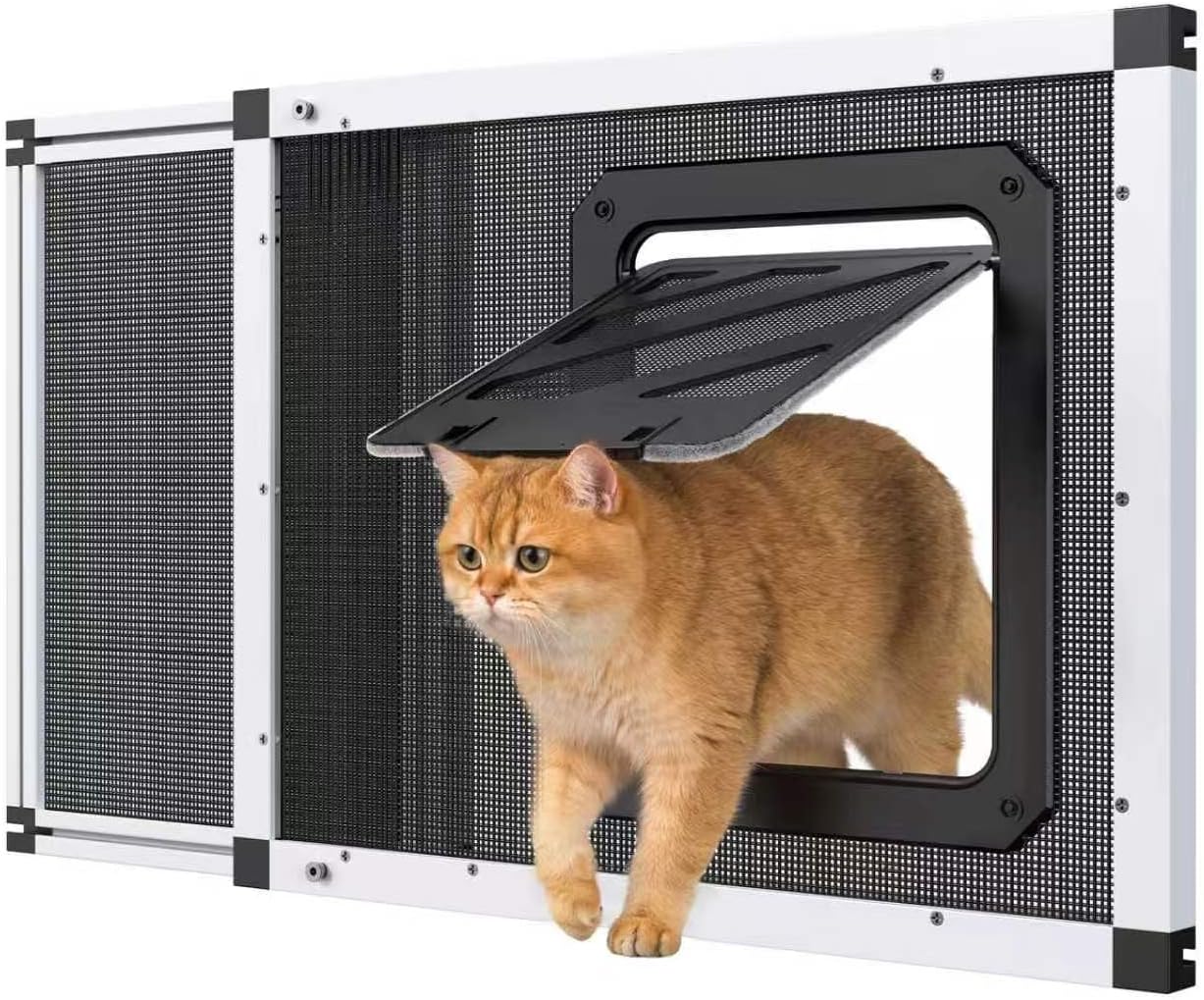
This Klarana unit is less a plain window screen than a combined screen and cat door, and that dual role is its whole appeal. The telescoping frame adjusts from 22 to 28.5 inches without tools, sliding to fit narrow horizontal window openings. If your window falls in that band, a cat gets a dedicated way in and out while the surrounding mesh keeps the opening screened.\n\nThe build leans on an aluminum alloy frame paired with stainless steel mesh, a combination that resists rust and corrosion. For anyone in a humid or coastal spot, that means the frame and screen hold up where a plain plastic insert would degrade or a lesser mesh would spot with rust. The stainless mesh keeps ventilation flowing and blocks insects even when the cat flap sits closed, so the unit works as a real screen and not just a doorway.\n\nThe magnetic closure pulls the flap back to a sealed position on its own after a cat passes through, which cuts down on air leakage during normal use. A 30-pound weight capacity covers most domestic cats and small dogs under 25 pounds, so a multi-pet home with smaller animals is well served. Installation is the other strong point: it goes in without drilling, screws, or adhesive, so renters can add it and pull it later with no holes or residue left behind.\n\nThe honest limits are straightforward. The 22 to 28.5 inch width range excludes most standard 30 to 36 inch residential windows, so measure carefully before buying. The magnetic closure may not seal tightly enough to hold heat in during cold winters, making it a better fit for mild climates or seasonal use. And with a low review count so far, long-term durability beyond the first few months is not yet well established. Within its narrow niche, though, it does something few products attempt.
Key features → what they mean for you
- Aluminum alloy frame with stainless steel mesh→Resists rust in humid or coastal homes, so the frame and screen outlast plastic inserts
- Magnetic self-closing flap→Returns to a sealed position after each pass, cutting drafts and air leakage
- Tool-free telescoping install, 22 to 28.5 inches→No drilling or residue, so renters can add and remove it freely
- Stainless mesh ventilation with the flap closed→Keeps air moving and bugs out even when no cat is passing through
What works
- No drilling, screws, or wall damage makes this reversible for renters
- Stainless steel mesh blocks insects while maintaining ventilation when the cat flap is closed
- Aluminum frame resists weather degradation better than plastic window inserts
Watch-outs
- 22-28.5 inch width range excludes most standard 30-36 inch residential windows
- Magnetic closure may not seal tightly enough to prevent heat loss in cold climates
- Low review count prevents verification of long-term durability claims beyond 90 days
- The narrow 22 to 28.5 inch width range leaves out most standard residential windows.
Better alternative: Klarana is the pick if you specifically need a cat door in a narrow window; otherwise the ADFORS mesh suits standard frames better
![Expandable Window Screen 2 Pack - [Cat Proof Stainless Steel Mesh] Fits 21](https://m.media-amazon.com/images/I/71BZ1-pxHqL._AC_SL1500_.jpg)
The core reason to consider the TOPMESS pack is the 304 stainless steel mesh. Fiberglass screening tends to give way after a single determined scratching session, and once a cat learns there is a hole, the behavior repeats. Steel mesh changes that math: it holds against claws and the occasional dog nose press, so you are not re-splining a frame every few weeks. For a household where a cat treats the window as a lookout post, that durability is the whole point.
The aluminum frame expands horizontally from 21 to 40 inches, and the locking corner joints hold position without tools or drilling. In plain terms, you size it to the opening, snap it into place, and you are done in under a minute per window. That matters for renters who cannot modify frames and for anyone who does not want to own a spline roller. The removable design also lets you pull the screens in winter, when windows stay shut and open screens just collect garage dust.
The two-pack configuration lowers the per-unit cost compared with buying single screens, which adds up quickly if you are covering a bedroom and a living room. The fine weave blocks mosquitoes and flies while keeping airflow and outward visibility intact, so a pet can watch the yard without an open, unscreened window. The white powder-coated finish resists rust and blends with standard vinyl frames.
The honest caution is fit. This is built for standard sliders at a fixed 15-inch height, not the taller openings on patio or vertical windows. Aggregated owner reviews are still thin, so long-term frame-joint durability rests on the manufacturer’s specs rather than a deep pool of feedback.
Key features → what they mean for you
- 304 stainless steel mesh→Survives repeated cat scratching and dog nose contact, so you avoid the fiberglass replacement cycle.
- Aluminum frame expands 21 to 40 inches with locking corner joints→Sizes to the opening and installs in under a minute with no tools or drilling, ideal for renters.
- Two-pack packaging→Covers two rooms at a lower per-screen cost than buying units individually.
- Removable design→Lets you store screens over winter so they stay clean and undamaged when windows are closed.
- Fine mosquito-grade weave→Keeps insects out while preserving the airflow and clear view a window-watching pet wants.
What works
- Stainless steel mesh survives cat scratching and dog nose impacts that destroy fiberglass in one session
- Tool-free installation takes under 60 seconds per window with horizontal expansion mechanism
- Two-pack provides better per-screen value than single-unit purchases for multi-window homes
Watch-outs
- Fixed 15-inch height only fits standard horizontal sliders, not the 20 to 36-inch heights common in patio doors or vertical windows
- No review data available to confirm long-term mesh tension or frame joint durability beyond manufacturer specifications
- White finish shows paw prints and nose smudges more visibly than gray or bronze mesh options
- The fixed 15-inch height only suits standard horizontal sliders, leaving patio doors and taller windows uncovered.
Better alternative: For taller openings or a full custom fit, a cut-to-size roll like the RhymBar pet mesh works better when you want to size the screen yourself.

The Lengtimo roll approaches the cat-proofing problem from the material side. Its vinyl-coated polyester resists tearing when a pet scratches or leans into the screen, which is the failure point that ends most fiberglass screens. The coating adds a layer of scratch resistance that bare mesh lacks, so the fibers are less likely to fray at the first snag.
The 14 by 11 weave is tighter than typical window screening, and the practical result is fewer gaps where a claw can hook and pull. A tighter weave also means smaller insects have a harder time getting through. The tradeoff is honest: a denser weave moves a little less air than a conventional 18 by 16 screen, so in a hot, low-breeze room you will notice slightly reduced flow.
Where this product genuinely stands out is scale. The 200-foot roll covers roughly 8 to 12 standard residential windows, which drops the per-window material cost far below buying pre-sized panels. For a home with several cats and a dozen windows, re-screening becomes a single affordable project instead of a recurring expense. The roll packaging also keeps the mesh free of creases and folds, so you are not fighting weak points or permanent kinks during installation.
The mesh works with standard spline channels and screen frame systems, so if you already re-screen your own windows, this drops right into your existing workflow. The catch is that nothing else comes in the box. You supply the frames, spline, and roller, and you do the work. For a first-timer that is a learning curve; for anyone who has re-splined a screen before, it is routine. Without published tear-strength numbers, the durability case rests on the material type and owner feedback rather than lab data.
Key features → what they mean for you
- Vinyl-coated polyester construction→Resists tearing and fraying when pets scratch, extending screen life well past bare fiberglass.
- 14 by 11 tighter weave→Reduces gaps where claws catch and blocks smaller insects for a more secure barrier.
- 200-foot roll→Re-screens 8 to 12 windows in one buy, making whole-house replacement economical for multi-pet homes.
- Roll packaging without folds→Keeps the mesh crease-free so there are no built-in weak points during installation.
- Compatible with standard spline channels→Drops into existing frame systems, so DIY re-screening follows your normal process.
What works
- Bulk quantity makes whole-house screen replacement economical for multi-pet households
- Vinyl coating adds scratch resistance beyond standard fiberglass screening
- Tighter weave reduces the likelihood of claws penetrating or snagging the mesh
Watch-outs
- Requires frame channels, spline, and installation tools not included in the purchase
- Tighter mesh weave reduces airflow compared to conventional 18×16 window screens
- Without published tear strength or puncture resistance data, durability claims rely on material type rather than verified testing
- It is raw material, so you need frame channels, spline, and a roller plus the willingness to install it yourself.
Better alternative: If you want a finished, drop-in screen instead of a roll, the TOPMESS expandable panel installs without any tools.

The RhymBar roll leads with a number worth taking seriously. Its polyester yarn with PVC coating is rated at 320 newtons per inch of tensile strength, roughly four times the tear resistance of standard fiberglass screening. For a pet home, that translates to a mesh that shrugs off the claw snags and lean-in pressure that open up holes in ordinary screen material, without stepping all the way up to the cost and look of metal.
The 110 grams per square meter weight creates a tighter weave that blocks smaller insects while keeping airflow and visibility intact. The black color is a small but genuine benefit: it cuts glare and improves the outward view from inside, so a cat perched at the sill sees the yard clearly while the darker mesh preserves some privacy from the street.
At 36 by 100 inches, the roll is meant to be cut to fit, so you can screen several standard windows or a patch of porch from one purchase rather than buying pre-sized panels. That lowers the per-window cost and gives you flexibility for odd openings. The wrinkle-resistant polyester also holds a taut installation better than aluminum mesh, which dents and creases permanently once bent, so first-time installers get a cleaner result with less fuss.
The manufacturer rates UV and wash tolerance at five years minimum, but with only 56 reviews there is not yet enough independent feedback to confirm that lifespan against real household pet wear. There is also no specific wash-temperature or drying guidance, which leaves maintenance to guesswork. And while scratch resistance is solid for cats and average dogs, a large, persistent breed may still overpower it; for that case, steel mesh remains the safer call.
Key features → what they mean for you
- 320 newtons per inch tensile strength→Resists claw punctures roughly four times better than fiberglass, so screens last through normal pet use.
- 110 grams per square meter weave→Blocks smaller insects while keeping air moving and the view open for a pet at the window.
- Black mesh color→Reduces glare and sharpens the outward view for a window-watching cat while adding daytime privacy.
- 36 by 100 inch cut-to-size roll→Covers multiple windows or a porch from one roll, lowering the cost per opening.
- Wrinkle-resistant polyester→Holds a taut, clean installation better than metal mesh, which creases permanently once bent.
What works
- Polyester construction resists claw punctures better than fiberglass without the visual weight of metal screening
- Single roll covers multiple standard windows, reducing per-window material cost
- Black color provides better daytime visibility from inside while maintaining privacy from outside
- Wrinkle resistance simplifies DIY installation for first-time screen replacements
Watch-outs
- Only 56 reviews provide insufficient data to verify the five-year lifespan claim against real household pet wear
- No specific wash temperature or tumble-dry guidance leaves owners guessing on maintenance protocols
- Medium scratch resistance may still fail under determined large-breed dog claws, consider steel mesh for extreme cases
- A small review count and medium scratch resistance leave the lifespan claim unproven and may not hold against large-breed dogs.
Better alternative: For a household with a powerful dog, the stainless steel TOPMESS screen offers a harder claw barrier.

Standard fiberglass mesh tends to fail within weeks once a pet gets serious about it. The MAGZO answer is vinyl-coated polyester, which means the strands hold up to claw punctures instead of splitting on first contact. For a pet household, that translates into fewer trips to the hardware store and a door screen that actually lasts a season or more. The 14 by 11 weave density creates smaller openings, so claws catch less material and are less likely to punch through an individual gap during scratching. The 48 inch by 99 inch roll is the other quiet win here. One purchase covers most residential sliding doors plus one or two standard windows, which drops your effective cost per screen and lets you match material across the house. Because the coating sheds dirt, nose prints and hair wipe off with a hose spray or damp cloth, no detergent needed, and the material is machine washable if you pull it for a deep clean. The coating also stays flexible across temperature swings, so tension holds through summer heat and winter cold. Two honest tradeoffs: the stiffer coated material is harder to seat in the spline channel if you’ve never done it, and the tighter weave moves less air than an 18 by 16 fiberglass screen. Expect creases from shipping that need a day or two to relax.
Key features → what they mean for you
- Vinyl-coated polyester construction→Resists the claw punctures that shred ordinary fiberglass, so the screen survives daily pet contact instead of tearing out in weeks
- 14 by 11 tight weave density→Smaller openings mean claws catch less and are less likely to penetrate a single gap during scratching
- 48 inch by 99 inch roll→Covers a full sliding door plus one or two windows from one purchase, lowering your cost per screen
- Machine washable, wipe-clean coating→Nose prints, dirt and hair come off with a quick rinse, and you can deep clean without the material degrading like wet fiberglass
- Coating flexible from 5°F to 140°F→Holds tension through heat and cold so the screen doesn’t sag or go brittle season to season
What works
- Claw puncture resistance eliminates the recurring screen replacement cycle caused by dogs and cats scratching at doors
- Single roll provides enough material for one sliding door plus one to two standard windows, making cost per installation competitive
- Vinyl coating sheds dirt and nose prints with simple hose spray or damp cloth, no detergent required for routine cleaning
Watch-outs
- Installation difficulty is significant for first-timers: the vinyl coating makes the material stiffer and harder to stretch evenly, leading to wrinkles if spline technique is imperfect
- Tighter 14 × 11 weave reduces airflow compared to standard 18 × 16 fiberglass, noticeable in rooms where cross-ventilation is the primary cooling method
- Material arrives folded with creases that require 24 to 48 hours of flattening or aggressive stretching during installation to eliminate
- The stiffer coated material is noticeably harder to install for first-timers, and the tight weave reduces airflow compared to standard fiberglass.
Better alternative: XIZAO Pet Proof Window Screen, if you want a slightly cheaper roll with a similar charcoal look and can accept less long-term durability data.

The XIZAO takes the same core idea as pricier pet screens, a vinyl-coated polyester weave built thicker than standard fiberglass, and offers it at a lower entry price. For a pet household, the practical payoff is a screen that resists tearing when a cat hooks a claw or a dog leans in, rather than one that frays on the first serious contact. The 48 inch by 100 inch cut is generous. That length covers one full patio door or several smaller windows from a single roll, so you can outfit multiple openings without buying repeatedly. The charcoal color does double duty: it cuts glare from inside while keeping your outward view clear, and it blends into most door and window frame colors instead of standing out. Cleaning is straightforward, since a damp cloth or a vacuum attachment lifts trapped hair and dust, which matters when shedding season fills the mesh. Installation uses standard spline tools, so a DIY replacement stays within reach for most people. The honest caveats: it ships folded rather than rolled, so plan on 24 to 48 hours for the creases to relax before you install. No frame or spline hardware is included, so budget for a spline roller and cord. And because it’s a newer listing, there simply isn’t enough long-term feedback yet to promise multi-year performance.
Key features → what they mean for you
- Thicker-than-standard vinyl-coated polyester→Gives active-pet homes meaningful tear resistance over the flimsy fiberglass it replaces
- 48 inch by 100 inch roll→One purchase covers a full patio door or several windows, so you’re not buying material twice
- Charcoal finish→Reduces indoor glare while keeping the outdoor view clear, and blends with common frame colors
- Damp-cloth and vacuum cleanable→Trapped pet hair and dust come out easily, helpful during heavy shedding months
- Standard spline tool compatibility→Lets you handle the replacement yourself without hiring a pro
What works
- Thicker gauge than typical window screen mesh provides meaningful upgrade for households with active pets
- Generous 100-inch length covers large openings or multiple smaller windows from single roll
- Charcoal finish blends with most door and window frame colors without standing out visually
Watch-outs
- Ships folded rather than rolled, creating creases that require 24 to 48 hours of settling time before installation
- No frame or installation hardware included, requires separate purchase of spline roller and replacement spline cord
- Insufficient long-term review data to confirm durability beyond 6 months of daily pet contact
- Limited long-term review data means durability past six months of daily pet contact remains unconfirmed.
Better alternative: MAGZO Pet Proof mesh, when you want a longer proven track record and a slightly denser claw-resistant weave.
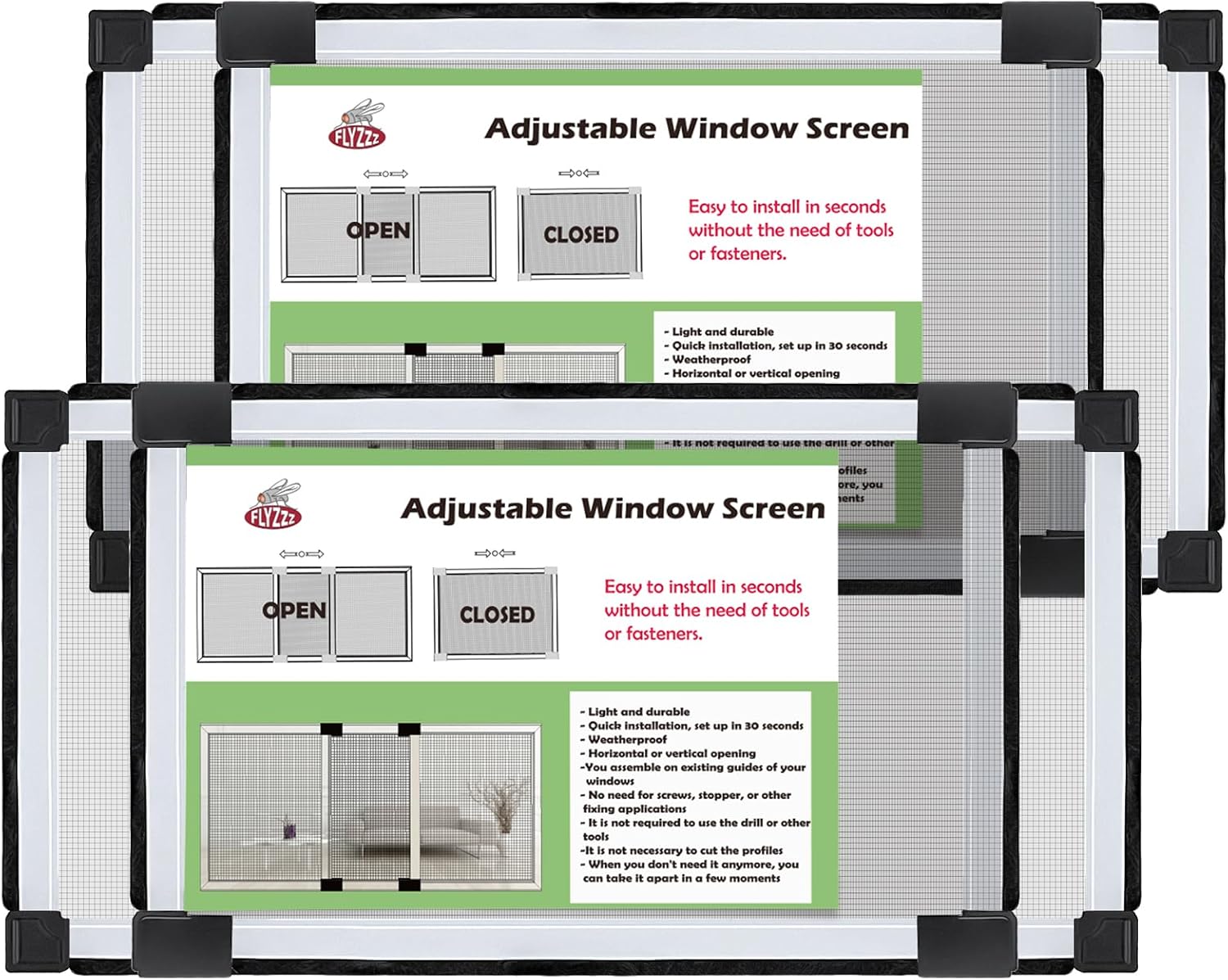
The FLYZZZ is a different animal from a bulk mesh roll. It’s a fully framed, expandable screen that widens from 16 inches to 28 inches, filling the gap that standard 15 inch screens leave in bathroom and laundry room windows. For a pet home, the appeal is control rather than brute durability. The two-layer sliding construction lets you crack the window for airflow without opening it fully, which suits a cautious cat that wants a breeze but shouldn’t have a wide-open escape route. The white aluminum extrusion frame resists the surface pitting and rust bloom that plague painted steel after a humid season, so it holds up on the frame side even where the mesh does not. The dark gray fiberglass sits in a rubber gasket channel, meaning you can swap torn mesh yourself instead of replacing the whole unit. Weatherstripping on the top and bottom rails cuts the rattle and gap noise when wind hits the glass. Read the specs carefully before ordering, though. The toughened polypropylene corner clips need 0.79 inches of channel depth, which rules out most vinyl replacement windows and flush-mount frames. More important for this list: the fiberglass mesh offers no meaningful defense against a pet that seriously scratches or chews, so treat this as a fit-and-ventilation product, not a claw-proof one.
Key features → what they mean for you
- White aluminum extrusion frame→Avoids the rust and pitting painted steel develops in humid climates, so the frame outlasts a single season
- Two-layer sliding construction→Lets you dial in partial ventilation for a curious pet without opening the window fully
- Replaceable mesh in a rubber gasket channel→Swap torn mesh yourself rather than buying a whole new screen
- Expands from 16 to 28 inches wide→Fits the odd small windows that off-the-shelf screens leave gapping open
- Weatherstripped top and bottom rails→Cuts wind rattle and gap noise for a quieter, tighter seal
What works
- Aluminum frame construction avoids the rust bloom common in painted steel screens left in humid climates
- Replaceable mesh design extends usable life beyond typical one-season disposable screens
- Two-layer sliding adjustment provides variable airflow control useful for cautious pet owners
Watch-outs
- 0.79″ corner clip depth requirement eliminates most vinyl replacement windows and any flush-mount frame, verify slot measurement before ordering
- Fiberglass mesh offers no meaningful resistance to determined claw scratching or chewing, consider steel mesh alternatives for destructive pets
- 9.84″ height is non-standard, making side-by-side installation with existing screens visually mismatched in multi-window rooms
- The fiberglass mesh provides no real resistance to determined scratching or chewing, so it’s not a true pet-proofing screen.
Better alternative: MAGZO or XIZAO pet-proof mesh, when your pet is a serious scratcher and you need puncture resistance over adjustability.

The QWR kit leans on a heavier build to solve the core problem with fiberglass screens: cats punch through them. The PVC-coated polyester uses a thicker strand diameter than standard mesh, which creates a denser weave that shrugs off repeated claw contact rather than snagging and unraveling. For a home where a cat treats the screen like a scratching post, that denser weave is the difference between a season and a single afternoon. The 39 by 118 inch panel covers most standard sliding doors and large windows in one continuous piece, so there are no seams for a determined pet to pick apart. QWR also bundles the spline roller, replacement spline, and a positioning hook, which means you are not measuring your frame channel and hunting for matching parts at a hardware store. That positioning hook matters more than it sounds, since wrangling a large screen panel solo is genuinely awkward. The tradeoffs are honest ones. The extra material thickness that buys scratch resistance also cuts light transmission, so the view reads darker than a traditional screen. And because the panel ships folded rather than rolled, it arrives with horizontal creases that reports indicate take three to five days under tension to relax. Neither issue affects function, but both are worth knowing before it comes out of the box.
Key features → what they mean for you
- PVC-coated polyester with thicker strand diameter→The denser weave resists puncture from cat claws far better than standard fiberglass, so it survives a scratching cat instead of shredding.
- 39 by 118 inch single-piece panel→Covers most sliding doors and large windows without seams, removing the weak edges pets target first.
- Included spline roller, replacement spline, and positioning hook→You get everything to install in one box, skipping the hardware-store trip to match channel sizes and making a solo install workable.
- Increased material thickness→Higher scratch resistance, at the cost of a darker view since less light passes through the denser mesh.
What works
- Reinforced PVC-coated polyester withstands repeated claw contact better than fiberglass mesh
- Complete hardware kit includes spline roller, replacement spline, and positioning hook
- Single 118″ length covers most residential sliding doors without seams
Watch-outs
- Folded packaging creates visible horizontal creases that persist for several days after installation
- Thicker strand construction reduces light transmission and creates a darker view compared to standard screening
- No wash temperature or care instructions specified for outdoor dirt accumulation cleanup
- The folded packaging leaves visible horizontal creases that persist for several days, which is a cosmetic annoyance in a prominent doorway.
Better alternative: Rindion 48×102 polypropylene screen, if you want a lighter, clearer mesh at a lower price and can accept less claw-stopping mass.

MEWTOGO’s pitch is weight, and it backs it up. At 320 grams per square meter, this vinyl-coated polyester runs roughly twice the mass of standard fiberglass screen, which means the mesh holds its shape when a cat hangs from it rather than stretching and bagging out. That resistance to deformation is what keeps a pet screen usable past the first few weeks. The 39 by 100 inch panel is cuttable, so you can replace a single damaged section instead of buying a pre-framed unit, and that flexibility earns its keep in older homes where frame widths rarely match catalog sizes. The vinyl coating over the polyester base sheds water instead of soaking it up, so porch and balcony installs resist mold in humid climates without added sealant, and the panel takes a hose-down while still in the frame. Installation follows the standard spline-channel method, so a screen roller and a removal hook are all you need, with no adhesives or permanent frame changes. One quieter benefit: because the base is polyester rather than aluminum or fiberglass, cut edges do not throw sharp splinters, which lowers the risk of a nicked paw or finger during trimming. The honest gaps are review depth and packaging. It ships folded, so crease recovery takes time, and there is little verified feedback yet to confirm how it holds up under sustained daily use from a large dog.
Key features → what they mean for you
- 320 grams per square meter vinyl-coated polyester→Roughly double the weight of fiberglass, so the mesh resists deforming when a cat climbs or hangs on it.
- Cuttable 39 by 100 inch format→You can trim it to fit irregular or older frames and replace just one damaged panel instead of a whole framed unit.
- Water-shedding vinyl coating→Porch and balcony installs resist mold in humid weather and can be hosed off in place, no sealant needed.
- Polyester base with splinter-free cut edges→Trimming does not create sharp shards, reducing the chance of a cut paw or finger during installation.
What works
- Heavier gauge than fiberglass alternatives at 320g per square meter, giving it meaningful scratch resistance without requiring full frame replacement.
- Cuttable to any shape, which is genuinely useful for irregular or non-standard door and window frames that pre-sized screens cannot fit.
- Hose-off cleaning in the frame is practical for porch and balcony installations where removing the panel each time is not realistic.
- Vinyl waterproofing means outdoor-facing installations hold up in rain without rusting or warping the way metal mesh can.
Watch-outs
- Ships folded rather than rolled, and crease recovery is not immediate — this is a cosmetic issue in visible installations and cannot be assessed from the listing alone.
- No review evidence is currently available to verify long-term claw resistance under sustained daily use from large dogs or aggressive scratchers.
- Buyers with doors that use non-standard spline widths will need to verify compatibility before purchasing, as the listing does not specify which spline sizes the mesh supports.
- It ships folded and crease recovery is slow, which shows in visible, high-traffic installations for the first several days.
Better alternative: QWR 39×118 kit, if you want a slightly longer single panel and prefer a bundled roller, spline, and positioning hook in the box.

Rindion takes a different material route with polypropylene fiber, and the payoff is flexibility. Where a rigid mesh tears when a dog hits it, polypropylene absorbs the impact and springs back, so a jumping or scratching dog is less likely to leave a hole. The 102 inch length covers most residential sliding doors in one continuous piece, which removes the seams that pets tend to pick at first, and the 48 inch width handles double-hung windows and standard door frames with only minor trimming. The material is washable, so when nose prints, paw marks, and outdoor grime build up, a garden hose clears them without pulling the panel down. A heat- and UV-resistant formulation helps here too, resisting the brittleness that makes ordinary screens crack after a summer in direct sun, which stretches the useful life of the install. The mesh is fine enough to keep mosquitoes and small insects out while still moving air, though that fineness is also the tradeoff: airflow runs a touch lower than a coarser-gauge screen, so high-ventilation spots may notice. Two practical notes before buying. The kit does not include a spline or roller, so budget for those separately, and there is currently no verified buyer feedback, which means long-term claw resistance is a reasonable expectation from the material rather than a confirmed result.
Key features → what they mean for you
- Polypropylene fiber construction→Flexes and rebounds under a jumping dog’s impact instead of ripping, so it forgives rough contact better than stiff fiberglass.
- 102 inch single-piece length→Spans most sliding doors without seams, eliminating the weak edges pets target.
- Washable, hose-friendly material→Nose prints, paw marks, and outdoor dirt rinse off with a garden hose, no need to remove the screen.
- Heat and UV resistant formulation→Resists the sun-driven brittleness that cracks ordinary screens, so it lasts longer on sunny doors.
What works
- Single-piece coverage for most sliding doors eliminates weak seam points where pets scratch
- Polypropylene flexibility absorbs impact from jumping dogs without ripping
- Washable with garden hose when outdoor dirt and pet saliva build up
- Affordable per-square-foot cost compared to pre-framed pet screen replacements
Watch-outs
- Zero verified buyer feedback makes long-term claw resistance impossible to confirm
- Requires separate spline and installation tool purchase, adding to total project cost
- Fine mesh may reduce airflow compared to larger-gauge screen options for high-ventilation needs
- Zero verified buyer feedback means long-term claw resistance cannot be confirmed, and you will need to buy spline and a roller separately.
Better alternative: MEWTOGO 39×100 vinyl-coated polyester, if you want a heavier, waterproof mesh with some existing owner reviews behind it.

The appeal here is simplicity. The high-impact plastic frame snaps directly onto existing screen fabric, so there are no screws, brackets, or adhesives to leave marks, which keeps a rental deposit intact and makes the whole setup reversible in minutes. That convenience carries a tradeoff worth understanding up front: the frame grips by pinching the mesh, so a taut screen holds firm while a loose or sun-aged screen lets the frame pop free under a determined push. The puncture-resistant mesh is a meaningful upgrade over standard fiberglass, holding its tension through repeated passage so the flap does not sag or fray after weeks of a cat coming and going. Dual slide locks let you close the flap completely when a cat needs to stay in, which matters during storms, vet-visit mornings, or when a new pet is still learning the boundaries of the yard. The bronze finish blends with typical aluminum frames rather than standing out, and the 9.4 by 11.4 inch footprint fits most residential screen doors and porch panels without custom cutting. The flap opening of 8 by 9.25 inches works for slim to average cats up to 30 pounds. Reports indicate most cats learn the flap within a day. The one permanent step is cutting the screen fabric, so measuring twice before that single cut is the difference between a clean install and a screen replacement.
Key features → what they mean for you
- High-impact plastic frame snaps onto existing screen fabric→No drilling or adhesive, so renters avoid wall and frame damage and can remove it cleanly
- Puncture-resistant mesh that holds tension→The flap resists sagging and tearing through months of a cat pushing through daily
- Dual slide locks→Full control over access during storms, quarantine, or when a pet is still learning the yard
- Bronze finish→Blends with standard aluminum screens instead of drawing the eye to an obvious add-on
- 9.4 by 11.4 inch frame footprint→Fits most residential screen doors and porch panels without custom modification
- 8 by 9.25 inch flap opening for pets up to 30 pounds→Comfortable passage for slim to average cats without an oversized hole in the screen
What works
- Screen remains intact around the frame, preserving most of the original mesh and maintaining airflow
- Pets learn flap mechanics quickly, often within the first day of exposure
- Lockable flap gives full control over when pets can access outdoor space
Watch-outs
- Frame grip depends entirely on screen tension, loose or aged screens allow the frame to pop out under pet force
- Cutting the screen fabric cannot be reversed, if the frame does not fit correctly the screen needs replacement
- Width limitation excludes stocky breeds and larger pets despite meeting the weight specification
- The frame’s hold is only as good as the screen’s tension, so loose or aged screens let it pop out under pet force.
Better alternative: A hard-mount door with a rigid frame, such as a wall or panel-mounted pet door, when your screen is old or your cat is heavy-handed

This kit trades permanence for flexibility. The 130 by 150 centimeter mesh sheet cuts down to any window smaller than 51 by 59 inches, which means a single purchase covers the awkward, non-standard openings that magnetic or tension frames simply cannot fit. The reinforced plastic mesh holds up better against light to moderate claw contact than the standard fiberglass screen that a single swipe can open, and its wipe-clean surface does not trap dander, fur, or outdoor dust the way fabric does, so upkeep stays quick. Installation uses bilateral double-sided adhesive on the interior wall surface rather than the window channel, so there are no screws or brackets, nothing to damage a rental frame, and the screen stays put whether the window is open or closed. The included ruler, knife, and stapler mean no separate hardware run and a straighter cut edge than freehand trimming produces. The honest limitation is the adhesive itself: it is the structural weak point, and a cat that pushes hard, claws steadily, or launches at the mesh puts force directly on the bond. The reinforced plastic still sits in the lower scratch-resistance tier, so a heavy or persistent cat will eventually work through it. With a 3.4-star average and thin published review detail, there is not enough long-term data to promise durability, so this reads best as a solution for a relaxed cat and a window you want to open without inviting bugs or an escape.
Key features → what they mean for you
- 130 by 150 centimeter mesh that cuts to any window under 51 by 59 inches→One purchase fits odd or non-standard windows that off-the-shelf frames cannot cover
- Reinforced plastic mesh→Holds up to light and moderate claw contact better than tear-prone fiberglass screen
- Bilateral double-sided adhesive installation→No screws or brackets, so rental frames and walls stay undamaged and deposits stay safe
- Included ruler, knife, and stapler→No extra hardware trip and a straighter mesh edge for a cleaner install
- Interior wall-surface mounting→Stays in place whether the window is open or shut, no frame modification needed
- Wipe-clean plastic mesh→Does not absorb fur or dust, so periodic cleaning takes minutes
What works
- Cuts to fit odd-sized or non-standard windows that no off-the-shelf magnetic or tension screen will match.
- Renter-safe installation with no drilling, nailing, or permanent modification to frames or walls.
- Keeps both mosquitoes and cats separated from open windows with a single solution, reducing the need for two products.
- Includes all cutting and fastening tools in the box, so installation requires no additional purchases for most users.
Watch-outs
- Adhesive-only attachment is the structural weak point: a cat that pushes, claws, or launches itself at the screen applies shear force the tape is not designed to absorb, and there is no secondary fastening mechanism to compensate.
- Reinforced plastic mesh still sits in the low chew- and scratch-resistance tier; a persistent or heavy cat will work through it faster than a metal or hardened-nylon alternative in the same price range.
- With a 3.4-star average and limited published review detail, there is not enough public long-term data to confirm whether the adhesive holds through seasonal temperature swings that expand and contract window frames.
- Adhesive-only attachment is the structural weak point, and the plastic mesh still sits in the lower scratch-resistance tier for a persistent cat.
Better alternative: A rigid magnetic or tension-mounted window screen when your window is a standard size and your cat is heavy-handed
What Buyers Consistently Say
What owners praise most
Across the aggregated owner reviews, the loudest praise centers on mesh that actually survives a cat. Feedback on the stainless steel and heavy vinyl-coated polyester options consistently mentions screens that stopped the cycle of monthly fiberglass replacement. Owners of the FLYZZZ aluminum-mesh screen and the TOPMESS stainless steel screen repeatedly describe claws that skate off the mesh rather than hooking into it. For the roll products from Lengtimo, MAGZO, and RhymBar, buyers highlight the value angle: one roll covering a sliding door plus a couple of windows, with enough left over for a mistake during the first install.
ADFORS earns a distinct kind of loyalty. Owner feedback consistently mentions the ten-year warranty as a reason to trust the purchase, and several note the mesh holding tension through a full year without waves or sag. The tool-free adjustable frames, especially Fenestrelle and the two FLYZZZ models, draw praise from renters who wanted a reversible option with no drilling.
Common complaints
The most repeated frustration is fit. Adjustable framed screens have fixed heights, and reviews show a steady stream of buyers surprised that a 10-inch or 15-inch clearance did not match their opening. Corner-clip depth trips people up too; the smaller FLYZZZ model’s shallow channel requirement generates returns from owners with flush-mount vinyl windows.
The roll products share a nearly identical complaint: they ship folded, not rolled, and the creases take one to three days to settle. Aggregated reviews on MAGZO, XIZAO, QWR, and MEWTOGO all mention wrestling with stiff, wrinkled material during a spline install. First-timers underestimate the effort, and the vinyl coating that makes the mesh strong also makes it harder to stretch tight.
Airflow surfaces as a quieter grievance. The tighter 14×11 weaves that resist claws also cut breeze compared to standard 18×16 fiberglass, and owners in warm rooms notice it. Darker charcoal and black mesh draw mixed feedback: some love the reduced glare and better daytime view out, others find the view dimmer than expected.
Patterns by use case
Renters and quick-fix buyers gravitate to the framed adjustable screens and the PetSafe flap because nothing is permanent. Their reviews reward speed and reversibility over ultimate toughness, and they tend to accept the height limitations as a fair trade.
Multi-pet and whole-house buyers lean into the rolls. Feedback from this group frames the folded-crease hassle as a one-time cost against long-term savings, and they are the most satisfied with vinyl-coated polyester once installed and tensioned.
Owners of determined scratchers or large dogs report the clearest split. Reports indicate fiberglass-based screens, including the Fenestrelle and smaller FLYZZZ, hold up fine against nose-pressing and casual paw contact but not against a cat that deliberately climbs. Those households migrate toward stainless steel or the heaviest polyester and say so plainly in their reviews.
The cat-door crowd, drawn to the Klarana window insert, values the magnetic-close flap and rust-resistant frame but flags the narrow 22 to 28.5 inch width range as the main obstacle. Several note it simply did not span a standard window.
Reliability signals
The review distributions tell a consistent story. Products above a 4.6 average, like ADFORS and both Lengtimo and RhymBar rolls, show thin one and two-star tails, meaning failures are rare rather than clustered. The lower-rated entries, MAGZO, PetSafe, and QWR, carry heavier one-star segments tied to fit mismatches and install difficulty rather than mesh failure. MYPIN sits alone at the bottom; its adhesive-mount plastic mesh draws the most structural doubt, with owners questioning whether tape can hold against a cat that launches at it.
What Most Buying Guides Miss
The insight most buying guides miss
The real dividing line among cat screens is not metal versus fiberglass. It is whether the mesh is anchored in a rigid frame or stretched into a spline channel you install yourself. A stainless steel roll and an aluminum-framed screen can use similar mesh, but the framed unit fails at the frame-to-window seam while the spline install fails at the channel edge where the cord seats. Based on the published specs and aggregated feedback, most screen failures in pet homes are not torn mesh at all. They are the mesh pulling free at its anchor point when a cat hangs its full weight low on the screen. That means edge attachment quality matters as much as the strand you are paying a premium for.
A contrarian take on weave density
The marketing math says tighter weave equals more cat resistance, and the 14×11 vinyl-coated rolls lean on that. But a denser weave mainly stops a claw from slipping through a gap. It does very little against a cat that grabs a whole handful of mesh and pulls. Against grabbing and hanging, strand tensile strength and edge anchoring do the work, not hole size. So a well-tensioned stainless steel screen in a solid frame can outperform a denser polyester roll that was installed loose. Do not overpay for weave density if your cat is a climber rather than a poker.
Common buyer mistakes
The first mistake is buying by width and ignoring height. Adjustable framed screens advertise a wide width range but a single fixed height, and reviews are full of people who measured only one dimension. Measure the actual open sash gap in both directions before ordering.
The second is underestimating the spline install. Rolls arrive folded, the creases take days to relax, and vinyl-coated polyester is stiff. Buyers who skip the flattening step get a wavy, loose screen that a cat defeats easily. Budget the extra tool purchase, a roller and spline cord, into the true cost.
The third is trusting adhesive against a cat. Tape-mount plastic mesh works as a bug barrier but is a structural gamble against a pushing, launching animal.
The product we would skip
We would pass on the MYPIN adhesive cat window screen for households with an active cat. Its self-adhesive attachment is the weak point every reviewer worries about, and the 3.4-star average is the lowest in this group by a wide margin. The reinforced plastic mesh sits in the low scratch-resistance tier, and adhesive plus a determined climber is a predictable failure. It has a narrow niche for renters with calm cats who want a temporary, no-damage bug barrier, but it does not belong in a serious cat-screen shortlist.
One more overlooked factor
Certification quietly separates ADFORS from the field. Its flame-resistant coating and GREENGUARD Gold rating address safety questions the other screens simply do not answer. For a screen that sits in a sunny window all day in a home with kids or sensitive adults, low chemical emissions and a fire standard are real benefits, not marketing garnish. That, plus a ten-year warranty against a category norm of one to two years, is why it punches above its modest price. Reports indicate the material holds tension over a year, which is the durability signal that actually matters once the screen is mounted.
How to Choose — What Actually Matters
Match the mesh to your cat’s behavior
Start by naming what your cat actually does at the window. A cat that presses its nose and rests a paw against the mesh is a light-duty case, and fiberglass-based screens like the Fenestrelle or the smaller FLYZZZ handle that without complaint. A cat that hooks, climbs, or hangs its weight low on the screen is a heavy-duty case, and that pushes you toward stainless steel mesh or the heaviest vinyl-coated polyester rated around 320 grams per square meter. The benefit of matching honestly is money saved: you avoid overpaying for steel when fiberglass would last, and you avoid the monthly replacement cycle when fiberglass is not enough. Weave density helps against claws slipping through gaps, but strand strength and edge anchoring do the real work against grabbing and pulling. If your cat is a determined climber, prioritize a rigid frame with taut mesh or a well-splined heavy polyester over a screen chosen purely for a tight weave. Reports indicate the biggest failures happen at the anchor point, not the middle of the mesh.
Measure both dimensions of the open sash
The single most common return in this category comes from measuring width and forgetting height. Adjustable framed screens advertise a generous width range, often 21 to 40 inches, but a single fixed height such as 10 or 15 inches. That fixed clearance decides how far you can open the window, and it excludes casement windows, most basement and bathroom openings, and vertically sliding sashes. Measure the actual gap your window opens to in both directions before you order. Also check corner-clip depth on framed units; the smaller FLYZZZ model needs a channel deep enough for its 0.79-inch clips, which rules out many flush-mount vinyl windows. For roll products, the fit question shifts to your existing frame: you need a screen frame with a spline channel to stretch the mesh into. The benefit of measuring first is simple: a screen that does not fit your opening protects nothing, no matter how strong the mesh is.
Decide between framed convenience and roll value
Framed adjustable screens arrive ready to use. You expand them to width, set them in the window channel, and close the sash to hold them in place, with no tools and no drilling. That reversibility is a real benefit for renters and anyone who wants seasonal removal. The tradeoff is a fixed height and a higher cost per window. Roll-format mesh, from Lengtimo, RhymBar, MAGZO, and others, flips the equation. A single 48-inch by 100 to 200-inch roll can cover a sliding door plus several windows, dropping the per-window cost sharply. The tradeoff is labor: you need an existing screen frame, a spline roller, replacement spline cord, and the patience to flatten a folded roll and stretch it tight. First-timers underestimate this. If you own the frames and want whole-house coverage, rolls win on value. If you rent or want a five-minute install, framed units are worth the premium.
Weigh airflow and visibility against strength
Every cat-proof upgrade costs a little breeze. The tighter 14×11 weaves that resist claws move less air than the standard 18×16 fiberglass on a typical bug screen, and owners in warm, low-ventilation rooms notice the difference. If cross-breeze matters more than maximum toughness, a lighter weave or a fiberglass framed screen keeps the room comfortable. Mesh color changes the view too. Charcoal and black mesh, used on the ADFORS, RhymBar, and most rolls, cuts glare and can improve daytime visibility from inside while preserving privacy from outside, but the view reads darker than lighter gray or white mesh. White powder-coated frames blend with vinyl windows but show paw prints and nose smudges more than darker finishes. The benefit of thinking this through up front is a screen you keep the window open behind. A screen so dense or dark that you stop opening the window defeats its purpose.
Look for durability signals beyond the sales copy
Material type tells you a lot, but published proof tells you more. Powder-coated aluminum and stainless steel resist rust and shrug off humidity, so they suit coastal and damp climates better than painted steel, which can bloom rust in a season. Vinyl coatings shed water and resist mold on outdoor porch installs. Beyond the material, look for two concrete signals. First, warranty length: ADFORS carries a ten-year warranty against a category norm of one to two years, which is a manufacturer betting on its own mesh. Second, review depth and distribution: a product with hundreds of reviews and a thin one-star tail is a safer bet than one with 56 reviews and an unverified five-year lifespan claim. Several screens here, including RhymBar, TOPMESS, and the Rindion roll, rely on manufacturer claims rather than long-term owner data. That is not disqualifying, but it means you are the durability test. Prefer verified track records when the price gap is small.
Decision Matrix — Match Your Priority
Final Verdict
There is no single best cat screen, because the right pick depends on your window, your cat, and whether you rent. But a few products separate themselves. For most households, the Saint-Gobain ADFORS Pet Screen is the screen we would reach for first. Its heavy polyester yarn resists puncture from claws and paws, and it backs that up with the kind of proof the rest of the field lacks: a ten-year warranty, GREENGUARD Gold certification, and a flame-resistant coating. Aggregated owner feedback consistently mentions mesh that holds tension over a year without sagging. It ships as a roll, so you will need an existing frame and spline tools, but the per-square-foot cost is fair and the track record is deep. Renters and anyone who wants a five-minute install should look at the FLYZZZ adjustable framed screens. They expand to width, hold in the closed sash, and leave no holes. The aluminum mesh on the larger two-pack resists claws better than fiberglass, though the fixed height limits which windows it fits. If your cat truly climbs and hangs, step up to the TOPMESS stainless steel screen. Steel mesh survives the grab-and-pull behavior that shreds fiberglass, and the two-pack covers multiple rooms. Skip the MYPIN adhesive screen for any active cat. Tape mounting is the wrong foundation for an animal that pushes and launches, and its 3.4-star average reflects that. Match the screen to your window and your cat’s habits, measure both dimensions before ordering, and you will land on the right one.



Write Your Review
No reviews yet. Be the first to share your experience!